The best motor skills activities for children include playdough, bead threading, scissor practice, pincer grip games, pre-writing strokes, finger isolation, puzzles, obstacle courses, animal walks, balloon games, balance activities, ball skills, and jumping games. These therapist-approved activities support both fine motor skills and gross motor skills through simple, play-based practice at home.
Motor skills lay the foundation for a child’s physical growth, independence, and overall development. Engaging children in fun, purposeful motor skill activities helps them build strength, coordination, balance, and body awareness from an early age. These activities support both gross motor skills—such as running, jumping, and climbing—and fine motor skills, like grasping, writing, buttoning, and cutting.
By integrating simple, play-based exercises into daily routines, parents and therapists can enhance a child’s ability to move with confidence and perform everyday tasks more effectively. Whether it’s obstacle courses, sensory play activities, balance exercises, or hand-strengthening tasks, each activity contributes to better motor planning, improved attention, and stronger overall development.
A Therapist's Insight
As a pediatric therapist, I often see that children make the best progress when motor practice feels like play rather than a formal exercise. The activities below are simple ways to support your child's coordination, strength, hand control, balance, and movement skills.
Reviewed/Written by Dr. Nitin Gupta, DMI Level C Certified Therapist
What Are Fine Motor Skills in Children?
Fine motor skills are the small, precise movements controlled by the muscles of the hands, fingers, wrists, lips, and tongue. These skills help children perform tasks that require accuracy, steady control, and coordination. An Early Intervention Program can strengthen these skills at the right age, ensuring children develop strong hand control and confidence in everyday tasks..
Key Examples of Fine Motor Skills
Fine motor tasks appear in almost every part of a child’s day, such as:
- Picking up tiny objects or beads
- Holding crayons, pencils, or markers correctly
- Fastening buttons, zippers, and snaps
- Opening jars, lids, bags, or lunch boxes
- Turning pages of a book smoothly
- Tying shoelaces or knotting strings
These everyday actions help strengthen the hand muscles and improve control and precision.
Why Fine Motor Skills Are Important
Fine motor skills are crucial for several key areas of development:
- Academic readiness: Children need to hold pencils, draw shapes, write letters, and use school tools confidently.
- Self-care skills: Activities like dressing, feeding, brushing teeth, and grooming depend on fine motor control.
- Play and creativity: Craftwork, colouring, building, and puzzle-solving all strengthen the hands and stimulate imagination.
- Independence: Strong fine motor skills help children complete daily tasks on their own, boosting self-esteem.
Children with weak fine motor skills may hold pencils incorrectly, avoid writing or drawing, get tired quickly, or struggle with simple daily routines such as buttoning shirts or opening bottles. Early identification and support make it easier for them to build strong, age-appropriate skills.

What Is Gross Motor Skills in Children?
Gross motor skills involve the The best motor skills activities for children are playdough, bead threading, scissor activities, pincer grip games, pre-writing practice, puzzles, obstacle courses, animal walks, balloon games, balance activities, ball games, and jumping activities. Fine motor activities strengthen hand and finger control, while gross motor activities develop balance, coordination, and whole-body movement.
Key Examples of Gross Motor Skills
Gross motor activities are part of a child’s daily routine and play. Examples include:
- Sitting without support
- Crawling, walking, running, and jumping
- Skipping, hopping, and galloping
- Climbing stairs or playground equipment
- Throwing, catching, kicking, or dribbling balls
- Balancing on one leg or walking on a line
- Riding scooters, cycles, tricycles, or balance bikes
These movements help children build strength, endurance, and confidence.
Why Gross Motor Skills Are Important
Gross motor development plays a key role in a child’s physical, academic, and social growth:
- Better posture: Strong gross motor skills help children sit upright and stay focused during classroom activities.
- Active play: Children participate more easily in outdoor play, sports, and group games.
- Safety: Good balance and coordination reduce the risk of trips, falls, and injuries.
- Confidence: Being able to run, jump, and climb builds self-esteem and independence.
- Socialization: Children with strong motor skills are more likely to join team activities and make friends.
- Cognitive growth: Body movement boosts brain development, supports attention span, and enhances learning.
Children with weak gross motor skills may avoid playground activities, struggle with climbing or running, fall more often, or get tired quickly. Early support through targeted play and therapy can make a big difference.
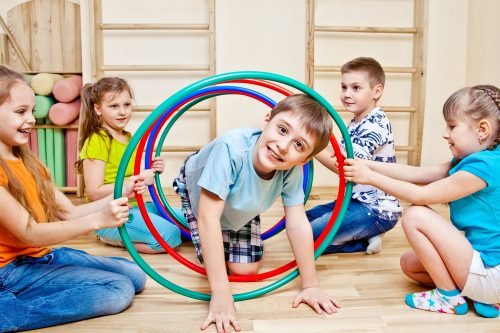
What Are the Best Motor Skills Activities for Children?
The best motor skills activities for children are playdough, bead threading, scissor activities, pincer grip games, pre-writing practice, puzzles, obstacle courses, animal walks, balloon games, balance activities, ball games, and jumping activities. Fine motor activities strengthen hand and finger control, while gross motor activities develop balance, coordination, and whole-body movement.
Fine and Gross Motor Skills Activities for Children
Below are step-by-step, therapist-approved, age-appropriate activities covering both fine and gross motor domains. These are designed to be simple, engaging, and effective at home or in therapy.
Fine Motor Skills Activities
Fine motor skills activities help children develop the small muscles in their hands and fingers. These skills are important for writing, drawing, cutting, buttoning, and other everyday tasks.
1. Playdough Strengthening
Playdough is one of the best fine motor skills activities for children because squeezing, rolling, pinching, and pressing strengthen the small muscles in the hands and fingers.
- Roll long shapes and make balls
- Press beads into the dough
- Cut shapes using child-safe plastic tools
- Make letters and simple patterns
2. Bead Threading & Lacing
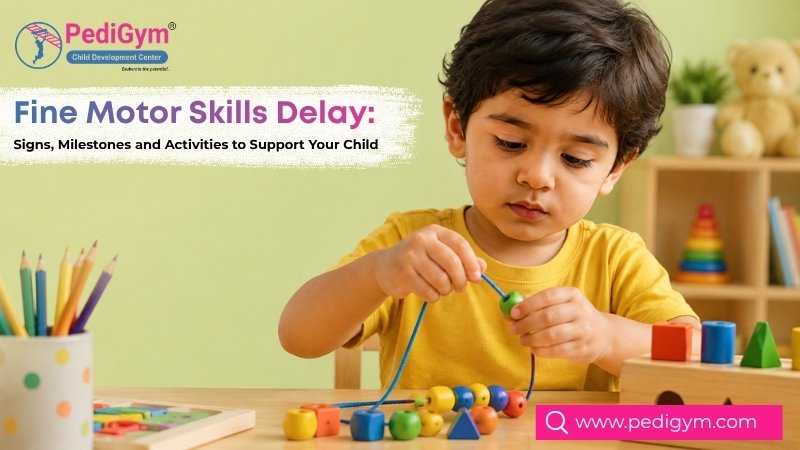
Bead threading and lacing improve fine motor control, hand-eye coordination, and the ability to use both hands together.
- Thread large → medium → small beads
- Lace animal or shoe-shaped cards
- Create colour patterns
3. Scissor Skill Training
Scissor practice helps children develop hand strength, precision, and the coordination needed for cutting and other daily tasks.
- Snip paper strips
- Cut zig-zags, curves, spirals
- Cut around simple shapes or pictures
4. Pincer Grip Games
Pincer grip activities strengthen the thumb and index finger movements children need for picking up small objects and developing a functional pencil grasp.
- Pick pom-poms with tweezers
- Use clothespins around a box
- Pick small beads from rice/sand trays
5. Pre-Writing Strokes
Pre-writing activities help children develop the visual-motor control needed for drawing and handwriting.
- Trace lines, curves, loops
- Write/draw on a sand or salt tray
- Practice vertical writing on chalkboards
6. Finger Isolation Activities
Finger isolation activities help children learn to move individual fingers independently, a skill that supports writing, buttoning, typing, and other daily tasks.
- Play simple piano or keyboard
- Do finger rhymes
- Tap each finger to the thumb
7. Pegboard & Puzzle Activities
Pegboards and puzzles develop fine motor accuracy, grip, visual-motor coordination, and problem-solving skills.
- Insert pegs into boards
- Complete simple to complex puzzles
Gross Motor Skills Activities
Gross motor skills activities help children develop strength, balance, coordination, and control of the large muscles in the arms, legs, and trunk.
1. Obstacle Course
Obstacle courses are effective gross motor skills activities because they combine balance, coordination, strength, motor planning, and spatial awareness.
Setup:
- Jump over pillows
- Crawl under tables
- Step through hoops
- Walk on a taped line
Add Challenge: Timed rounds or carrying a beanbag.
2. Animal Walks
Animal walks help children build core strength, coordination, body awareness, and motor planning through imaginative play.
- Bear walk
- Crab walk
- Frog jumps
- Duck walk
3. Balloon Games
Balloon games build visual tracking, timing, and hand-eye coordination while giving children time to plan their movements.
- Balloon keep-up
- Balloon volleyball
- Tap using elbows, knees, or head
4. Balance Activities
Balance activities help children develop stability, posture, and body control for confident movement during play and everyday activities.
- Heel-to-toe walk
- One-leg standing
- Beanbag walk
- Hopscotch
5. Ball Skills
Ball games improve visual tracking, hand-eye coordination, reflexes, and confidence in physical activities.
Activities:
- Rolling
- Underhand/overhand throwing
- Catching with both hands
- Bounce catching
Progression: Start with large balls → move to smaller ones.
6. Jumping & Hopping Games
Jumping and hopping activities develop leg strength, rhythm, sequencing, and coordination.
- Jump between floor markers
- Hop on one leg
- Skipping with a rope
Importance of Developing Motor Skills in Children
Motor skills are vital for a child’s learning, independence, confidence, and overall growth. Strong fine and gross motor skills help children perform daily tasks easily and participate actively at school and during play.
1. Foundation for Learning
Fine motor skills support writing, drawing, and using school tools, while gross motor skills help children sit upright, stay focused, and join physical activities.
2. Independence in Daily Life
Good motor development helps children dress themselves, use cutlery, open lunch boxes, and carry school bags confidently.
3. Active and Healthy Lifestyle
Strong motor skills build better strength, stamina, and coordination, reducing fatigue and boosting overall fitness.
4. Social Development
Children with good motor skills join team games, outdoor play, and group sports more easily, building confidence and friendships.
5. Better Brain Development
Movement supports attention, memory, sensory processing, and emotional regulation, helping children learn better.
6. Prevents Long-Term Difficulties
Early motor development reduces challenges in handwriting, reading, posture, and classroom behaviour as the child grows.
FAQs
What are fine motor skills activities for children?
Fine motor skills activities strengthen the small muscles of a child’s hands and fingers. Examples include playdough, bead threading, scissor practice, pincer grip games, pre-writing activities, and puzzles.
What are gross motor skills activities for children?
Gross motor skills activities use the large muscles of the body to improve movement, balance, strength, and coordination. Examples include obstacle courses, animal walks, balloon games, balance activities, ball games, and jumping.
How can I improve my child’s motor skills at home?
You can improve your child’s motor skills at home through 10–20 minutes of fun, regular play each day. Use playdough and puzzles for fine motor skills and obstacle courses, ball games, and balance activities for gross motor development.
What is the difference between fine and gross motor skills?
Fine motor skills involve small hand and finger movements, such as writing and cutting. Gross motor skills involve larger body movements, such as walking, jumping, running, and balancing.
What is the difference between fine and gross motor skills?
Fine motor skills use the small muscles of the hands and fingers for tasks like writing, buttoning, and cutting. Gross motor skills use the large muscles of the arms, legs, and trunk for activities like walking, running, jumping, and balancing. Both develop together and are essential for independence.
How can I improve my child’s motor skills at home?
You can improve motor skills with simple daily play. Activities like playdough, puzzles, threading beads, colouring, balloon play, animal walks, and small obstacle courses help strengthen both fine and gross motor skills. Short, fun sessions work best.
What causes motor skill delays?
Motor delays may occur due to premature birth, developmental delays, low muscle tone, sensory processing issues, or limited movement opportunities. Early screening helps identify the cause and guide proper intervention.
How often should motor skill exercises be done?
Short, regular practice is most effective. Doing 10–20 minutes of focused motor activities daily helps build strength, coordination, and confidence faster than long, occasional sessions.
What signs indicate my child needs therapy?
Signs include difficulty holding pencils, weak grip, frequent falling, trouble using scissors or buttons, avoiding sports or outdoor play, and getting tired quickly. If these challenges affect daily routines, therapy can help.
Conclusion
Motor skill development is essential for a child’s independence, confidence, and academic success. With engaging daily activities and supportive guidance, every child can improve their fine and gross motor skills. PediGym’s expert team uses evidence-based therapies, play-based sessions, and personalised plans to help children reach their full potential.

Dr. Nitin, Founder of PediGym Child Development Center, is a dedicated pediatric therapy expert and DMI Level C Certified Therapist leading structured, evidence-based therapy programs in Faridabad and Gurgaon. Under his guidance, PediGym provides comprehensive pediatric rehabilitation focused on improving motor skills, coordination, sensory processing, speech clarity, and functional independence through personalized intervention plans.