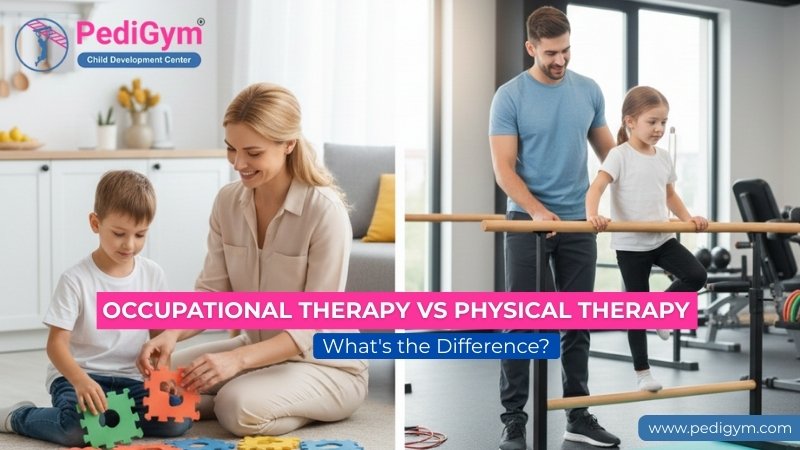
Occupational Therapy and Physical Therapy are both important for supporting a child’s development, but they focus on different aspects of growth. Occupational Therapy (OT) helps children develop the skills needed for everyday activities, such as fine motor control, hand–eye coordination, sensory processing, attention, and self-care tasks like dressing, feeding, and writing. The goal of OT is to improve functional independence and help children participate more confidently in daily routines at home and school.
Physical Therapy (PT) focuses on improving movement, strength, and overall physical abilities. It supports the development of gross motor skills such as sitting, standing, walking, balance, posture, and muscle coordination. While OT concentrates on how children perform daily activities, PT addresses how they move their bodies—often working together to support well-rounded physical and functional development.
What Is Occupational Therapy?
Occupational Therapy (OT) focuses on helping children perform everyday activities, also known as occupations, that are essential for their age, development, and environment. These activities include play, learning, self-care, and social participation. The primary goal of occupational therapy is to help children become more independent, confident, and functional in their daily lives. Rather than focusing only on physical movement, occupational therapy addresses the interaction between a child’s physical abilities, sensory processing, emotional regulation, and cognitive skills to support meaningful participation at home, school, and in social settings.
1. Fine Motor Skills
Fine motor skills involve the coordinated use of small muscles in the hands and fingers. These skills are essential for school readiness and independence. Occupational therapy helps children with:
- Grasping and releasing objects effectively
- Developing proper pencil grip and hand control
- Using crayons, pencils, scissors, and classroom tools
- Improving hand strength, dexterity, and finger coordination
- Enhancing bilateral coordination (using both hands together)
Strong fine motor skills allow children to write, draw, eat, and manage daily tasks with confidence.
2. Sensory Processing and Integration
Sensory processing refers to how the brain receives, organizes, and responds to sensory information from the environment. Occupational therapy supports children who have difficulty with:
- Sensitivity or under-responsiveness to sound, touch, movement, or light
- Poor body awareness and difficulty understanding where their body is in space
- Challenges with balance, coordination, and motor planning
- Emotional overload, meltdowns, or avoidance behaviors
Through sensory integration strategies, occupational therapy helps children:
- Stay calm, focused, and regulated
- Improve attention and learning readiness
- Respond appropriately to sensory input during daily activities
3. Self-Care and Daily Living Skills
Self-care skills are essential for independence and confidence. Occupational therapy teaches children the skills needed to manage daily routines. Key self-care areas include:
- Feeding skills, chewing, and utensil use
- Dressing tasks such as buttoning, zipping, and tying shoelaces
- Grooming activities like brushing teeth and washing hands
- Toileting readiness and independence
Occupational therapy breaks down these tasks into manageable steps, helping children master them at their own pace.
4. Cognitive and Behavioral Skills
Occupational therapy also addresses the cognitive and behavioral components that influence daily functioning. OT helps children improve:
- Attention span and task completion
- Planning, organizing, and problem-solving skills
- Emotional regulation and coping strategies
- Ability to follow routines, rules, and instructions
- Social interaction and play skills
These skills are critical for classroom participation and positive peer relationships.
What Is Physical Therapy?
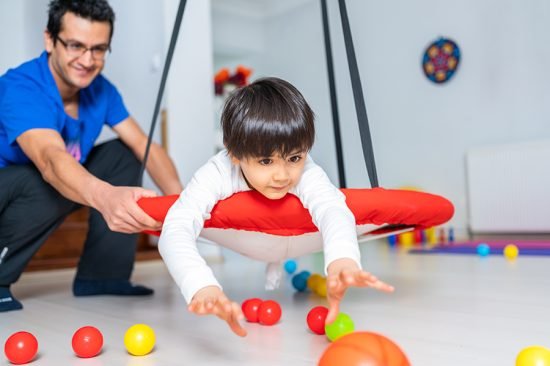
Physical Therapy (PT) focuses on improving a child’s movement quality, strength, posture, balance, and overall mobility. The goal of pediatric physical therapy is to help children move more efficiently, safely, and confidently so they can actively participate in daily activities, play, and school routines. Physical therapy addresses how a child’s muscles, joints, and nervous system work together to support functional movement and prevent secondary complications.
1. Gross Motor Development
Gross motor skills involve large muscle movements required for mobility and play. Physical therapy supports children in developing age-appropriate motor milestones such as:
- Rolling, sitting, crawling, and standing
- Walking, running, and jumping
- Climbing, stair navigation, and playground activities
Improving these skills allows children to explore their environment and build independence.
2. Strength and Endurance
Muscle strength and endurance are essential for sustained movement and posture control. Physical therapy helps children with:
- Muscle activation and controlled movement patterns
- Core strength for trunk stability and balance
- Endurance needed for daily routines and play activities
Enhanced strength helps reduce fatigue and improves movement efficiency.
3. Balance and Coordination
Balance and coordination are necessary for safe and confident movement. Physical therapy focuses on:
- Postural control during sitting, standing, and walking
- Coordination between both sides of the body
- Fall prevention and safe transitions between movements
These skills support smooth, controlled movement and reduce the risk of injury.
4. Posture and Alignment
Proper posture and alignment are crucial for long-term musculoskeletal health. Physical therapy addresses:
- Body positioning during movement and rest
- Joint alignment and weight-bearing patterns
- Gait training to improve walking efficiency and symmetry
Correcting posture early helps prevent pain and movement limitations later in life.
How Physical Therapy Supports Functional Participation?
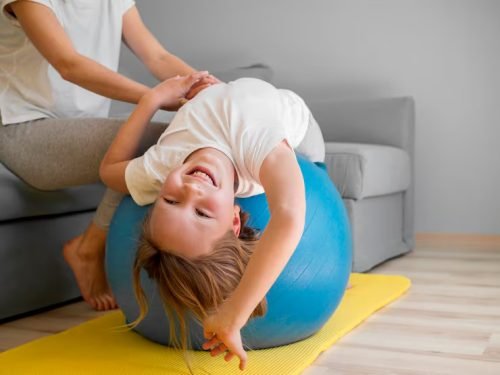
Physical therapy helps children move with greater control, strength, and safety, enabling them to take part in play, school, and everyday activities with confidence. By improving movement patterns and physical endurance, physical therapy lays the foundation for long-term mobility and independence.
At PediGYM, physical therapy sessions are engaging, goal-oriented, and designed to support meaningful functional outcomes for every child.
Differences Between Occupational Therapy and Physical Therapy
Occupational Therapy (OT) and Physical Therapy (PT) are both crucial for a child’s development, but they focus on different aspects of growth and function. Understanding their differences helps parents make informed decisions about their child’s care.
- Focus and Purpose
- Occupational Therapy: OT focuses on helping children perform meaningful daily activities, also called “occupations,” that are important for their age and environment. This includes tasks such as feeding, dressing, writing, grooming, and participating in school or play.
- Physical Therapy: PT emphasizes improving a child’s physical movement, strength, balance, posture, and mobility. It helps children move efficiently, safely, and confidently in their environment.
- Skills and Areas Addressed
- Occupational Therapy: Fine motor skills (like grasping and using pencils), sensory processing, self-care routines, cognitive skills, emotional regulation, and behavioral skills.
- Physical Therapy: Gross motor skills (like crawling, walking, running, and climbing), muscle strength, endurance, coordination, balance, posture, and overall body alignment.
- Goals
- Occupational Therapy: The main goal is functional independence. OT helps children manage daily life tasks, improving participation at home, school, and social settings.
- Physical Therapy: The primary goal is to enhance physical ability and movement efficiency, ensuring children can move safely and participate fully in physical activities.
- Approach and Methods
- Occupational Therapy: Uses task practice, adaptive tools, sensory activities, fine motor exercises, and strategies to manage routines and behaviors.
- Physical Therapy: Uses exercises, stretches, gait training, balance and coordination activities, and posture correction to strengthen muscles and improve mobility.
- Conditions Commonly Treated
- Occupational Therapy: Autism Spectrum Disorder (ASD), ADHD, sensory processing disorders, developmental delays, learning difficulties, and coordination challenges.
- Physical Therapy: Cerebral palsy, Erb’s palsy, delayed motor milestones, muscle weakness, hypotonia, and orthopedic or neurological conditions.
6. How They Work Together
OT and PT often complement each other. For example, PT might help a child develop core strength and balance, which then allows OT to help the same child feed themselves, write, or engage in school activities more independently. Together, these therapies provide a holistic approach that supports both physical development and functional independence.
When Does a Child Need Both OT and PT?
Many children benefit from a combined approach of Occupational Therapy (OT) and Physical Therapy (PT), as the two therapies complement each other to support holistic development. While PT focuses on improving physical movement, strength, balance, and posture, OT helps children apply these physical gains to daily life activities, ensuring they become independent and confident in their routines.
For example:
- A child may work with a PT to strengthen leg muscles and improve walking stability, balance, and coordination.
- Simultaneously, an OT can help the child develop hand coordination for dressing, feeding, writing, and participating effectively in school and play activities.
Children with conditions such as cerebral palsy, developmental delays, Erb’s palsy, neurological disorders, or sensory processing challenges often require both therapies to address physical and functional needs together. A combined approach ensures that improvements in strength, posture, and motor skills directly translate into better daily participation, independence, and confidence.
Therapy Techniques Used at PediGYM
At PediGYM, we use evidence-based pediatric therapy techniques designed to support each child’s unique developmental needs. Our approach combines therapeutic exercises with fun, engaging activities to make therapy effective and enjoyable. Some of the key techniques we use include:
- Play-Based Therapeutic Activities: Incorporating games, toys, and creative tasks to improve motor skills, coordination, and social interaction while keeping children engaged and motivated.
- Sensory Integration Strategies: Techniques that help children process and respond to sensory information, improving attention, self-regulation, and overall functional performance.
- Functional Task Training: Practicing real-life activities such as feeding, dressing, writing, and classroom tasks to promote independence and daily life skills.
- Strength and Balance Exercises: Activities designed to enhance muscle strength, stability, coordination, and overall gross motor development.
- Parent-Guided Home Programs: Custom home exercises and routines that allow parents to reinforce therapy progress in a familiar environment, ensuring consistency and faster improvement.
Every therapy plan at PediGYM is personalized based on the child’s age, diagnosis, abilities, and developmental goals. By combining these techniques, we ensure children not only improve their skills but also gain confidence, independence, and the ability to participate fully in daily life.
How to Choose the Right Therapy for Your Child?
Deciding whether your child needs Occupational Therapy (OT), Physical Therapy (PT), or both requires careful evaluation of their developmental needs. The right therapy depends on several factors:
- Developmental assessment results
- Functional challenges
- Daily activity limitations
- Professional therapist recommendations
A comprehensive pediatric evaluation helps determine whether Occupational Therapy, Physical Therapy, or both are needed.
Final Thoughts
Understanding the difference between Occupational Therapy and Physical Therapy allows parents to make informed decisions about their child’s developmental journey. While Physical Therapy improves movement and strength, Occupational Therapy builds independence and daily living skills. Together, they create a strong foundation for lifelong functional success.
If you’re unsure which therapy your child needs, PediGYM offers professional evaluations and individualized pediatric therapy programs to guide your child toward confident growth and independence.

Dr. Nitin, Founder of PediGym Child Development Center, is a dedicated pediatric therapy expert and DMI Level C Certified Therapist leading structured, evidence-based therapy programs in Faridabad and Gurgaon. Under his guidance, PediGym provides comprehensive pediatric rehabilitation focused on improving motor skills, coordination, sensory processing, speech clarity, and functional independence through personalized intervention plans.