
Understanding the difference between disability and disorder in children is important for parents, educators, and caregivers, as both terms describe challenges that can affect a child’s development but in different ways. A disability refers to a long-term limitation in physical, intellectual, sensory integration, or developmental delay functioning that impacts a child’s ability to perform everyday activities such as learning, communication, mobility, or self-care. Disabilities are often lifelong and may be present from birth or acquired early in life, requiring ongoing support, accommodations, and therapeutic intervention.
Understanding Child Development and Functioning
Child development is a continuous and complex process that unfolds from infancy through adolescence. It involves the coordinated growth of multiple developmental systems that work together to help a child learn, interact, and function independently. These include:
- Brain maturation, which supports thinking, attention, memory, and emotional regulation
- Physical growth and movement, including posture, balance, coordination, and motor skills
- Sensory processing, which allows children to interpret and respond appropriately to sensory information from their environment
- Language acquisition, covering both understanding (receptive language) and expression (expressive language)
- Emotional and social development, which influences behavior, relationships, and self-regulation
- Adaptive and self-care skills, such as feeding, dressing, toileting, and daily routines
When development does not follow expected patterns, a child may be identified with a disorder or, in cases of significant functional limitation, a disability.
What Is Disability in Children?
A disability is a condition that results in long-term or permanent functional limitations that affect a child’s ability to independently perform daily life activities. These limitations may be present from birth or may develop due to illness, injury, or neurological conditions, and they typically require ongoing support throughout childhood and beyond.
Rather than focusing on what a child cannot do, the approach to disability emphasizes strengths, functional abilities, and participation in everyday life.
Core Characteristics of Disability:
- Persistent across time, often lasting throughout life
- Impacts major life activities, such as movement, communication, learning, or self-care
- Requires ongoing support or accommodations, including therapy, assistive devices, or environmental modifications
- Emphasis on ability enhancement rather than cure, aiming to maximize independence and quality of life
Types of Childhood Disabilities:
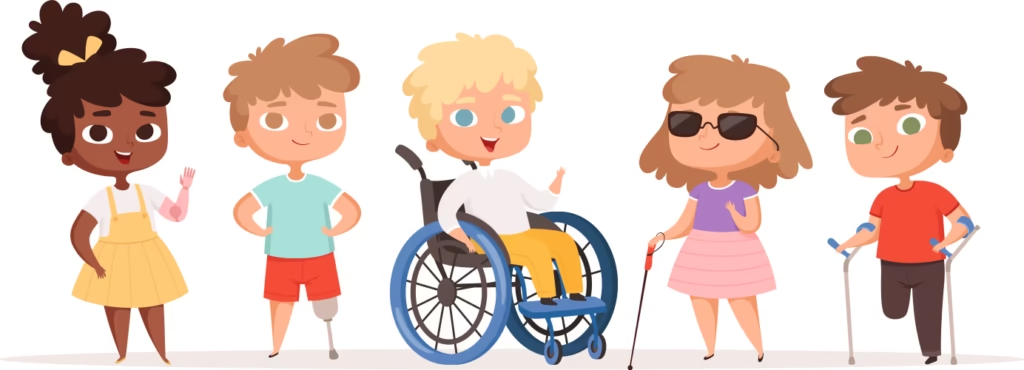
- Physical disabilities, such as cerebral palsy, muscular disorders, or neuromotor conditions
- Intellectual disabilities, affecting cognitive functioning and adaptive skills
- Sensory disabilities, including vision or hearing impairments
- Multiple disabilities, where more than one area of functioning is affected
Disabilities are often identified based on functional assessment rather than diagnosis alone.
What Is Disorder in Children?
A disorder refers to a condition that disrupts normal developmental, neurological, behavioral, or emotional functioning in children. These conditions often affect how a child processes information, regulates behavior, learns new skills, or interacts with their environment. Disorders may appear early in life or become noticeable as developmental demands increase, such as during school years.
Importantly, disorders can present very differently in each child and may change over time. With early identification, consistent therapy, and appropriate support, many children show meaningful improvement and are able to function independently.
Core Characteristics of Disorder:
- Developmental delays or atypical patterns, where skills emerge differently than expected
- Variable severity, ranging from mild challenges to more significant difficulties
- Potential for significant improvement, especially with early intervention
- Does not always limit independence permanently, particularly when addressed early
Common Childhood Disorders:
- Autism Spectrum Disorder (ASD), affecting communication, social interaction, and behavior
- Attention Deficit Hyperactivity Disorder (ADHD), impacting attention, impulse control, and activity levels
- Sensory Processing Disorder, influencing how sensory information is received and responded to
- Speech disorders, affecting communication and comprehension
- Learning disorders, impacting reading, writing, or mathematical skills
Children with disorders often display uneven skill development, performing well in some areas while struggling in others.

What Is the Difference Between Disability and Disorder?
The difference between a disability and a disorder becomes clearer when we look at how each condition affects a child’s development, functioning, and response to intervention.
Nature of the condition
A disability involves a long-term or permanent limitation in physical, cognitive, sensory, or functional abilities.
A disorder affects developmental, neurological, behavioral, or emotional functioning and may not always result in permanent limitations.
Duration and course
Disabilities are usually lifelong, though functional abilities can improve with therapy and support.
Disorders may change over time, and many children show improvement as they mature and receive intervention.
Level of independence
Children with disabilities often require ongoing assistance, adaptations, or assistive devices for daily activities.
Children with disorders often achieve greater independence, especially with early and consistent therapy.
Response to therapy
In disabilities, therapy focuses on adaptive improvement, helping children learn alternative strategies to perform tasks.
In disorders, therapy targets developmental improvement, such as improving attention, communication, behavior, or sensory regulation.
Goal of intervention
The primary goal in disability-focused intervention is functional participation, independence, and quality of life.
The main goal in disorder-focused intervention is skill acquisition, self-regulation, and developmental progress.
Impact on daily life
Disabilities often affect multiple areas of daily living, including mobility, self-care, and communication.
Disorders may affect specific areas, such as learning, behavior, or social interaction, without limiting all daily activities.
Causes and Risk Factors
Understanding the causes and risk factors of disabilities and disorders helps in early identification, prevention of secondary complications, and timely intervention.
Causes of Disabilities:
- Genetic conditions, where inherited or spontaneous genetic changes affect physical, cognitive, or sensory development
- Birth injuries or complications, such as lack of oxygen, premature birth, or difficult deliveries that impact brain or body function
- Neurological damage, resulting from infections, trauma, or developmental brain abnormalities
- Chronic medical conditions, including long-term illnesses that interfere with normal growth and functional development
These causes often lead to persistent functional limitations, requiring ongoing support and rehabilitation.
Causes of Disorders:
- Neurodevelopmental differences, where the brain develops or processes information differently
- Genetic and environmental factors, including family history and environmental exposures
- Prenatal or early life influences, such as maternal health, nutrition, infections, or early childhood experiences
Early identification of risk factors allows families and professionals to begin intervention at the right time, improving developmental outcomes and supporting a child’s long-term growth and independence.
Diagnostic and Assessment Process
The identification of disabilities and disorders in children involves a comprehensive and structured evaluation process. This ensures that concerns are accurately understood and that intervention plans are tailored to the child’s specific needs.
- Developmental screening, which helps detect early signs of delay by comparing a child’s skills with age-appropriate milestones
- Clinical observation, where healthcare professionals and therapists observe the child’s movement, behavior, communication, and interaction in different settings
- Functional assessment, focusing on how the child performs daily activities such as mobility, self-care, play, learning, and social participation
- Multidisciplinary evaluation, involving professionals such as pediatricians, therapists, psychologists, and educators to gain a holistic understanding of the child development
Diagnosis alone does not determine outcome functional ability and intervention quality play key roles.
Educational and Social Impact
Disabilities and disorders can significantly influence a child’s educational experience and social participation, making appropriate support within school and community settings essential.
In school environments:
- Children with disabilities may require special education services, individualized education plans (IEPs), classroom accommodations, assistive devices, or modified learning approaches to support their functional and academic needs.
- Children with disorders may benefit from behavioral strategies, structured routines, learning support, or therapy-based interventions integrated into the classroom to help with attention, communication, sensory regulation, or learning challenges.
Social participation may also be affected, emphasizing the need for inclusive practices.
Conclusion
Understanding the difference between disability and disorder in children is essential for making informed decisions about a child’s care, education, and long-term development. While a disability involves long-term functional limitations that may require ongoing support, a disorder affects developmental or behavioral functioning and often shows improvement with early and consistent intervention.
Recognizing these differences allows parents, educators, and professionals to choose the right therapeutic approach, set realistic goals, and provide appropriate educational and social support. Most importantly, early identification, timely intervention, and strong family involvement play a vital role in helping every child build skills, confidence, and independence.

Dr. Nitin, Founder of PediGym Child Development Center, is a dedicated pediatric therapy expert and DMI Level C Certified Therapist leading structured, evidence-based therapy programs in Faridabad and Gurgaon. Under his guidance, PediGym provides comprehensive pediatric rehabilitation focused on improving motor skills, coordination, sensory processing, speech clarity, and functional independence through personalized intervention plans.