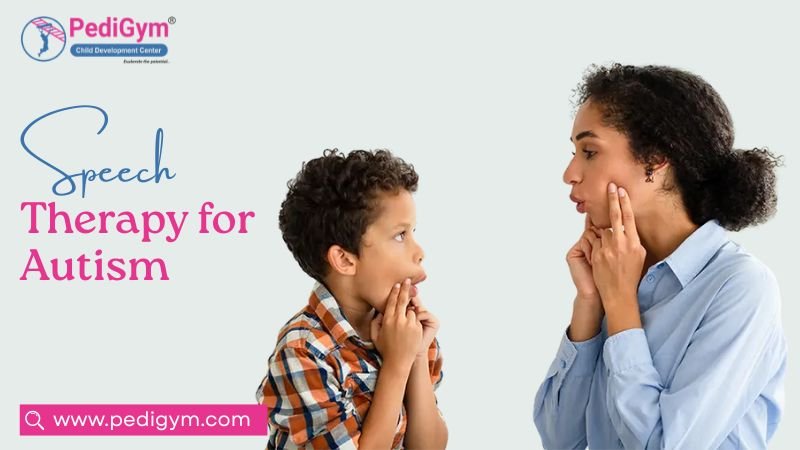
Speech therapy for autism helps children develop the communication skills they need to express their thoughts, understand others, and participate more confidently in everyday life. Therapy is not only about improving speech – it also focuses on understanding language, using gestures, developing social communication, and finding alternative ways to communicate when spoken language is limited. Early assessment and individualized intervention can make a meaningful difference in a child’s development.
Key Takeaways For Speech Therapy Supports
✔ Speech therapy supports both verbal and non-verbal communication.
✔ Every child with autism has unique communication strengths and challenges.
✔ Early intervention can improve language, social interaction, and daily independence.
✔ Therapy goals should focus on functional communication, not just speaking clearly.
✔ Parents play an essential role by reinforcing communication strategies during everyday routines.
✔ Individualized therapy programs and regular progress monitoring lead to better long-term outcomes.
Speech Therapy for Autism: More Than Learning to Speak
Receiving an autism diagnosis often brings many questions for families. One of the most common concerns is communication. Some children may speak later than expected, while others use only a few words, repeat phrases without understanding their meaning, or find it difficult to start and maintain conversations. These differences can make everyday activities—such as asking for help, playing with peers, or expressing emotions—more challenging.
Speech therapy for autism is designed to help children communicate in ways that are meaningful for their individual abilities and daily lives. While many people associate speech therapy with pronunciation, its role is much broader. A speech-language therapist works on helping children understand language, express themselves, develop social communication, and use alternative communication methods when needed.
At PediGYM Child Development Center, we believe communication is about helping every child connect with the people around them. Our therapists begin by understanding each child’s strengths, interests, sensory preferences, and developmental profile before creating personalized therapy goals. This child-centred approach allows therapy to become practical, engaging, and relevant to everyday situations rather than focusing only on isolated speech exercises. This reflects our commitment to individualized, evidence-based pediatric care and multidisciplinary collaboration.
Rather than comparing a child to developmental milestones alone, we focus on helping them communicate more effectively at home, in school, and within their community. Every meaningful interaction—whether it’s making a request, answering a question, sharing an idea, or enjoying a conversation—is a step toward greater confidence and independence.
What Is Speech Therapy for Autism?
Speech therapy for autism is a specialized intervention provided by qualified speech-language therapists to improve communication, language, and social interaction skills in children with Autism Spectrum Disorder (ASD). Therapy is individualized because no two children on the autism spectrum communicate in exactly the same way.
Depending on a child’s needs, therapy may focus on:
- Developing first words or expanding vocabulary.
- Improving understanding of spoken language.
- Encouraging meaningful two-way communication.
- Building conversation and social interaction skills.
- Improving speech clarity and articulation.
- Teaching play-based communication.
- Supporting non-verbal children through Augmentative and Alternative Communication (AAC), visual supports, gestures, or picture-based systems.
- Helping children communicate confidently in everyday environments such as home, school, and the community.
An important goal of speech therapy for autism is functional communication. Instead of teaching children to memorize words or repeat sentences, therapy helps them communicate with purpose—whether that means asking for a favourite toy, expressing discomfort, sharing excitement, or participating in classroom activities.
Because communication challenges vary widely among children with autism, therapy plans should be regularly reviewed and adjusted as the child’s skills develop. Personalized goals are far more effective than a one-size-fits-all program.
- Building functional communication skills.
- Improving speech clarity and pronunciation.
- Enhancing understanding of spoken language.
- Encouraging meaningful social interaction.
- Supporting alternative communication methods when verbal speech is limited.
A qualified speech therapy centre designs therapy plans based on the child’s age, abilities, challenges, and daily communication needs.
Does Every Child With Autism Need Speech Therapy?
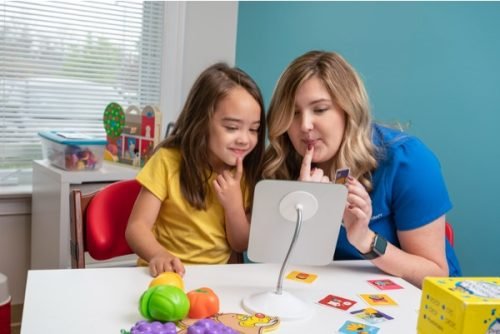
Not every child with autism has the same communication profile, but many benefit from an evaluation by a speech-language therapist. Some children develop spoken language but struggle with conversation, understanding social cues, or interpreting emotions. Others may communicate primarily through gestures, pictures, or communication devices.
A professional assessment helps identify the child’s current communication strengths, challenges, and learning style. Therapy recommendations are then based on individual needs rather than diagnosis alone.
Speech therapy may be recommended if a child:
- Speaks very few words for their age.
- Does not respond consistently when their name is called.
- Has difficulty expressing wants or needs.
- Frequently repeats words or phrases without using them meaningfully.
- Finds it difficult to understand simple instructions.
- Avoids interaction with family members or peers.
- Has unclear speech that is difficult to understand.
- Shows frustration because they cannot communicate effectively.
- Struggles with turn-taking or maintaining conversations.
Early assessment allows families to understand what support their child needs and helps therapists create realistic, measurable communication goals.
Signs Your Child May Benefit From Speech Therapy
Every child develops at their own pace, but certain communication differences may indicate that a professional evaluation is helpful. Seeking advice early does not automatically mean a child has autism or another developmental condition. Instead, it provides an opportunity to identify strengths, address challenges, and begin appropriate support if needed.
Parents may consider an assessment if they notice that their child:
- Uses very limited words or has delayed speech development.
- Relies mainly on gestures instead of spoken communication.
- Repeats words or phrases without understanding their meaning.
- Rarely initiates communication with others.
- Has difficulty following simple instructions.
- Finds it challenging to make eye contact naturally during interaction.
- Appears frustrated when trying to communicate.
- Has trouble playing or communicating with other children.
- Does not ask questions or share interests with family members.
- Shows difficulty understanding everyday conversations.
It’s important to remember that communication involves much more than spoken language. Children may communicate through facial expressions, body language, gestures, pictures, signs, or communication devices. A comprehensive speech-language assessment looks at all of these skills to develop a therapy plan that supports the child’s overall communication- not just speech.
How Does Speech Therapy Help Children with Autism?
Speech therapy helps children with autism communicate better in their own way. Some children learn to use words, while others communicate through gestures, pictures, or communication devices. The goal of speech therapy is not just to improve speech—it is to help children express their needs, understand others, build relationships, and become more confident in everyday life.
Since every child is different, speech therapy is planned according to each child’s communication skills, age, and learning needs. At PediGYM, our therapists create personalised therapy plans that focus on practical communication skills children can use at home, school, and in social situations. Progress is reviewed regularly so therapy continues to meet the child’s changing needs.
1. Helps Children Express Their Needs
One of the first goals of speech therapy is to help children communicate what they want and need. Instead of becoming frustrated, children learn different ways to express themselves. Depending on their abilities, they may use spoken words, gestures, pictures, or communication devices.
As communication improves, children become more confident in asking for food, toys, help, or a favourite activity. They also learn to share their feelings, answer simple questions, and make choices during everyday routines.
2. Improves Understanding of Language
Communication is not only about speaking—it is also about understanding what others say. Some children with autism may find it difficult to follow instructions or understand questions. Speech therapy helps children understand simple words, everyday conversations, and daily routines more easily.
As their understanding improves, children become better at following instructions, responding to questions, and taking part in activities at home, school, and during play.
3. Builds Social Communication Skills
Speech therapy also teaches children how to communicate with other people. Many children with autism know words but find it difficult to start conversations, take turns while talking, or understand how to interact with others.
Through structured activities and play, children learn to greet people, wait for their turn, listen to others, answer questions, and enjoy conversations. These skills help them build friendships and feel more confident in social situations.
4. Makes Speech Clearer
Some children know what they want to say but find it difficult for others to understand their speech. Speech therapy helps improve the way children pronounce words and speak more clearly.
Therapists use fun activities, games, and speech exercises to help children practise sounds, words, and short sentences. As speech becomes clearer, children often feel more confident talking with family members, teachers, and friends.
5. Supports Children Who Do Not Speak Yet
Speech therapy is helpful even if a child is not speaking or uses very few words. Therapists introduce different ways for children to communicate so they can express their thoughts and needs without feeling frustrated.
This may include using picture cards, simple signs, communication boards, or speech-generating devices. These tools do not stop children from learning to speak. Instead, they help children communicate while continuing to develop their speech and language skills.
What Happens During the First Speech Assessment at PediGYM?
The first speech assessment is designed to understand how your child communicates, not to test them. There are no exams or right and wrong answers. Our therapists create a relaxed and child-friendly environment so children feel comfortable while playing and interacting.
During the assessment, the therapist observes how your child communicates naturally, understands language, responds to people, and interacts during play. Parents are also encouraged to share their observations because they know their child’s strengths, daily challenges, and communication habits better than anyone else. This information helps us create a personalised therapy plan that matches your child’s individual needs.
During the assessment, the therapist may look at:
Area | What We Observe |
Speaking Skills | Whether your child uses words, short sentences, gestures, or other ways to communicate. |
Understanding Language | How well your child understands simple instructions, questions, and everyday conversations. |
Play Skills | How your child plays with toys, shares attention, takes turns, and interacts during play. |
Social Interaction | How your child responds to their name, communicates with family members, expresses emotions, and interacts with others. |
After the assessment, our therapists explain the findings in simple language and discuss the next steps with parents. If speech therapy is recommended, we create a personalised plan with clear goals and regularly review your child’s progress to ensure therapy continues to meet their needs.
What Techniques Are Used in Speech Therapy for Autism?
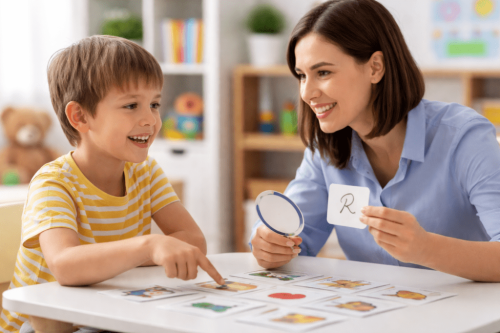
Speech therapy uses different techniques to help children improve their communication skills. Since every child with autism learns differently, speech therapists choose activities and teaching methods based on the child’s age, communication level, interests, and individual needs. The goal is to make learning enjoyable while helping children use communication confidently in everyday life.
Some of the most commonly used speech therapy techniques include:
1. Play-Based Therapy
Play is one of the best ways for children to learn. Instead of sitting at a table for long periods, speech therapists use toys, games, puzzles, and pretend play to encourage communication. While children are having fun, they naturally learn to ask for things, answer questions, take turns, and interact with others. This makes learning feel enjoyable rather than stressful.
2. Learning Through Everyday Activities
Children learn language more easily when they practise it during everyday routines. Speech therapists encourage communication during activities such as eating, reading, dressing, or playing. For example, snack time becomes an opportunity to ask for food, story time encourages children to answer simple questions, and playtime helps them learn new words and conversations. Practising language in real-life situations makes it easier for children to use these skills at home, school, and in the community.
3. Visual Supports
Many children with autism understand pictures better than spoken words. Speech therapists often use visual supports to make communication easier and reduce confusion. These may include picture cards, visual schedules, communication boards, emotion charts, or simple daily routine charts. Visual supports help children understand instructions, follow routines, and express themselves more confidently.
4. Learning by Watching and Copying
Children often learn new words and sentences by watching others. During therapy, the speech therapist speaks clearly and models the correct language instead of repeatedly correcting the child. For example, if a child says, “Car,” the therapist might respond, “Yes, the red car is going fast.” This naturally introduces new words and longer sentences without making the child feel pressured.
5. Alternative Ways to Communicate (AAC)
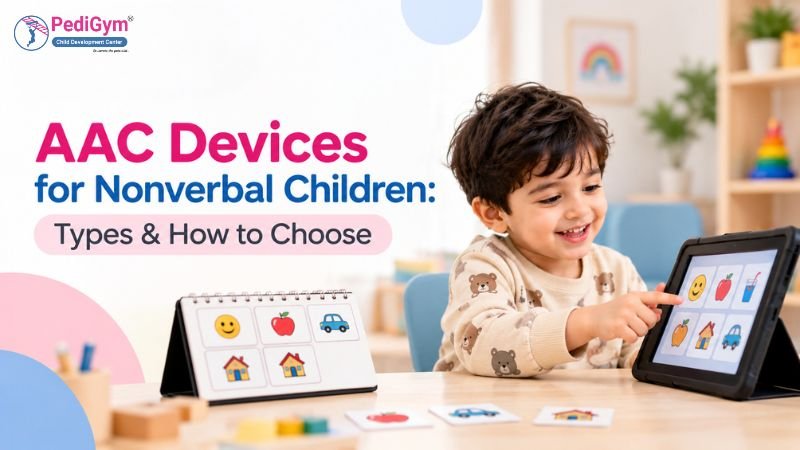
Not every child communicates using spoken words, and that’s okay. When a child has limited or no speech, speech therapists may introduce Augmentative and Alternative Communication (AAC) to help them express their thoughts and needs. AAC can include picture exchange cards (PECS), communication books, communication boards, or speech-generating devices. These tools give children a reliable way to communicate while continuing to support their speech and language development. Research also shows that using AAC does not stop children from learning to speak. Instead, it often reduces frustration and encourages meaningful communication.
Choosing the Right Technique for Every Child
There is no single speech therapy technique that works for every child with autism. The most effective therapy plan is one that is personalised to the child’s strengths, challenges, and communication goals. At PediGYM, our speech therapists regularly assess each child’s progress and adjust therapy activities as their communication skills develop. This personalised approach helps children build practical communication skills that they can use confidently in everyday situations.
How Does Speech Therapy Change as Children Grow?
Speech therapy changes as your child grows because their communication needs change with age. As children learn new skills, the therapy goals also change to help them communicate better at home, school, and in everyday life.
Age Group | What Speech Therapy Focuses On |
Toddlers (1–3 Years) | Helping children say their first words, use gestures to communicate, respond to their name, copy simple sounds and actions, and enjoy communicating through play. |
Preschool Children (3–5 Years) | Building vocabulary, speaking in short sentences, following simple instructions, asking for what they need, answering easy questions, and learning to communicate while playing with others. |
School-Age Children (5–12 Years) | Improving conversations, telling simple stories, understanding classroom instructions, making friends, expressing thoughts clearly, and communicating with confidence at school and home. |
Teenagers (13+ Years) | Developing everyday communication skills, expressing opinions, building friendships, solving everyday problems through conversation, and becoming more confident and independent in daily life. |
Every child learns at their own pace. Some children may reach these goals earlier, while others need more time and support. At PediGYM, speech therapy goals are personalised according to each child’s communication skills and are updated regularly as they continue to make progress.
- Faster development of speech and language skills, allowing children to communicate their needs more effectively
- Improved social engagement and interaction, helping children connect with peers and caregivers
- Better readiness for school and learning environments, including improved attention, understanding, and classroom participation
- Increased independence in daily activities, such as following instructions, expressing choices, and managing routines
Families seeking reliable speech therapy in Faridabad are encouraged to begin therapy as soon as communication delays or concerns are noticed. Early action can make a lasting and positive difference in a child’s overall development.
How Long Does Speech Therapy for Autism Take?
There is no fixed timeline for speech therapy because every child learns and progresses at their own pace. Some children may start showing small improvements within a few weeks, while others may need several months or longer to develop new communication skills. The important thing is to focus on steady progress rather than expecting immediate results.
The time it takes to see improvement depends on several factors, including your child’s age, current communication skills, the type of support they need, how regularly they attend therapy, and how often communication strategies are practised at home. Children usually make the best progress when parents, therapists, and teachers work together to support the same communication goals.
Instead of looking only for big changes, pay attention to small milestones that show your child is moving in the right direction. These may include:
- Asking for help more often.
- Using new words or gestures to communicate.
- Following simple instructions more consistently.
- Joining conversations or play activities with others.
- Showing less frustration while expressing their needs.
- Responding better during everyday interactions.
Every small achievement is an important step towards stronger communication skills. With regular speech therapy for autism, family support, and consistent practice, many children continue to build confidence and become more independent in communicating over time.
10 Simple Speech Therapy Activities Parents Can Practice at Home
Supporting your child’s communication doesn’t stop after a therapy session. Everyday activities at home can create natural opportunities for children to practise the skills they are learning during speech therapy for autism. The goal isn’t to teach perfect speech but to encourage your child to communicate more confidently in daily life. Here are ten simple activities that parents can easily include in their routine.
1. Offer Simple Choices
Giving your child simple choices encourages them to communicate instead of relying on you to guess what they want. For example, ask, “Would you like an apple or a banana?” or “Do you want the red ball or the blue ball?” Even if your child responds by pointing, using a gesture, or saying a single word, they are learning that communication helps them express their needs. Giving them a few seconds to respond also builds confidence and encourages independent communication.
2. Talk During Everyday Routines
Daily routines are one of the easiest ways to build language skills. While getting dressed, preparing meals, bathing, or cleaning up toys, describe what you are doing using short and simple sentences. For example, say, “Let’s wash your hands,” or “Your shoes are blue.” Hearing familiar words in real-life situations helps children understand language more easily and gradually increases their vocabulary.
3. Read Picture Books Together
Reading picture books is a simple way to improve your child’s language and communication skills. Choose books with large, colourful pictures and encourage your child to look, point, and respond. Instead of reading every page without stopping, ask simple questions like, “Where is the dog?” or “What is the boy doing?” These small conversations help develop listening skills, vocabulary, and early sentence building while making reading enjoyable.
4. Play Interactive Games
Children often communicate more naturally while playing than during structured learning activities. Games such as rolling a ball, building blocks, pretend cooking, or completing simple puzzles encourage children to request objects, take turns, and respond to others. Play also creates opportunities to introduce new words and practise social interaction in a relaxed and enjoyable environment.
5. Sing Songs With Actions
Songs that include simple actions can make learning language more engaging. Nursery rhymes such as If You’re Happy and You Know It or Wheels on the Bus encourage children to copy actions, recognise familiar words, and join in through movement. Many children who hesitate to speak during conversation are more willing to participate when music is involved, making songs a valuable communication activity.
6. Give Your Child Time to Respond
Children with autism may need a little extra time to understand what they hear and decide how to respond. After asking a question, avoid repeating it immediately. Instead, wait quietly for a few seconds and allow your child to process the information. This simple habit reduces pressure and gives children the confidence to communicate at their own pace.
7. Use Your Child’s Favourite Interests
Children are more likely to communicate when an activity involves something they genuinely enjoy. Whether your child loves bubbles, toy cars, dinosaurs, trains, or animals, use these interests to encourage conversation and requests. For example, pause before blowing bubbles and wait for your child to ask for “more.” This creates a natural reason for them to communicate instead of simply receiving the toy or activity.
8. Praise Every Communication Attempt
Every effort your child makes to communicate deserves encouragement, whether they use words, gestures, signs, or pictures. Instead of focusing only on correct speech, celebrate every attempt by responding positively. Simple praise like “Great asking!” or “Well done!” motivates children to communicate more often and builds their confidence over time.
9. Reduce Passive Screen Time
Watching videos may expose children to new words, but communication develops best through interaction with people. Replacing some screen time with activities like talking, reading, playing, or storytelling gives children more opportunities to practise listening, understanding, and expressing themselves in meaningful ways.
10. Make Communication Part of Everyday Life
The most effective communication practice doesn’t happen during one dedicated session—it happens throughout the day. Encourage your child to communicate during meals, shopping, bedtime, outdoor play, and family conversations. These everyday experiences help children use language naturally and understand that communication is part of daily life, not just something they do during therapy.
When Does a Child Need More Than Speech Therapy?
Some children make better progress when speech therapy is combined with other therapies. Since communication is closely connected with learning, movement, sensory skills, and behaviour, working on these areas together can help children develop more effectively.
Depending on your child’s needs, a therapist may recommend a combination of therapies.
Occupational Therapy (OT)
Occupational therapy helps children improve skills needed for everyday activities. It can also support attention, sensory processing, hand coordination, and play skills, which are important for learning and communication.
Behaviour Therapy
Behaviour therapy helps children improve attention, learning, emotional control, and positive behaviours. These skills can make it easier for children to participate in speech therapy and communicate with others.
Special Education
Special education helps children develop language, learning, reading, writing, and classroom skills. It also encourages communication with teachers and classmates in everyday school activities.
Parent Training
Parents play an important role in a child’s communication journey. Learning simple speech therapy techniques from your therapist allows you to practise communication during meals, playtime, reading, and other daily routines. Regular practice at home helps children use their new skills more confidently.
Our Approach at PediGYM
At PediGYM, we understand that every child is different. That’s why our speech therapists work closely with occupational therapists, special educators, and parents to create a personalised therapy plan. By working together, we support your child’s overall development and help them build communication skills that can be used confidently at home, school, and in everyday life.
Why Families Choose PediGYM
Choosing the right therapy center is about more than convenience. Families need a team that understands each child’s unique strengths, communicates openly, and involves parents throughout the therapy journey.
At PediGYM Child Development Center, our approach is built around:
- Individualized assessment and therapy planning
- Evidence-informed intervention strategies
- Experienced therapists working with children with developmental needs
- Child-friendly therapy environments that encourage engagement
- Regular progress reviews and goal updates
- Parent education and home-program guidance
- Collaboration between therapists to support the child’s overall development
Rather than focusing only on improving speech, we aim to help children communicate confidently in everyday situations—at home, in school, and within their communities.
Frequently Asked Questions
Can a child with autism improve communication through speech therapy?
Many children develop stronger communication skills through individualized speech therapy. Progress varies depending on the child’s strengths, communication profile, and consistency of intervention.
At what age should speech therapy begin?
Early intervention is recommended whenever communication concerns are identified. However, children, adolescents, and even adults can continue developing communication skills through appropriate therapy.
Is speech therapy only for children who cannot speak?
No. Speech therapy also helps children who speak but struggle with conversation, understanding language, social communication, pronunciation, or expressing ideas effectively.
Will using AAC prevent my child from speaking?
Current research indicates that Augmentative and Alternative Communication (AAC) supports communication development and does not prevent spoken language. For many children, AAC reduces frustration while encouraging meaningful interaction.
How often should my child attend speech therapy?
The frequency depends on the child’s assessment findings, communication goals, and family circumstances. Your speech-language therapist will recommend an individualized therapy plan.
Can parents practice speech therapy at home?
Yes. Parents play a crucial role by creating communication opportunities during daily routines, reading together, playing interactive games, and following guidance provided by their therapist.
Conclusion
Communication is one of the most important life skills a child develops, and every meaningful interaction builds confidence, independence, and stronger relationships. While every child with autism follows a unique developmental journey, timely assessment, individualized intervention, and consistent family involvement can make a lasting difference.
Speech therapy for autism is not simply about teaching children to speak. It is about helping them communicate in ways that allow them to express their needs, share experiences, participate in learning, and connect with the people around them.
At PediGYM Child Development Center, we are committed to providing compassionate, evidence-informed, and child-centered therapy that reflects each child’s unique strengths and goals. By working closely with families, our multidisciplinary team strives to create meaningful communication opportunities that support long-term growth and independence.
Expert Review
Medically Reviewed by Dr. Nitin Gupta
Founder, PediGYM Child Development Center
DMI Level C Certified Therapist
Dr. Nitin Gupta has extensive experience working with children with autism, developmental delays, and communication disorders. Every article published by PediGYM is reviewed to ensure it reflects current clinical knowledge, evidence-based practices, and practical guidance that parents can trust.
References
The information in this guide is based on current clinical recommendations and trusted health organisations, including:

Dr. Nitin, Founder of PediGym Child Development Center, is a dedicated pediatric therapy expert and DMI Level C Certified Therapist leading structured, evidence-based therapy programs in Faridabad and Gurgaon. Under his guidance, PediGym provides comprehensive pediatric rehabilitation focused on improving motor skills, coordination, sensory processing, speech clarity, and functional independence through personalized intervention plans.