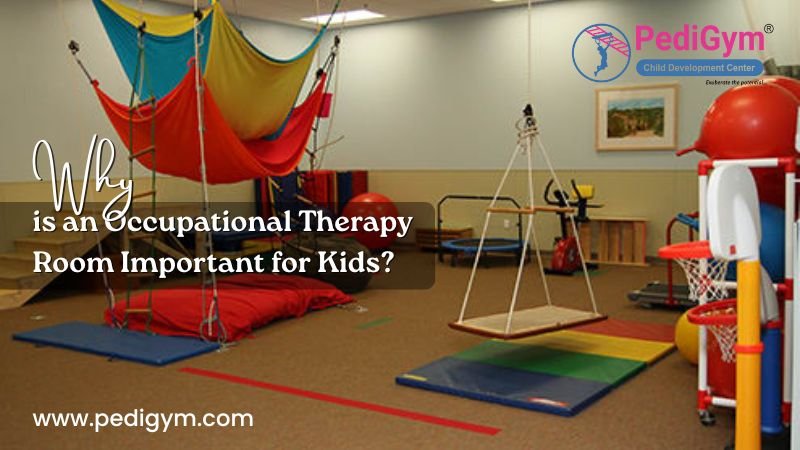
An Occupational Therapy (OT) room is a specially designed therapeutic environment that supports a child’s physical, sensory, cognitive, and emotional development. It is not just a play area, but a structured space where children learn essential life skills through purposeful activities. For children with autism, ADHD, sensory processing issues, developmental delays, learning disabilities, or motor difficulties, an OT room plays a vital role in improving independence and overall functioning.
What Is an Occupational Therapy Room?
An Occupational Therapy (OT) room is a specially structured therapeutic space equipped with scientifically selected tools and equipment that support a child’s overall development. It helps children build and improve:
- Fine motor skills – Hand strength, finger coordination, proper grasp, and writing readiness needed for tasks like coloring, cutting, buttoning, and using school tools.
- Gross motor skills – Balance, posture, body coordination, muscle strength, and endurance required for sitting, walking, running, climbing, and participating in play and sports.
- Sensory processing and regulation – The ability to correctly respond to touch, movement, sound, and body awareness, helping children stay calm, organized, and attentive.
- Attention, concentration, and planning skills – The capacity to focus on tasks, follow instructions, sequence activities, and complete work independently.
- Self-care and daily living abilities – Skills such as dressing, feeding, grooming, and managing classroom routines that promote independence and confidence.
The OT room is designed to be child-friendly, safe, colorful, and highly motivating. With soft equipment, engaging activities, and a structured layout, it creates an environment where children feel comfortable to explore and learn.
Sensory Integration and Regulation
Many children experience difficulty in processing and organizing sensory information such as touch, movement, sound, visual input, and body awareness. When the brain cannot correctly interpret these sensations, it may lead to problems like over-sensitivity, poor attention, restlessness, anxiety, or low activity levels. An Occupational Therapy room provides a controlled and safe environment with sensory-based equipment such as:
- Swings and hammocks for vestibular input to improve balance, coordination, and the ability to regulate movement.
- Textured mats and sensory walls for tactile stimulation, helping children gradually accept and respond appropriately to different touch sensations.
- Crash pads and soft blocks for deep pressure input, which promotes body awareness, muscle relaxation, and a calming effect on the nervous system.
- Balance boards and therapy balls for enhancing posture, core strength, and spatial orientation.
Development of Gross Motor Skills
Gross motor development is essential for maintaining good posture, walking, running, jumping, climbing, and sitting properly in the classroom. Strong gross motor abilities form the foundation for a child’s overall physical health and active participation in play and learning. An Occupational Therapy room provides a variety of large-movement activities and equipment such as:
- Climbing frames and ladders to build upper- and lower-body strength and improve coordination.
- Obstacle courses to enhance planning, sequencing, and whole-body control.
- Trampolines and balance beams to develop balance, core stability, and postural control.
- Crawling tunnels to improve bilateral coordination, body awareness, and spatial orientation.
These activities help children achieve the following benefits:
- Improved muscle strength and endurance for daily movements.
- Better coordination and balance, leading to smoother and safer mobility.
- Enhanced body control and postural stability for classroom sitting and writing tasks.
- Increased confidence in movement, encouraging active participation in sports, play, and social activities.
Improvement of Fine Motor and Hand Skills
Fine motor skills are crucial for activities such as writing, coloring, cutting with scissors, buttoning clothes, tying laces, and using spoons and forks during meals. These small muscle movements of the hands and fingers are essential for academic performance as well as daily self-care. An Occupational Therapy room offers a variety of structured and play-based activities such as:
- Pegboards and puzzles to improve finger strength, precision, and visual-motor coordination.
- Therapy putty and hand exercises to build grip strength, finger flexibility, and hand endurance.
- Beading and threading tasks to enhance fine finger control, bilateral coordination, and concentration.
- Pre-writing and drawing stations to support proper pencil control, line formation, and early writing skills.
Through these activities, children are able to:
- Strengthen finger and hand muscles required for functional tasks.
- Improve hand-eye coordination and visual-motor integration.
- Develop a proper and comfortable pencil grip for writing.
- Gain greater independence in self-care tasks such as dressing, feeding, and managing school materials.
Cognitive and Attention Development
Occupational therapy also plays an important role in strengthening a child’s thinking, learning, and executive functioning skills. Structured and goal-oriented activities in the OT room are designed to enhance:
- Attention span and focus, helping children stay engaged in tasks for longer periods.
- Memory and sequencing, allowing them to remember instructions and perform activities in the correct order.
- Problem-solving abilities, which support reasoning, decision-making, and flexible thinking.
- Planning and organization, essential for completing classroom work and daily routines independently.
Through guided play and therapeutic tasks, children learn to follow instructions, sustain attention, and complete activities with greater accuracy and confidence. These improvements directly support academic performance, classroom participation, and overall learning readiness.
Training in Daily Living Skills
One of the most important goals of occupational therapy is to help children become independent in their everyday activities. The OT room is designed to simulate real-life situations and provides specialized practice areas such as:
- Dressing boards for buttons, zippers, and laces to improve hand coordination and self-care skills.
- Feeding practice tools to develop proper grasp, coordination, and oral-motor control for eating.
- Grooming and hygiene stations for activities like brushing, washing hands, and personal care routines.
- Classroom simulation areas to practice sitting posture, using school supplies, and following class routines.
Through regular practice in these settings, children gradually become more independent in:
- Dressing and undressing on their own.
- Eating with proper use of spoons, forks, and cups.
- Managing school materials such as bags, books, and stationery.
- Performing daily personal care tasks with confidence and minimal assistance.
Emotional and Social Skill Development
Through both individual and group-based activities in the Occupational Therapy room, children gradually develop important emotional and social skills that are essential for school and daily life. These activities help children learn:
- Turn-taking and sharing, which encourage patience and respect for others.
- Following rules and routines, supporting better classroom behavior and task completion.
- Managing frustration and emotions, helping children cope with challenges and transitions more calmly.
- Building self-confidence, as children experience success and positive reinforcement during therapy sessions.
Group therapy sessions in the OT room provide opportunities for children to interact with peers in a safe and guided environment. Through cooperative play, structured games, and shared tasks, children improve their communication skills, learn teamwork, and develop positive social relationships, all within a supportive and encouraging setting.
Safe and Structured Therapeutic Environment
An Occupational Therapy room is carefully designed to provide a safe, supportive, and well-organized environment where children can move, play, and learn without fear of injury. Safety is a top priority, and the room is equipped with:
- Padded flooring to reduce the risk of falls and provide cushioning during movement activities.
- Soft play equipment such as foam blocks, crash mats, and therapy cushions to allow safe jumping, climbing, and rolling.
- Proper spacing for movement so children can perform gross motor activities, obstacle courses, and balance tasks comfortably.
- Age-appropriate and child-sized tools that are easy to handle and suitable for each developmental level.
This structured and secure setup allows children to explore their abilities with confidence while occupational therapists guide them through purposeful activities. It ensures that therapy sessions are both effective and enjoyable, helping children work toward their developmental and functional goals in a risk-free and encouraging environment.
Conclusion
An Occupational Therapy room is a powerful developmental space that supports a child’s physical, sensory, emotional, and functional growth. It helps children improve motor skills, regulate sensory responses, enhance learning readiness, and develop independence in daily life. At PediGYM, a well-equipped OT room creates the perfect balance of therapy and play, ensuring holistic development and a strong foundation for a child’s future.

Dr. Nitin, Founder of PediGym Child Development Center, is a dedicated pediatric therapy expert and DMI Level C Certified Therapist leading structured, evidence-based therapy programs in Faridabad and Gurgaon. Under his guidance, PediGym provides comprehensive pediatric rehabilitation focused on improving motor skills, coordination, sensory processing, speech clarity, and functional independence through personalized intervention plans.