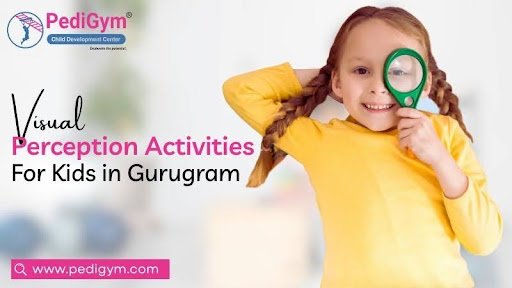
Visual perception is a critical developmental skill that influences how children learn, move, play, and interact with their environment. Many academic and daily life challenges faced by children are not due to poor eyesight, but due to difficulty in processing visual information. At PediGYM, Gurugram, we offer structured and evidence-based visual perception activities for kids, guided by experienced pediatric occupational therapists to support learning, coordination, and independence.
What Is Visual Perception?
Visual perception refers to the brain’s ability to interpret, organize, and make sense of visual information received through the eyes. It is different from visual acuity (clarity of vision). A child may have normal eyesight but still struggle with:
- Recognizing and distinguishing letters and numbers
- Understanding shapes, patterns, and symbols
- Judging distance, depth, and spatial position
- Copying information accurately from the board or books
- Organizing written work on paper, including spacing and alignment
Visual perception plays a key role in learning, movement, and daily functioning. It works closely with attention, motor planning, sensory processing, and cognitive development.
Why Is Visual Perception Important for Children?
Visual perception is essential for a child’s ability to learn, move, play, and function independently. Strong visual perception skills allow children to accurately understand and respond to visual information, which supports success at school and in everyday life.
Academic Skills
Well-developed visual perception helps children with:
- Reading fluently and understanding what they read
- Recognizing and differentiating letters and numbers
- Maintaining proper spacing, alignment, and letter formation in handwriting
- Understanding math concepts such as shapes, patterns, size, and direction
- Copying information accurately from books and classroom boards
These skills form the foundation for academic confidence and classroom performance.
Daily Living Skills
Visual perception also supports independence in daily routines, including:
- Dressing tasks such as buttoning, zipping, and tying shoelaces
- Using utensils correctly while eating
- Organizing school bags, notebooks, and personal belongings
- Navigating their environment safely by judging distance, steps, and obstacles
Strong visual perception enables children to perform these tasks with greater ease and confidence.
Play and Social Skills
Play is a major part of childhood development, and visual perception plays a key role in:
- Participating in board games and sports that require visual tracking and coordination
- Completing puzzles, building blocks, and construction activities
- Following visual cues and instructions during group and classroom activities
- Improving peer interaction and teamwork through structured play
When visual perception skills are well developed, children are better able to engage in play, social interactions, and learning experiences successfully.
Common Visual Perception Difficulties in Children
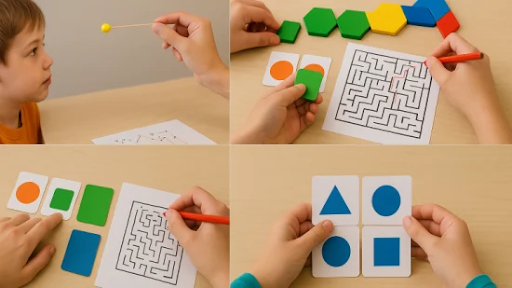
Children with visual perception challenges may show a variety of signs that affect their learning, play, and daily activities. These difficulties are often subtle and may be mistaken for lack of interest or attention, but they are actually related to how the brain processes visual information.
- Frequent letter reversals (b/d, 6/9)
- Poor copying skills from books or boards
- Difficulty finding objects in cluttered spaces
- Avoidance of drawing, coloring, or writing tasks
- Poor puzzle-solving skills
- Easily losing place while reading
- Frustration, low confidence, or reduced attention span
If left unaddressed, these difficulties can impact academic performance and self-esteem. Early identification and occupational therapy intervention can help strengthen visual perception skills, improve learning outcomes, and build confidence in children.
Types of Visual Perception Activities at PediGYM
At PediGYM, visual perception activities are carefully selected and graded by pediatric occupational therapists to match each child’s developmental level. These activities are play-based, goal-oriented, and designed to improve functional skills used at school and home.
1. Visual Discrimination Activities
These activities help children identify similarities and differences between shapes, letters, numbers, and objects. This skill is essential for accurate reading and writing. Activities include:
- Matching letters, numbers, shapes, and pictures
- Sorting objects based on color, size, or shape
- Spot-the-difference worksheets and games
Supports: Reading accuracy, spelling skills, attention to detail, and classroom performance
2. Visual Memory Activities
Visual memory activities focus on a child’s ability to remember and recall visual information over short and long periods of time. Activities include:
- Memory card and matching games
- Copying patterns or designs from visual models
- Recall-based drawing and pattern reproduction tasks
Supports: Reading comprehension, spelling, following instructions, and classroom learning
3. Visual Figure-Ground Activities
These activities help children locate specific information within busy or cluttered visual environments, a skill commonly needed in classrooms and worksheets. Activities include:
- Hidden picture and search-and-find games
- Finding objects in cluttered visuals or worksheets
- Visual scanning and tracking tasks
Supports: Classroom focus, reading fluency, and visual attention
4. Visual Spatial Relationship Activities
These activities improve understanding of position, direction, spacing, and orientation of objects in space. Activities include:
- Block construction and building tasks
- Maze activities and path-following games
- Left-right awareness and directional concept games
Supports: Handwriting spacing, math alignment, copying skills, and safe navigation
5. Visual Closure Activities
Visual closure activities enhance a child’s ability to recognize objects or symbols when parts are missing or incomplete. Activities include:
- Completing missing parts of pictures
- Guess-the-object or picture completion games
- Pattern completion and visual reasoning tasks
Supports: Reading speed, word recognition, and visual reasoning skills
6. Visual Sequencing Activities
These activities help children understand and remember the order of visual information, which is important for academics and daily routines. Activities include:
- Sequencing picture cards and storyboards
- Pattern repetition and continuation tasks
- Following step-by-step visual instructions
Supports: Reading, writing, problem-solving, and task organization
7. Eye-Hand Coordination Activities
Eye-hand coordination activities integrate visual input with precise motor movements, supporting both fine and gross motor skills. Activities include:
- Throwing, catching, and aiming games
- Pegboard activities, threading, and lacing tasks
- Tracing, drawing, cutting, and pre-writing exercises
Supports: Fine motor development, handwriting skills, self-care tasks, and functional independence
Play-Based Therapy Approach at PediGYM
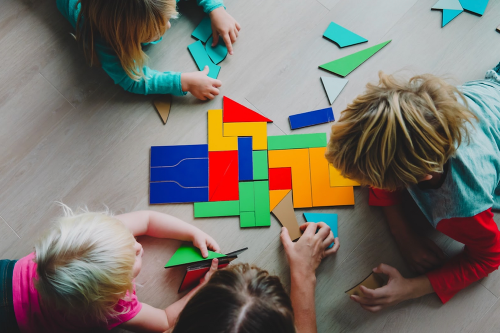
At PediGYM Gurugram, we follow a child-centered, play-based therapy approach that makes learning effective, enjoyable, and meaningful. Play is a natural way for children to explore, learn, and build new skills, which is why it forms the foundation of our therapy programs. Our therapy approach is:
- Child-centered and play-based, ensuring activities match the child’s interests and motivation
- Adapted to the child’s developmental level, learning style, and individual needs
- Gradually progressed from simple to complex tasks, allowing steady skill development without pressure
- Designed to improve both functional skills and self-confidence, helping children feel successful
Through fun, engaging activities, children are more motivated to participate actively in therapy sessions. When therapy feels enjoyable rather than demanding, children show better attention, faster skill acquisition, and more long-lasting outcomes
Benefits of Visual Perception Therapy
With consistent and structured intervention, visual perception therapy can bring meaningful improvements in a child’s learning, behavior, and daily functioning.
- Improved reading and writing abilities
- Better classroom attention and organization
- Enhanced academic confidence
- Improved motor coordination
- Greater independence in daily tasks
Overall, visual perception therapy supports not only academic success but also a child’s confidence, independence, and overall development, laying a strong foundation for long-term learning and functional skills.
Why is PediGYM the Preferred Choice in Gurugram?
Parents across Gurugram trust PediGYM for high-quality pediatric therapy because we focus on evidence-based care, individualized planning, and child-friendly practices that deliver meaningful outcomes.
- Experienced pediatric occupational therapists
- Individualized therapy plans
- Evidence-based assessment and intervention
- Child-friendly and safe therapy spaces
- Strong focus on early intervention and outcomes
At PediGYM, our goal is to support every child’s growth, confidence, and independence while working closely with families throughout the therapy journey.
Final Thoughts
Visual perception plays a vital role in a child’s overall development and academic success. Identifying difficulties early and addressing them through structured therapy can prevent long-term challenges. If you are searching for visual perception activities for kids in Gurugram, PediGYM offers expert-led, engaging, and result-oriented therapy programs. Schedule a visual perception assessment at PediGYM Gurugram and support your child’s learning journey today.

Dr. Nitin, Founder of PediGym Child Development Center, is a dedicated pediatric therapy expert and DMI Level C Certified Therapist leading structured, evidence-based therapy programs in Faridabad and Gurgaon. Under his guidance, PediGym provides comprehensive pediatric rehabilitation focused on improving motor skills, coordination, sensory processing, speech clarity, and functional independence through personalized intervention plans.