Noticing that your child is developing differently can bring many questions. Feeling worried or unsure is natural, and many families experience the same concerns.
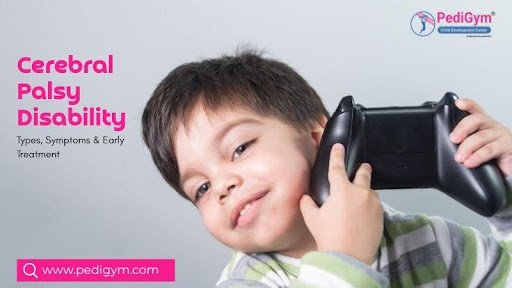
Cerebral palsy disability affects movement, posture, and muscle control. Every child experiences it differently. Some need mild support, while others benefit from regular therapy.
The good news is that early understanding and the right care can make a real difference. In this guide, you’ll learn about the types, signs, causes, and treatment options that can help your child move forward with confidence.
Takeaway: Early awareness helps families take positive steps sooner.
What Is Cerebral Palsy Disability?
Cerebral palsy is a group of neurological conditions that affect movement and coordination. It happens when the developing brain is injured or does not develop as expected.
This change may occur during pregnancy, during birth, or shortly after birth. While the brain injury itself does not worsen over time, the symptoms may change as a child grows and faces new physical demands.
For example, muscle stiffness may become more noticeable when a child starts standing or walking. Some children may also need more support during school years when tasks become more complex.
There are two main forms of cerebral palsy:
Congenital Form: This type is present from birth and is linked to brain development before or during delivery.
Acquired Form: This develops after birth due to events such as infection, injury, or bleeding in the brain during infancy.
Cerebral palsy is one of the most common motor disabilities in children. With early care and family support, many children make strong progress.
Takeaway: Children can continue to learn and grow with the right help.
Types of Cerebral Palsy
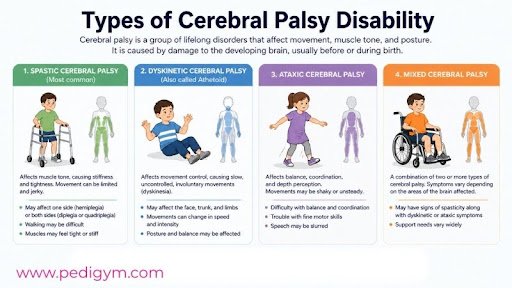
Understanding the types of cerebral palsy helps families know why symptoms can look different from child to child.
1. Spastic Cerebral Palsy
This is the most common type. It causes muscles to feel tight or stiff, making movement harder and less smooth.
It can feel like the body is trying to move while the muscles resist.
Subtypes include:
- Diplegia: Mainly affects the legs
- Hemiplegia: Affects one side of the body
- Quadriplegia: Affects all four limbs and sometimes the trunk
Children may walk on their toes, have stiff legs, or struggle with balance.
Takeaway: Muscle tightness is the main feature of spastic cerebral palsy.
2. Dyskinetic Cerebral Palsy
This type causes involuntary movements that the child cannot control. Movements may be twisting, slow, sudden, or irregular.
Hands, feet, arms, face, and legs can all be affected. Sitting, walking, or holding objects may become difficult.
It may look as if the body is moving at the wrong time without meaning to.
Takeaway: Uncontrolled movements are the key sign of dyskinetic cerebral palsy.
3. Ataxic Cerebral Palsy
This type mainly affects balance and coordination.
Children may appear shaky, unsteady, or unsure when walking. Tasks such as writing, catching a ball, or climbing stairs may need extra effort.
It can seem similar to trying to balance on an uneven surface.
Takeaway: Balance and coordination challenges are common in ataxic cerebral palsy.
4. Mixed Cerebral Palsy
Some children have symptoms from more than one type. This is known as mixed cerebral palsy.
The most common combination includes spastic and dyskinetic features together. A child may have both muscle stiffness and involuntary movements.
Takeaway: Mixed presentations combine symptoms from different movement patterns.
Cerebral Palsy Symptoms
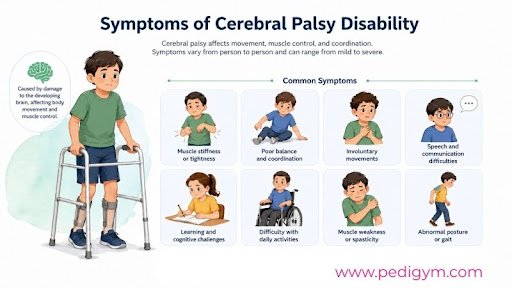
Cerebral palsy symptoms vary widely. Some signs appear in infancy, while others become clearer as a child grows.
It’s important to understand that symptoms are not always severe. Sometimes they begin as small differences in movement or posture.
Delayed Milestones
A baby may take longer than expected to roll over, sit, crawl, or walk. Every child grows at their own pace, but repeated delays deserve attention.
Floppy or Stiff Muscle Tone
Some babies feel unusually floppy when held. Others may seem very stiff, with tight arms or legs.
Poor Head Control
If a baby struggles to hold the head steady beyond expected stages, it may be a sign that movement development needs review.
Feeding Difficulties
Some infants have trouble sucking or swallowing. Feeding may take a long time or feel tiring.
Favoring One Side
Parents may notice early hand preference, one closed fist, or dragging one side while crawling.
Unusual Posture
Crossed legs, frequent back arching, or awkward resting positions may be noticed.
Takeaway: Early signs can be subtle, so trust your instincts and seek advice when concerned.
Symptoms in Older Children
Difficulty with Fine Motor Skills
Tasks such as writing, buttoning clothes, tying laces, or using utensils may be harder than expected.
Walking Differences
Some children walk on their toes, limp, keep knees close together, or appear unsteady.
Muscle Stiffness or Spasms
Tight muscles can make movement harder. Some children also experience spasms or discomfort after activity.
Balance Problems
Frequent falls, difficulty jumping, or trouble on uneven surfaces may occur.
Speech Challenges
Some children understand language well but find it difficult to speak clearly. Others may need help with communication.
Fatigue
Because movement can require more effort, some children become tired faster during play or school activities.
Symptoms may be mild in one child and more significant in another. If you notice these symptoms, consult a pediatric specialist as early as possible.
Takeaway: Early support often leads to better long-term progress.
What Causes Cerebral Palsy?
Cerebral palsy happens because of injury to the developing brain or differences in brain development.
Possible causes include:
- Lack of oxygen around birth
- Infections during pregnancy
- Premature birth
- Low birth weight
- Brain bleeding
- Head injury in infancy
- Severe newborn infections
In many cases, the exact cause is never identified. It is also important to know that it is never the parent’s fault.
Families deserve support, not blame.
Takeaway: Causes vary, and many families never receive one clear answer.
Early Treatment for Cerebral Palsy
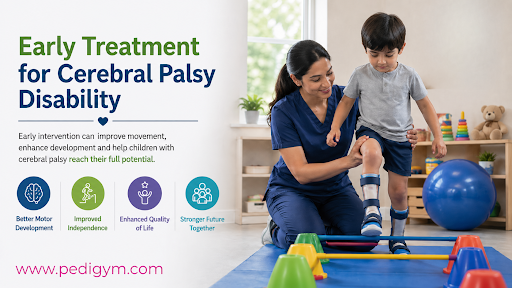
There is no cure for cerebral palsy disability, but early and consistent treatment can greatly improve a child’s quality of life.
Every child is unique, so treatment plans are personalized.
Physical Therapy
Physical therapy helps improve strength, balance, posture, and movement skills. It supports crawling, standing, walking, and daily mobility.
Occupational Therapy
Occupational therapy focuses on everyday tasks such as dressing, eating, writing, and play. It helps children become more independent.
Speech Therapy
Speech therapy supports communication, speech clarity, and swallowing difficulties when needed.
Medications
Doctors may prescribe medicines for muscle stiffness, pain, or seizures. Botox may be used in some cases to reduce spasticity.
Braces and Orthotic Devices
Braces, walkers, and supportive seating can improve posture and make movement easier.
Surgery
Some children may benefit from surgery to improve bone alignment or reduce severe muscle tightness.
Emerging Therapies
Research into new approaches, including stem cell therapy, is ongoing. These treatments are still being studied.
The earlier therapy begins, the better the outcomes can be. A team that includes pediatricians, therapists, and specialists can create the best plan for each child.
Takeaway: Early treatment helps children build skills, confidence, and independence.
When Should You Seek Help?
Do not feel you need to wait if something does not seem right.
If your child shows delays in movement, posture, feeding, or communication—especially before age two—consult a specialist promptly.
Early diagnosis often means therapy can begin sooner.
If you are looking for expert support in Faridabad or Gurgaon, PediGym offers specialized therapy programs for children with developmental needs.
Founded by Dr. Nitin Gupta, the center provides compassionate, evidence-based care through experienced therapists.
Takeaway: Acting early creates more opportunities for progress.
Conclusion
Cerebral palsy is a lifelong condition, but it does not define a child’s future. With the right support, many children build skills, confidence, and greater independence.
Understanding the signs and seeking help early can create meaningful progress over time. If you are concerned about your child’s development, connect with a qualified specialist.
Families in Faridabad and Gurgaon can reach out to PediGym for trusted support for cerebral palsy disability.
Takeaway: With timely care and encouragement, children can thrive.

Dr. Nitin, Founder of PediGym Child Development Center, is a dedicated pediatric therapy expert and DMI Level C Certified Therapist leading structured, evidence-based therapy programs in Faridabad and Gurgaon. Under his guidance, PediGym provides comprehensive pediatric rehabilitation focused on improving motor skills, coordination, sensory processing, speech clarity, and functional independence through personalized intervention plans.