
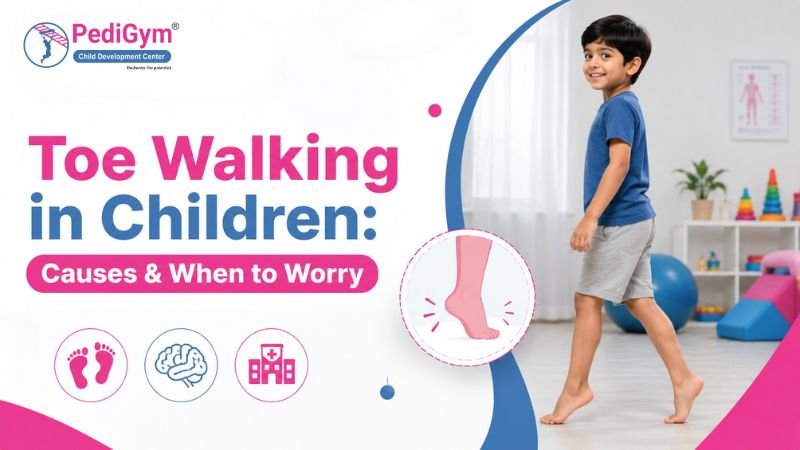
Toe walking means a child walks on the balls of the feet or toes without putting the heels down normally. It is common when toddlers are learning to walk, but persistent toe walking after the early walking years deserves attention, especially if it is frequent, one-sided, painful, or linked with stiffness, weakness, or developmental concerns.
Is Toe Walking Normal in Toddlers?
Occasional toe walking can be part of normal development. The key questions are your child’s age, how often it happens, and whether they can walk with their heels down.
- Under 2 years: Brief periods of walking on the toes are often part of developing gait.
- After age 2: Frequent or persistent toe walking should be discussed with a pediatrician or pediatric therapist.
- Beyond age 3: Continued toe walking, particularly when the child cannot comfortably place the heels down, warrants an assessment.
A peer-reviewed review reported that at age 5.5 years, about 2% of typically developing children still walked on their toes, compared with 41% of children with a neuropsychiatric diagnosis or developmental delay. This is an association, not proof of causation.
The prevalence figures are supported by a peer-reviewed review indexed by PubMed.
Signs and Symptoms
The main sign is walking on the front of the feet with the heels raised. Other features include:
- Tight calf muscles or reduced ankle movement
- Difficulty standing with the heels flat
- Frequent tripping or poor balance
- Pain or discomfort
- A difference between the two sides
- Self-consciousness about the way they walk
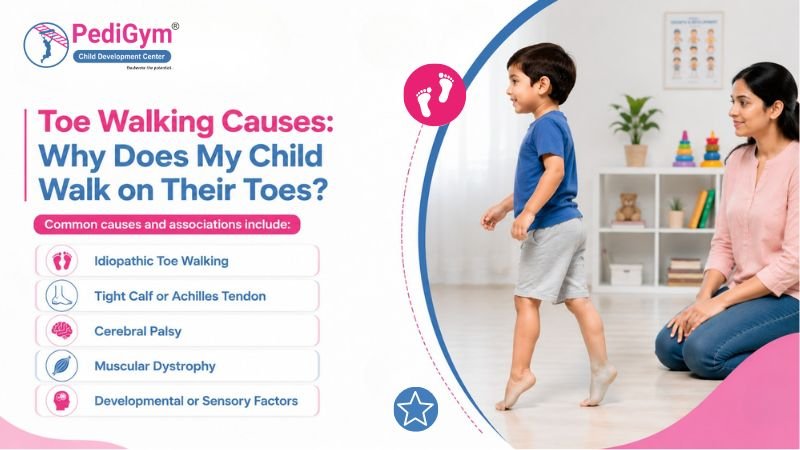
Toe Walking Causes: Why Does My Child Walk on Their Toes?
Idiopathic toe walking is the most common explanation when no underlying medical cause is found. It is considered a diagnosis of exclusion, meaning clinicians first look for neurological, muscular, orthopedic, or developmental reasons.
Common causes and associations include:
Idiopathic Toe Walking
Some children continue the pattern even though their neurological and musculoskeletal examinations are normal. Family history can matter because it appears to occur more often in some families.
Tight Calf or Achilles Tendon
A shortened or tight calf-Achilles complex can make heel-to-toe walking difficult. Repeated walking on the toes can also contribute to reduced ankle flexibility.
Cerebral Palsy
Children with cerebral palsy may walk on their toes because of increased muscle tone or spasticity. Other signs can include stiffness, weakness, delayed motor skills, or differences between the sides.
Muscular Dystrophy
Certain muscular disorders can affect gait and make a child appear to walk on their toes. Weakness, difficulty running, climbing stairs, getting up from the floor, or frequent falls are important clues.
Developmental or Sensory Factors
Some children with developmental differences or sensory processing difficulties show unusual walking patterns. Toe walking can also occur in children with autism, but it is not a diagnostic sign by itself.
Autism and This Walking Pattern: Is There a Link?
Toe walking and autism can occur together, but toe walking does not mean a child has autism. A child with autism may also have sensory differences, motor-planning difficulties, or other gait features that influence how they walk.
If this pattern occurs alongside speech or social-communication concerns, repetitive behaviors, loss of previously acquired skills, or broader developmental delays, discuss the full picture with your pediatrician or developmental specialist.
When to Worry About Toe Walking
Persistent toe walking is more concerning when your child cannot walk flat-footed, the pattern is becoming more frequent, or other symptoms are present.
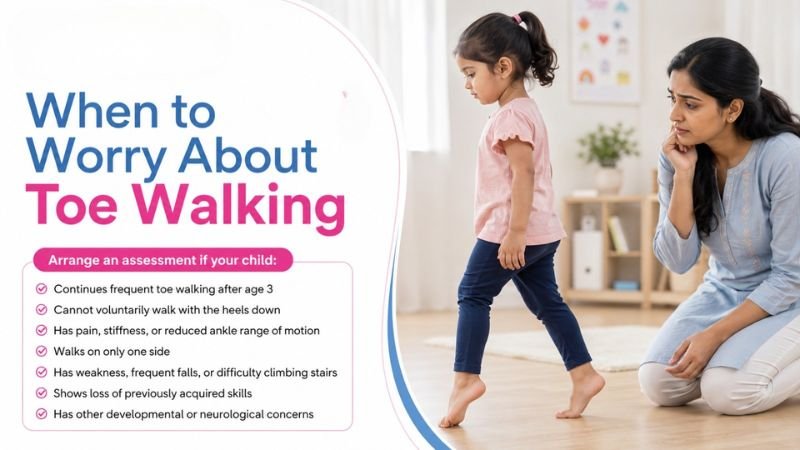
Arrange an assessment if your child:
- Continues frequent toe walking after age 3
- Cannot voluntarily walk with the heels down
- Has pain, stiffness, or reduced ankle range of motion
- Walks on only one side
- Has weakness, frequent falls, or difficulty climbing stairs
- Shows loss of previously acquired skills
- Has other developmental or neurological concerns
Which Specialist Should I See?
Start with your child’s pediatrician. Referral may be appropriate to a pediatric orthopedist, neurologist, developmental pediatrician, or pediatric physical therapist.
How Is the Walking Pattern Evaluated?
Assessment begins with a detailed history and physical examination. The clinician may ask when the pattern started, whether it happens all the time, whether your child can walk with the heels down, and whether anyone else in the family has a similar history.
The examination may assess:
- Ankle range of motion and calf tightness
- Muscle strength and tone
- Reflexes and neurological signs
- Balance and coordination
- Walking and running pattern
If a neurological or muscular condition is suspected, further tests may include blood tests, imaging, EMG, or formal gait analysis. Idiopathic toe walking is considered after relevant causes have been assessed.
Some pediatric gait services also use an objective 50-foot walk test with an accelerometer in children aged 6 and older to quantify how often the pattern occurs.
Treatment Options for Children Who Walk on Their Toes
Treatment depends on the cause, age, ankle flexibility, severity, and impact on function.
- Physical therapy: Stretching, strengthening, balance work, gait training, and exercises that encourage heel contact may improve movement and function.
- Ankle-foot orthosis (AFO): Bracing can help maintain the ankle in a more functional position and support a heel-to-toe pattern.
- Serial casting: A series of casts can gradually improve ankle range when calf or Achilles tightness limits heel contact.
- Botox: Botulinum toxin may be considered in selected cases with significant muscle tightness. It is not routine for every child, and evidence does not show added benefit over casting alone.
- Surgery: If severe tightness persists despite appropriate non-surgical treatment, procedures to lengthen the calf or Achilles tendon may be considered.
What Does Improvement Look Like?
Treatment outcomes vary by age, severity, flexibility, and the underlying cause. In a retrospective study of 204 children with idiopathic toe walking, 121 returned for follow-up and 55 of those children (45.5%) met the study’s short-term success criteria. AFO use was the treatment factor most strongly associated with successful short-term resolution. Because many children did not return for follow-up, this should not be treated as a guaranteed success rate for every child.
How to Stop Toe Walking at Home
Home exercises can support a professional plan. Helpful strategies may include:
- Calf and ankle stretches taught by a therapist
- Activities that encourage controlled heel contact
- Balance and strengthening exercises
- Practising slow heel-to-toe walking
- Following prescribed brace use consistently
Do not force your child to keep their heels down all day. If there is pain, marked stiffness, weakness, or difficulty following instructions, seek professional guidance.
Outlook and Prognosis
Many children improve with observation, therapy, or targeted treatment. Persistent problems can affect ankle movement, gait, comfort, or foot and calf function, so reassessment matters.
The outlook is generally easier to manage when the cause is identified and ankle flexibility and walking function are monitored over time.
Expert Guidance
Dr. Nitin, Founder of PediGym Child Development Center, is a dedicated pediatric therapy expert and DMI Level C Certified Therapist leading structured, evidence-based therapy programs in Faridabad and Gurgaon.
FAQ
Is toe walking always a sign of autism?
No. It can occur in typically developing children and may have several causes. Autism should be considered only when other developmental or behavioral signs are present.
Can a child outgrow toe walking?
Yes. Some children stop without treatment, particularly when they can walk flat-footed and have normal ankle movement. Persistent or worsening cases still deserve assessment.
When should I worry about toe walking?
Seek professional advice if it continues after age 3, the child cannot put the heels down, or there is pain, stiffness, weakness, asymmetry, frequent falling, or developmental concern.
Can toe walking be corrected?
Often, yes. Treatment may include physical therapy, stretching, AFOs, serial casting, and, in selected cases, other medical or surgical options. The right plan depends on the underlying cause and physical findings.
Final Takeaway
Toe walking is often harmless in young toddlers, but persistent toe walking should not be ignored. The key step is identifying why your child is walking this way. Early assessment can distinguish an idiopathic pattern from conditions needing specialist care and guide treatment for safer, more efficient walking.

Dr. Nitin, Founder of PediGym Child Development Center, is a dedicated pediatric therapy expert and DMI Level C Certified Therapist leading structured, evidence-based therapy programs in Faridabad and Gurgaon. Under his guidance, PediGym provides comprehensive pediatric rehabilitation focused on improving motor skills, coordination, sensory processing, speech clarity, and functional independence through personalized intervention plans.