
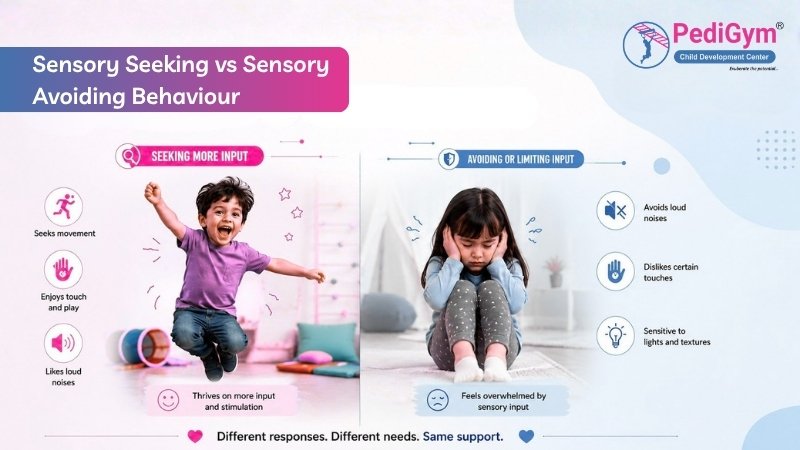
Have you ever wondered why your child constantly seeks movement while another avoids everyday sounds, textures, or crowded places? The difference between Sensory Seeking and Sensory Avoiding lies in how a child’s nervous system processes sensory input. A child who is sensory seeking needs more movement, touch, or pressure to stay focused and regulated, while a sensory avoiding child becomes overwhelmed by everyday sensory experiences and tries to reduce them. Both are common sensory processing differences and are not signs of poor behavior or parenting.
These patterns are often seen in children with Sensory Processing Disorder (SPD), autism, ADHD, and other developmental delay conditions, but they can also occur in children without a formal diagnosis. Understanding whether your child is sensory seeking, sensory avoiding, or has a mixed sensory profile is the first step toward providing the right support and improving sensory regulation.
At PediGym, we often meet families who have spent months trying different parenting approaches before realizing their child’s behavior is linked to sensory processing issues, not defiance. With the right guidance and Occupational Therapy for Sensory Processing, children can build the skills they need to participate more confidently at home, in school, and during everyday activities.
Why Do Children Experience the Same World So Differently?
Children experience the world differently because their brains process sensory input in different ways. While most children naturally filter everyday sights, sounds, touch, and movement, others may find these sensations either too intense or not noticeable enough. This difference, known as sensory modulation, influences how children respond to their environment.
Children rely on eight sensory systems for healthy sensory development—the five familiar senses, along with the vestibular system (balance and movement), proprioceptive input (body awareness), and the interoceptive system (internal body signals like hunger and tiredness). When the brain has difficulty organizing information from these systems, sensory processing issues can occur.
A child with an underresponsive sensory system may constantly seek movement, deep pressure, or touch to stay focused, while a child with an overresponsive sensory system may avoid loud sounds, bright lights, or certain textures because they quickly experience sensory overload. Understanding these sensory processing differences helps parents respond with empathy and choose strategies that better support their child’s needs.
Sensory Seeking vs Sensory Avoiding: What Parents Usually Notice First
Parents often notice Sensory Seeking and Sensory Avoiding behaviors long before hearing terms like Sensory Processing Disorder (SPD) or pediatric occupational therapy.
A sensory seeking child may constantly climb, jump, spin, crash into cushions, or chew on objects because they need more sensory input to stay focused and regulated. These behaviors are often mistaken for simply being energetic.
In contrast, a sensory avoiding child may refuse certain clothing, cover their ears around loud sounds, avoid crowded places, or become upset during haircuts or messy play. These reactions are often linked to auditory sensitivity, tactile sensitivity, or visual sensitivity, making everyday experiences feel overwhelming.
It’s also important to remember that many children have a mixed sensory profile. For example, a child may seek movement and deep pressure but avoid certain food textures or noisy environments. Looking at the overall pattern, rather than a single behavior, helps parents and therapists better understand the child’s unique sensory needs
Sensory Seeking vs Sensory Avoiding: At a Glance
While every child has a unique sensory profile, understanding the general differences between Sensory Seeking and Sensory Avoiding can help parents recognize common patterns. Keep in mind that this comparison is only a guide—many children have a mixed sensory profile, showing characteristics of both depending on the environment, activity, or time of day.
Sensory Seeking | Sensory Avoiding |
Looks for extra sensory input to stay alert and organized | Tries to reduce sensory input to feel calm and comfortable |
Often associated with an underresponsive sensory system | Often associated with an overresponsive sensory system |
Enjoys climbing, jumping, spinning, crashing, or rough play | Avoids loud noises, crowded places, bright lights, or fast movement |
May seek deep pressure, tight hugs, or heavy work activities | May dislike unexpected touch, clothing tags, or certain fabric textures |
Frequently chews pencils, shirt collars, or toys (oral sensory seeking) | May refuse foods because of texture, smell, or temperature |
Appears constantly “on the go” | May withdraw from busy or unpredictable environments |
Note: This table is intended to help parents recognize common behaviors. Every child is unique, and many children experience a combination of both sensory seeking and sensory avoiding behaviors. A professional assessment provides the most accurate understanding of your child’s individual sensory needs.
When Do Sensory Behaviors Become More Than "Just a Phase"?
Every child has sensory preferences, and that’s a normal part of development. The concern isn’t whether your child likes or dislikes certain sensations—it’s whether those reactions begin to affect everyday life.
If your child regularly struggles with getting dressed, avoids social activities because of noise, has frequent meltdowns in busy environments, or finds it difficult to participate at school, these may be signs of sensory processing issues rather than typical preferences. Over time, these challenges can affect learning, confidence, friendships, and emotional regulation in children.
When sensory behaviors consistently interfere with daily routines or participation, it’s worth seeking a professional evaluation. Early identification and support can help children develop the skills they need to feel more comfortable, confident, and independent.

Therapist's Insight
Sensory behaviors aren't simply habits to stop—they're often a child's way of responding to their environment. When we understand the reason behind the behavior, we can teach children healthier ways to regulate themselves rather than expecting them to just 'push through' overwhelming situations.
Dr. Nitin Gupta Founder, PediGym | DMI Level C Therapist | 14+ Years of Experience in Pediatric Rehabilitation
This family-centered approach helps therapists understand the why behind a child’s behavior and create personalized strategies that improve participation at home, school, and in everyday life.
Understanding the Connection Between SPD, Autism, and ADHD
Online checklists can help parents recognize possible sensory processing issues, but they can’t replace a professional evaluation. A pediatric sensory assessment looks beyond behavior to understand how your child responds to different types of sensory input and how it affects fine motor development, gross motor development, learning, play, and everyday routines.
Parents play an important role by sharing observations from home and school, helping therapists build a complete picture of the child’s sensory profile. Rather than simply labeling a child as sensory seeking or sensory avoiding, the goal is to identify their individual needs and create a personalized therapy plan that supports success in daily life. Early assessment often leads to earlier support and better long-term outcomes.
How Pediatric Occupational Therapy Helps Children with Sensory Processing
Pediatric Occupational Therapy helps children with sensory processing issues understand and respond to sensory input more effectively, making everyday activities at home, school, and in the community easier to manage.
At PediGym, therapy begins with a comprehensive assessment to understand each child’s unique sensory profile and how it affects learning, play, communication, and motor development. Under the guidance of Dr. Nitin Gupta, Founder of PediGym and a DMI Level C Therapist with over 14 years of experience, every therapy plan is tailored to the child’s individual needs and family goals.
Many children benefit from Sensory Integration Therapy where play-based activities such as swinging, climbing, balancing, and obstacle courses help improve sensory regulation, coordination, body awareness, and self-regulation skills. As children build these skills, parents often notice smoother daily routines, better classroom participation, and increased confidence.
The American Occupational Therapy Association (AOTA) also recognizes occupational therapy as an effective way to help children participate more successfully in meaningful everyday activities by supporting their sensory, physical, and emotional development.
Supporting Your Child at Home
Supporting your child’s sensory regulation starts with understanding their sensory needs rather than trying to stop the behavior. Notice when they seem calm, what situations overwhelm them, and which types of sensory input they seek or avoid. These patterns help you better understand their unique sensory profile.
For a sensory seeking child, regular movement activities such as climbing, jumping, pushing, pulling, or carrying light household items can provide proprioceptive input that improves focus and body awareness. For a sensory avoiding child, predictable routines, comfortable clothing, and quieter spaces can help reduce sensory overload and make everyday activities feel less overwhelming.
Many families also benefit from sensory diet activities—a personalized plan of sensory experiences recommended by an occupational therapist to help children stay regulated throughout the day.
Consistency is key. When parents, teachers, and therapists use similar classroom sensory strategies and home routines, children receive the consistent support they need to participate more confidently in learning, play, and daily life.
Why Early Intervention Matters
When sensory challenges in children begin affecting learning, play, daily routines, or confidence, early support can make a significant difference. The early years are an important time for brain development, making Early Intervention Therapy especially effective in building sensory, motor, and self-regulation skills.
Early intervention also gives parents practical strategies to support their child during everyday routines at home, school, and in the community. With the right guidance, children can develop greater independence, participate more confidently in daily activities, and build a stronger foundation for future learning and development.
Frequently Asked Questions
Can a child be both sensory seeking and sensory avoiding?
Yes. Many children have a mixed sensory profile, meaning they may seek certain types of sensory input while avoiding others. For example, a child might enjoy climbing but dislike loud noises or certain clothing textures. A professional assessment can identify their unique sensory needs.
Is Sensory Processing Disorder (SPD) the same as autism?
No. Sensory Processing Disorder (SPD) and autism are different conditions. A child can have SPD without autism, although sensory processing differences are common in autistic children. A professional evaluation helps determine the underlying cause of sensory challenges.
Will my child outgrow sensory processing issues?
Some children improve as they grow, but others continue to experience sensory processing issues that affect daily life. If sensory challenges interfere with learning, play, or routines, early support and occupational therapy can help develop effective coping and self-regulation skills.
When should I consider occupational therapy for sensory processing?
Consider an evaluation if your child’s sensory behaviors regularly affect school, play, eating, sleep, social interactions, or daily routines. Early assessment helps identify their needs and provides practical strategies to improve participation and independence.
What are sensory diet activities?
A sensory diet is a personalized plan of activities that provides the right amount of sensory input throughout the day. An occupational therapist designs these activities to support sensory regulation, attention, and self-regulation based on each child’s individual needs.
Final Thoughts
Understanding Sensory Seeking and Sensory Avoiding helps parents see beyond behaviors and recognize what their child truly needs. Whether your child seeks extra sensory input, avoids certain sensations, or has a mixed sensory profile, the right support can make everyday life easier and more enjoyable.
With personalized strategies and Pediatric Occupational Therapy children can strengthen their sensory regulation, build confidence, and participate more comfortably at home, school, and in the community.
If you’re concerned about your child’s sensory development or behavior, don’t wait for the challenges to grow. Book an Assessment with the PediGym team to understand your child’s unique sensory needs and receive personalized guidance.
About the Medical Reviewer
Dr. Nitin Gupta is the Founder of PediGym and a DMI Level C Therapist with 14+ years of experience in pediatric rehabilitation. He specializes in early intervention, sensory processing, neurodevelopmental therapy, and helping children with developmental challenges build independence through evidence-based, family-centered care.
Disclaimer
This article is for educational purposes only and is not a substitute for professional medical advice, diagnosis, or treatment. If you have concerns about your child’s sensory development or behavior, consult a qualified pediatric occupational therapist or healthcare professional for an individual assessment.

Dr. Nitin, Founder of PediGym Child Development Center, is a dedicated pediatric therapy expert and DMI Level C Certified Therapist leading structured, evidence-based therapy programs in Faridabad and Gurgaon. Under his guidance, PediGym provides comprehensive pediatric rehabilitation focused on improving motor skills, coordination, sensory processing, speech clarity, and functional independence through personalized intervention plans.