

In today’s digital world, screens are almost impossible to avoid. From online learning and educational apps to cartoons and video calls with grandparents, digital devices have become part of everyday family life. But many parents still wonder: Is too much screen time affecting my child’s growth and development?
At PediGym, we often meet parents who share similar concerns:
“My child only eats while watching cartoons.”
“My toddler isn’t speaking much. Could screen time be the reason?”
“My child gets angry whenever I take away the tablet.”
These concerns are becoming increasingly common as smartphones, tablets, and televisions become part of everyday family life.
The good news is that screens don’t have to be the enemy. Educational content, video calls with family, and age-appropriate digital learning can all be beneficial when used in moderation. The real concern begins when screens start replacing the experiences children need most—talking with family, active play, reading, outdoor activities, and meaningful social interaction.
Research shows that screen time and child development are closely connected World Health Organization, American Academy of Pediatrics, JAMA Pediatrics. especially during the early years when the brain is developing rapidly. Too much passive screen exposure may influence brain development, language skills, attention span, sleep quality, emotional regulation, and physical activity, while healthy digital habits can help children enjoy technology without missing out on real-world learning.
Quick Takeaways
Short on time? Here are the key points every parent should know:
✔ Too much screen time can affect a child’s speech, attention, sleep, physical activity, and overall development.
✔ Not all screen time is harmful. Age-appropriate educational content used with parental involvement can support learning.
✔ Children learn best through conversations, play, outdoor activities, reading, and everyday experiences.
✔ Creating healthy digital habits early helps children enjoy technology without missing out on real-world learning.
What Is Screen Time?
Screen time is the amount of time a child spends using digital devices such as smartphones, tablets, televisions, computers, or gaming consoles for learning, entertainment, or communication.
It includes activities like:
- Watching TV or YouTube videos
- Using smartphones or tablets
- Playing video games
- Attending online classes
- Using educational apps
- Video calling family and friends
Not all screen time is harmful. High-quality, age-appropriate content watched with parental involvement can support learning. However, when screen use replaces play, face-to-face conversations, physical activity, or sleep, it may negatively affect screen time and child development.
The Impact of Screen Time on Child Development
Excessive screen time can affect many areas of a child’s development, including language, learning, attention, sleep, emotional well-being, and physical growth. The biggest concern isn’t just how much time children spend on digital devices—it’s when screens replace the everyday experiences they need to learn and grow, such as talking, playing, exploring, and interacting with others.
Let’s take a closer look at how screen time and child development are connected.
1. Screen Time and Brain Development
Too much passive screen time may affect a child’s brain development by reducing opportunities for hands-on learning and real-life experiences.
The first five years of life are especially important for brain development because this is when a child’s brain grows rapidly. Every conversation, game, hug, and new experience helps build strong brain connections. During these early years, the way children use digital devices also plays an important role in screen time and brain development.
Instead of spending long hours watching videos or using digital devices, young children learn best when they:
- Run, climb, and explore their surroundings.
- Build towers with blocks or solve simple puzzles.
- Draw, colour, and enjoy pretend play.
- Talk with family members and discover new things through everyday activities.
A child learns best by experiencing the world around them. Whether they’re building a block tower, chasing bubbles in the park, helping you water plants, or listening to a bedtime story, every activity helps them think, solve problems, and build new skills. While educational videos can introduce new ideas, they can’t replace the learning that happens through play, conversation, and everyday experiences.
PediGym Expert Insight
According to Dr. Nitin Gupta, Founder of PediGym and DMI Level C Certified Therapist, limiting screen use is only one part of the solution.
“What children do after the screen is switched off matters even more. Simple activities like talking, playing, climbing, drawing, helping at home, or listening to a story give children the experiences they need to build strong brain connections.”
2. Screen Time and Language Development
Yes, excessive screen time can affect language development, especially if it replaces conversations with parents and caregivers.
Children don’t learn to speak by simply hearing words on a screen. They learn language through two-way communication—listening, responding, asking questions, and interacting with people.
For example, a child may watch an alphabet video every day, but they learn far more when a parent reads a story, sings songs, or talks with them during everyday activities.
Children learn to speak by talking and listening to the people around them. Simple everyday moments help them learn, such as:
- Talking to you while playing
- Listening to bedtime stories
- Singing rhymes and songs together
- Asking questions and hearing your answers
- Playing with brothers, sisters, or friends
For example, when your child points at a dog and you say, “Yes, that’s a dog! It’s barking,” they’re learning new words and how to use them. These small conversations happen naturally throughout the day and teach children much more than simply watching videos. Even spending 20–30 minutes talking or playing together every day can make a big difference in your child’s speech and language development.
What We Commonly See at PediGym
Many parents visit PediGym because they’re worried that their child isn’t speaking as much as expected or spends most of their free time watching videos. While screen time isn’t always the only reason behind a speech delay, replacing passive screen time with more conversations, storytelling, singing, and interactive play often supports healthy communication alongside professional guidance when needed.
3. Screen Time Can Affect Attention and Cognitive Skills
Excessive screen use may reduce a child’s attention span and make it harder to develop important cognitive skills.
Fast-moving videos and constant digital stimulation keep the brain entertained but don’t always encourage children to think independently.
As a result, Some children may find it harder to:
- Pay attention in class or during conversations.
- Finish one activity before moving to another.
- Solve simple problems on their own.
- Wait patiently for their turn.
- Stay calm without asking for a screen.
Instead of spending every free moment on screens, encourage activities like puzzles, drawing, building blocks, reading, or outdoor play. These experiences naturally strengthen cognitive skills while improving patience and focus.
Screen Time and School Performance
As children grow older, too much recreational screen time can also affect their learning at school. Parents may notice that homework takes longer to finish, reading becomes less interesting, or children lose focus more quickly during lessons.
Creating a healthy balance between study time, physical activity, sleep, and screen use can help children stay engaged, develop better learning habits, and perform more confidently at school.
4. Social and Emotional Development
Children develop social and emotional skills through real-life interactions, not screens.
From smiling back at parents to sharing toys with friends, children learn important life skills through everyday experiences.
When children spend more time with screens than with people, you may notice that they:
- Want to use the phone or tablet all the time.
- Get upset when you ask them to switch off the screen.
- Spend less time talking or playing with the family.
- Don’t want to go outside or play with other children.
- Get angry or annoyed over small things.
Simple family activities like storytelling, board games, cooking together, or visiting a park help children build confidence, empathy, and stronger social skills.
A Real-Life Example from PediGym
A family recently visited PediGym because their four-year-old preferred watching videos instead of playing with other children. Rather than asking the parents to stop screen time completely, our therapists suggested a few simple changes—keeping mealtimes screen-free, introducing bedtime story sessions, and encouraging outdoor play every evening.
Over time, the parents noticed their child becoming more interested in talking, playing with family, and joining activities with other children.
Every child is different, but small, consistent changes at home often make a meaningful difference when combined with the right support.
5. Screen Time Can Affect Sleep Quality
Using screens before bedtime can make it harder for children to fall asleep and get enough rest.
The blue light from smartphones, tablets, and televisions can reduce melatonin production, making it difficult for the brain to prepare for sleep.
After a poor night’s sleep, you may notice your child:
- Waking up feeling tired.
- Feeling sleepy during the day.
- Becoming cranky over small things.
- Losing interest in play or learning.
- Finding it harder to concentrate at school.
A simple habit like switching off screens at least one hour before bedtime and replacing them with books or quiet family time can significantly improve sleep quality.
6. Reduced Physical Activity and Healthy Growth
When children spend too much time on screens, they often spend less time being physically active.
Running, climbing, cycling, dancing, and outdoor games are essential for healthy child growth. These activities help develop strong muscles, better balance, coordination, and overall fitness.
When screen time replaces active play, children may:
- Spend more time sitting than running or playing.
- Choose videos instead of outdoor games.
- Get tired more quickly during physical activities.
- Miss opportunities to build strength, balance, and coordination.
- Spend less time exploring and playing outside.
The solution doesn’t have to be complicated. A family walk after dinner, playing catch in the park, or simply encouraging active play every day can support both physical and emotional development.
Are There Any Positive Effects of Screen Time on Child Development?
Screen time can support a child’s learning when it’s used in moderation, with age-appropriate content and parental involvement.
Not every minute spent on a screen is harmful. Watching an educational video, joining an online class, or video calling grandparents can all be positive experiences when balanced with play, conversation, and family time.
For example, children can use screens to:
- Learn colours, numbers, letters, and shapes through educational videos.
- Enjoy drawing, music, or storytelling apps.
- Stay connected with grandparents and relatives through video calls.
- Explore new topics that match their age and interests.
The biggest difference is how screens are used. Sitting with your child, asking simple questions about what they’re watching, or joining them in an educational game helps turn screen time into a learning experience.
Remember, screens should support your child’s learning—not replace story time, outdoor play, conversations, or spending time with family.
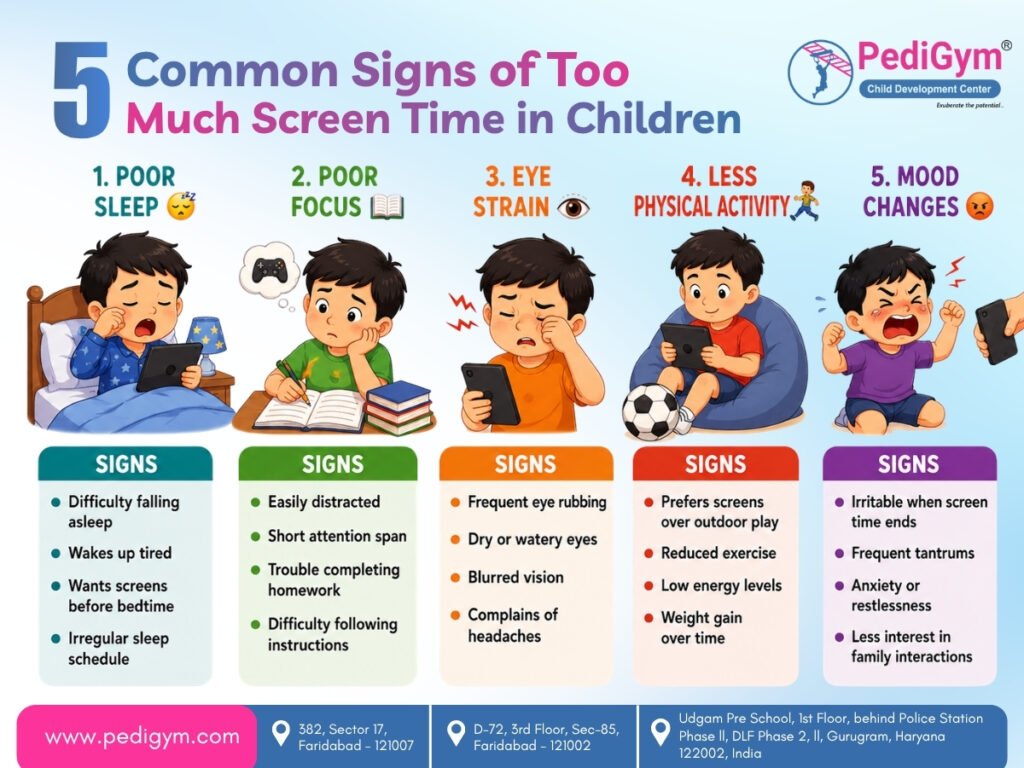
5 Signs Your Child May Be Getting Too Much Screen Time
If screen time is starting to affect your child’s daily routine, you may notice small changes in their behaviour, sleep, or interest in everyday activities.
Some common signs include:
- Crying or getting angry when it’s time to switch off the phone, TV, or tablet.
- Taking a long time to fall asleep at night.
- Choosing videos or games over playing outside.
- Talking and playing less with family or friends.
- Getting bored quickly and finding it difficult to finish simple activities like homework, reading, or puzzles.
These signs don’t always mean screen time is the only cause, but if they continue for several weeks or start affecting your child’s daily life, it’s a good idea to review their screen habits. If you’re still concerned, speaking with a child development specialist can help you understand what your child needs and whether any additional support is required.
Worried About Your Child’s Development?
If you’ve noticed several of these signs for a few weeks and they’re starting to affect your child’s daily routine, it may be helpful to seek professional guidance.
At PediGym, our team carries out detailed developmental assessments to understand your child’s strengths and identify areas where extra support may be beneficial. Based on the assessment, we create personalised therapy plans and practical home strategies that help children continue learning beyond the therapy room.
Practical Tips for Reducing Screen Time for Kids
Reducing screen time doesn’t mean taking away phones, tablets, or TVs completely. The goal is to help children spend more time talking, playing, learning, and exploring while using screens in a healthy and balanced way.
Here are some simple changes that can make a big difference.
1. Make Some Parts of the Day Screen-Free
Choose a few moments each day when the whole family stays away from screens. For example, keep phones and TVs off during meals, bedtime, or family conversations.
These screen-free moments give children a chance to talk, share their day, and spend quality time with the people around them.
2. Encourage More Outdoor Play
Children learn a lot while running, jumping, cycling, or playing in the park. Outdoor play keeps them active, helps them make friends, and gives them a break from screens.
Even 30–60 minutes of outdoor play every day can support healthy growth and reduce the habit of constantly asking for a phone or tablet.
3. Read and Talk Together Every Day
You don’t need expensive toys to help your child learn. Reading a story, singing rhymes, or simply talking about their day helps children learn new words and become more confident speakers.
For example, ask simple questions like:
- “What was your favourite part of today?”
- “Can you tell me what happened in the story?”
These small conversations support speech, language, and communication skills much better than passive screen time.
4. Be the Example Your Child Learns From
Children copy what they see. If they notice parents checking their phones all the time, they’ll naturally want to do the same.
Try putting your phone away while eating together, playing, or talking with your child. Even a short period of distraction-free family time shows children that people are more important than screens.
5. Give Them Fun Alternatives to Screens
Sometimes children ask for a screen simply because they’re bored.
Instead of saying “No phone,” offer something more interesting, such as:
- Building blocks
- Colouring or drawing
- Simple puzzles
- Playing with toys
- Dancing to music
- Helping in the kitchen
- Playing outside
When children are busy doing something they enjoy, they often forget about the screen.
6. Don’t Use Screens as a Reward
It’s tempting to say, “Finish your homework and you can watch YouTube.” But using screens as a reward can make children want them even more.
Instead, celebrate good behaviour with things like:
- Extra story time
- A trip to the park
- Playing their favourite game together
- Stickers or words of encouragement
These rewards help build positive habits without making screens feel like the best part of the day.
PediGym Therapist Tip
Instead of saying “No more phone”, try inviting your child to do something more exciting.
For example:
- “Let’s go for a cycle ride.”
- “Can you help me water the plants?”
- “Let’s build a tower with blocks.”
- “Come and help me make chapatis.”
Children are more likely to leave the screen when they’re excited about another activity rather than simply being told to stop.
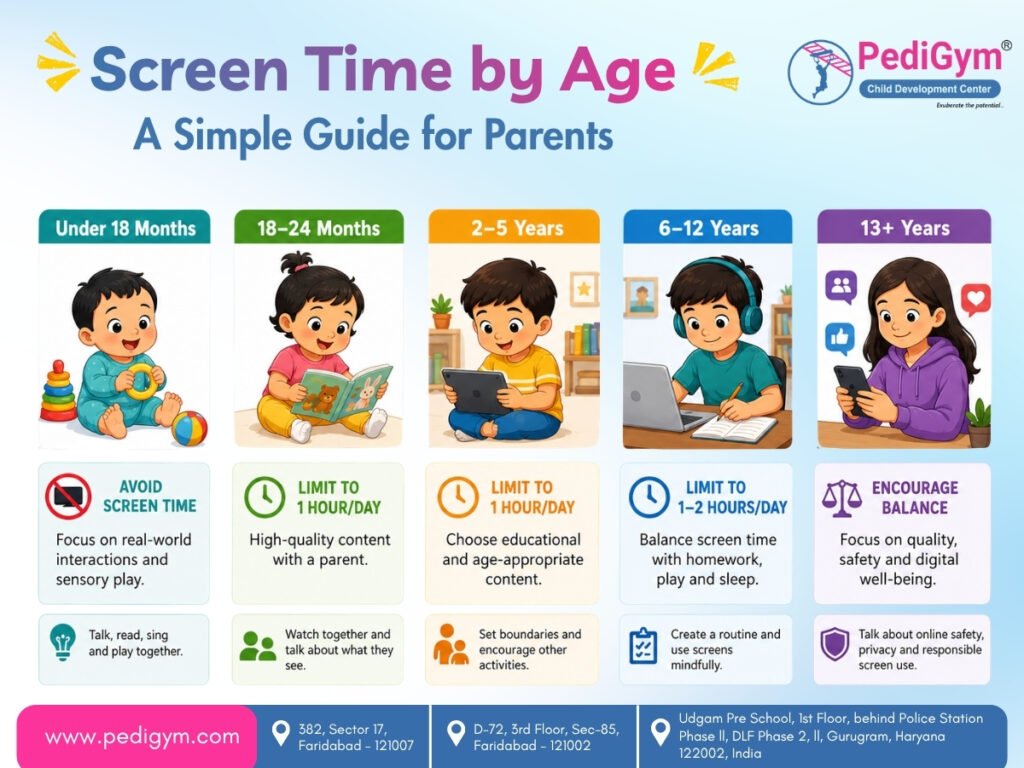
Recommended Screen Time by Age
The right amount of screen time depends on your child’s age. While every family is different, most child health experts recommend setting age-appropriate limits and making sure screens don’t replace sleep, play, learning, or family time.
Child’s Age | Recommended Screen Time |
Under 2 years | Avoid screen time as much as possible, except for video calls with family members. |
2 to 5 years | Limit screen time to about 1 hour a day and choose age-appropriate, educational content. Whenever possible, watch together and talk about what your child is seeing. |
6 years and above | Set clear daily limits and make sure there’s enough time for school, outdoor play, reading, hobbies, sleep, and family activities. |
Remember
It’s not just about how many hours your child spends on a screen—it’s also about what they’re watching and what they’re missing because of it. If screen time starts replacing play, conversations, exercise, or sleep, it’s a good time to review your family’s digital habits.
Screen Time Myths vs Facts
Myth | Fact |
Educational videos can replace talking with my child. | Children learn language best through real conversations and everyday interactions. |
More screen time means more learning. | The quality of screen time is far more important than the number of hours. |
Taking screens away completely is the only solution. | Healthy routines and balanced screen habits are more effective than sudden bans. |
Watching videos during meals helps children eat better. | Screen-free meals encourage better eating habits and more family interaction. |
Frequently Asked Questions
What is the 3-3-3 rule for children?
The 3-3-3 rule encourages children to spend time on learning, active play, and family interaction before using screens for entertainment. While it isn’t an official medical guideline, many parents use it as a simple way to create a healthy daily routine and reduce unnecessary screen time.
What is the 3-6-9-12 rule for screen time?
The 3-6-9-12 rule is a screen-use guideline that recommends introducing digital devices gradually as children grow. It was developed by French psychiatrist Dr. Serge Tisseron to help families build healthy digital habits.
The guideline suggests:
- Before 3 years: Avoid personal screens.
- Before 6 years: Avoid video games and gaming consoles.
- Before 9 years: Use the internet only with an adult’s supervision.
- Before 12 years: Allow more independent internet use, but with clear rules and parental guidance.
What are five negative effects of screen time?
Too much screen time can affect a child’s learning, behaviour, sleep, and overall development. Some common effects include:
- Finding it hard to stay focused.
- Talking or communicating less.
- Taking longer to fall asleep.
- Spending less time playing and being active.
- Getting upset more easily or finding it difficult to interact with others.
What is the 30-30-30 rule for screen time?
The 30-30-30 rule encourages children to take regular breaks from screens to reduce eye strain and sitting for long periods. A simple way to follow this rule is to take a short break every 30 minutes, look away from the screen for about 30 seconds, and spend the next 30 seconds stretching, walking, or moving around before returning to the screen.
What is the 7-7-7 rule for kids?
The 7-7-7 rule is not an official screen time or child development guideline. You may come across different versions of this rule online, but there isn’t one standard meaning that is supported by pediatric experts.
Instead of following internet trends, it’s better to focus on proven habits such as limiting recreational screen time, encouraging active play, spending quality time together, and making sure children get enough sleep. These everyday habits have a much greater impact on healthy growth and development.
When Should Parents Seek Professional Advice?
At PediGym, we believe parents know their children better than anyone else. If something doesn’t feel right, trusting your instincts and seeking guidance early can make a real difference. Under the guidance of Dr. Nitin Gupta and our multidisciplinary team, we work closely with families to create personalised therapy plans and practical home strategies that support communication, movement, learning, and overall development.
Final Thoughts
Screens are a part of modern childhood, but they should never replace the everyday experiences that help children learn and grow. Talking with family, playing outdoors, reading stories, and spending quality time together help children build the skills they need to reach important child development milestones.
"Technology should support childhood, not replace it. Children learn best through play, movement, conversations, and meaningful relationships."
Dr. Nitin Gupta Founder, PediGym Child Development Center | DMI Level C Certified Therapist
Dr. Nitin Gupta leads the team at PediGym’s child development centers in Faridabad (Sector 85 & Sector 17) and Gurgaon (DLF Phase 2), where families receive evidence-based therapy and practical guidance to support their child’s overall development.

Dr. Nitin, Founder of PediGym Child Development Center, is a dedicated pediatric therapy expert and DMI Level C Certified Therapist leading structured, evidence-based therapy programs in Faridabad and Gurgaon. Under his guidance, PediGym provides comprehensive pediatric rehabilitation focused on improving motor skills, coordination, sensory processing, speech clarity, and functional independence through personalized intervention plans.