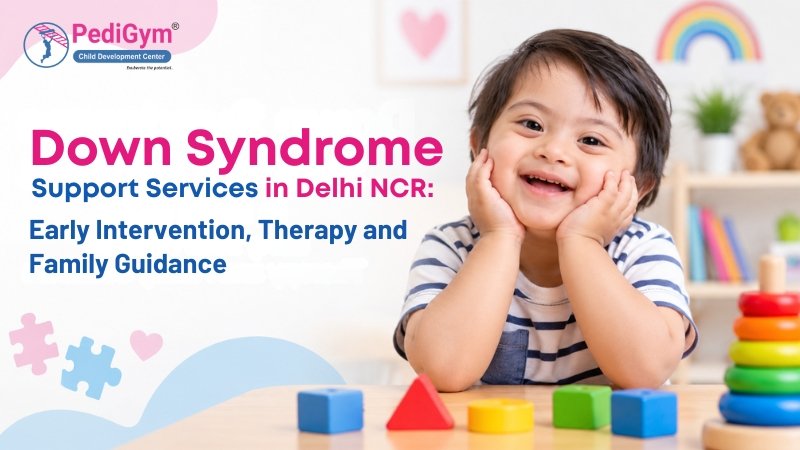
Down syndrome support in Delhi NCR can help children develop communication, motor, learning and daily-living skills through individualized therapy and early intervention. Because every person with Down syndrome has different strengths and developmental needs, the most effective approach is usually a structured plan based on an individual assessment rather than a one-size-fits-all program.
At PediGym Child Development Center, Dr. Nitin, Founder and a DMI Level C Certified Therapist, leads structured, evidence-based pediatric therapy programs in Faridabad and Gurgaon. The focus is on understanding each child’s developmental profile, setting practical goals and involving parents in the therapy journey.
Important: Down syndrome is a lifelong genetic condition, not something that can be “cured” through therapy. However, appropriate medical care, developmental intervention and family support can help a child build greater independence and participate more fully in everyday life.
What Is Down Syndrome?
The Down syndrome definition is a genetic condition associated with an extra copy of chromosome 21, either fully or partially. Most people have 46 chromosomes arranged in 23 pairs, whereas a person with Down syndrome commonly has an additional chromosome 21, resulting in 47 chromosomes.
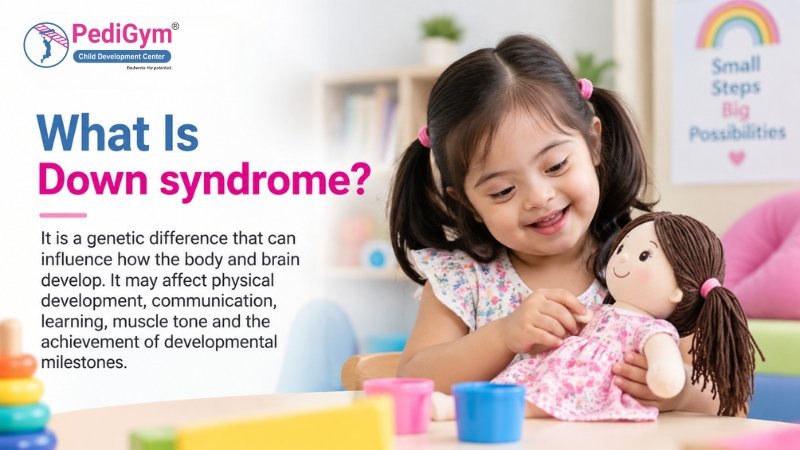
In simple terms, what is Down syndrome? It is a genetic difference that can influence how the body and brain develop. It may affect physical development, communication, learning, muscle tone and the achievement of developmental milestones.
The Down syndrome meaning should therefore be understood beyond physical characteristics or a diagnosis. Each child has an individual personality, learning style, abilities and potential. Therapy should focus on the child’s functional needs rather than defining the child by the condition.
Trisomy 21 Explained
The term trisomy 21 means that a person has three copies of chromosome 21 instead of the usual two.
There are three main chromosomal forms:
- Trisomy 21: The most common form, accounting for about 95% of cases.
- Translocation: Around 3% of cases, where extra chromosome 21 material is attached to another chromosome.
- Mosaicism: Around 2% of cases, where only some cells have an extra chromosome 21.
These differences can be identified through chromosomal testing.
The etiology of Down syndrome is related to extra chromosome 21 material. In many cases, this happens because of an error in chromosome separation when reproductive cells are formed. It is not caused by anything a parent did before or during pregnancy.
Understanding the cause can help families, but it should not become the focus of a child’s development. The more important question is: What support does this child need now?
Down syndrome Chromosome Number
The usual human chromosome number is 46. In most cases, Down syndrome is associated with 47 chromosomes, because of an additional copy of chromosome 21.
Understanding the Down syndrome chromosome number helps explain the genetic basis of the condition, but chromosome count alone cannot predict a child’s abilities, personality, learning potential or future development.
Common Down Syndrome Symptoms and Developmental Challenges
Down syndrome symptoms can vary considerably between individuals. A child may have some characteristic physical features and developmental differences without experiencing every commonly associated challenge.
Developmental areas that may require additional support include:
- Gross motor development: sitting, crawling, standing, walking, balance and coordination.
- Fine motor skills: grasping objects, drawing, using utensils and managing clothing fasteners.
- Speech and language: understanding language, building vocabulary, pronunciation and expressing needs.
- Cognitive and learning skills: attention, problem-solving, memory and learning new concepts.
- Social and adaptive skills: play, interaction, self-care and participation in everyday routines.
- Muscle tone and posture: lower muscle tone can influence movement and physical skill development.
Children may also have an increased likelihood of certain medical concerns, including heart conditions, hearing difficulties, vision problems, sleep-related concerns and thyroid issues. Regular medical follow-up is therefore an important part of comprehensive care.
Diagnosis and Testing
Down syndrome can be identified through prenatal screening, diagnostic testing during pregnancy or chromosomal testing after birth.
Prenatal Screening
Prenatal screening can estimate the likelihood of the condition. Common screening approaches include:
- NIPT (non-invasive prenatal testing): A blood test that screens for certain chromosomal conditions, including trisomy 21.
- Nuchal translucency screening: An ultrasound measurement performed during early pregnancy as part of screening.
- Maternal blood screening: Blood tests that can help estimate the likelihood of certain chromosomal conditions.
Screening results do not by themselves confirm a diagnosis. When a definitive prenatal diagnosis is needed, diagnostic testing may be considered.
Prenatal Diagnostic Tests
- CVS (chorionic villus sampling): A diagnostic procedure that examines placental tissue for chromosomal abnormalities.
- Amniocentesis: A diagnostic procedure that examines a sample of amniotic fluid for chromosomal changes.
Chromosomal Testing After Birth
If Down syndrome is suspected after birth, chromosome testing can confirm the diagnosis.
A karyotype test examines the chromosomes and can identify the extra chromosome 21 or other chromosomal patterns associated with the condition.
A FISH test uses fluorescent probes to look for specific chromosome changes and can provide faster preliminary information in appropriate cases.
Families should discuss the most appropriate testing option with a qualified medical professional based on their individual circumstances.
Why Early Intervention Matters
Early intervention is an important part of developmental care. It can include physical therapy, occupational therapy, speech and language therapy, educational support and other services depending on the child’s needs.
For a young child, therapy is not simply about completing exercises. It should connect directly to functional goals, for example, improving sitting balance so the child can play more independently, developing hand skills for feeding, or strengthening communication so the child can express choices and needs.
Developmental monitoring can also help identify areas where additional support may be beneficial. Early identification allows families and professionals to plan appropriate intervention rather than waiting for difficulties to become more significant.
Therapy and Developmental Support
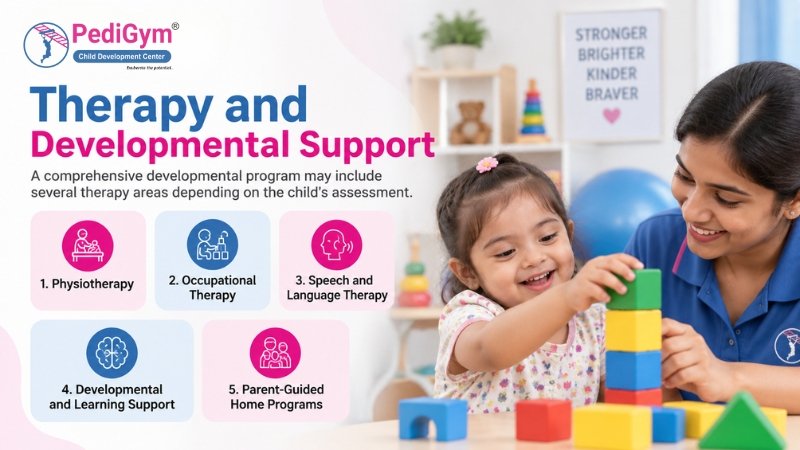
A comprehensive developmental program may include several therapy areas depending on the child’s assessment.
1. Physiotherapy
Physiotherapy can focus on strength, balance, posture, coordination, mobility and age-appropriate gross motor skills. For children with low muscle tone or delayed motor development, therapy can support progression toward functional milestones.
2. Occupational Therapy
Occupational therapy can address fine motor abilities, sensory-motor development, hand-eye coordination and activities of daily living. Goals may include feeding, dressing, handwriting readiness, play skills and greater independence.
3. Speech and Language Therapy
Communication is a major area where some children benefit from targeted intervention. Speech and language therapy may work on understanding language, vocabulary, communication, speech clarity and functional expression.
4. Developmental and Learning Support
Therapy can incorporate attention, imitation, cognitive skills, problem-solving, play and early learning activities. The aim is to make learning meaningful and connected to the child’s everyday environment.
5. Parent-Guided Home Programs
Parents are an important part of effective intervention. Simple activities integrated into meals, playtime, dressing, communication and household routines can reinforce skills outside therapy sessions.
Choosing the Right Developmental Centre in Delhi NCR
Families looking for Down syndrome support in Delhi NCR should consider more than the number of therapy services offered by a centre. Look for a program that:
- Begins with a detailed developmental assessment.
- Creates individualized, measurable goals.
- Uses age-appropriate and evidence-informed intervention.
- Tracks progress instead of relying only on attendance.
- Involves parents in goal setting and home activities.
- Coordinates with medical professionals when health concerns affect development.
- Adjusts the therapy plan as the child develops.
A good developmental program should recognize that progress is not identical for every person with Down syndrome. One child may need greater assistance with motor development, while another may primarily need communication, learning or independence-focused support.
Looking Beyond Childhood
Developmental support should not stop simply because a child reaches adolescence or adulthood. As needs change, goals may shift from early milestones toward communication, self-care, education, vocational preparation, social participation and greater independence.
Long-term health monitoring also remains important. Adults with Down syndrome may continue to require appropriate medical follow-up, including monitoring for conditions such as thyroid problems and other age-related health concerns.
Families can gradually work toward practical adult-life skills, including:
- Personal care and daily routines
- Communication and social participation
- Household and community activities
- Education and vocational preparation
- Supported employment where appropriate
- Independent or supported living skills
The aim is to build on the individual’s strengths and provide the level of support needed at each stage of life.
Down Syndrome Support at PediGym Child Development Center
At PediGym Child Development Center, Dr. Nitin, Founder and a DMI Level C Certified Therapist, leads structured pediatric therapy programs designed around individual developmental needs in Faridabad and Gurgaon.
The approach can focus on practical developmental goals such as movement, communication, coordination, functional independence, learning readiness and participation in everyday activities.
Rather than comparing a child with a fixed milestone timeline, therapy should identify the child’s current abilities and build the next achievable skills. Regular reassessment can help therapists and parents understand what is improving, what needs modification and which goals should come next.
Frequently Asked Questions
How common is Down syndrome?
According to the CDC, Down syndrome occurs in about 1 in every 640 babies born in the United States.
Can Down syndrome be cured?
No. Down syndrome is a lifelong genetic condition. Therapy does not remove the extra chromosome. Instead, intervention aims to support development, functional abilities, communication, participation and independence.
What is the Down syndrome chromosome number?
Most people with Down syndrome have 47 chromosomes because of an extra copy of chromosome 21. However, chromosomal variations such as translocation and mosaicism also exist.
What are the main Down syndrome symptoms?
Developmental differences may involve motor skills, speech and language, learning, muscle tone and adaptive skills. Physical characteristics can also be present. However, symptoms and their severity differ from one individual to another.
How is Down syndrome diagnosed?
Diagnosis may involve prenatal screening, prenatal diagnostic testing or chromosomal testing after birth. Karyotype testing can confirm the chromosomal pattern, while FISH can provide faster preliminary information in appropriate cases.
When should therapy begin?
Developmental support can begin when a need is identified. Early intervention is particularly valuable because it provides opportunities to build foundational skills during early childhood. However, intervention can remain beneficial at different ages.
How can parents support therapy at home?
Parents can reinforce therapy through everyday activities such as talking during routines, encouraging functional communication, practicing age-appropriate self-care, playing movement games and providing opportunities for independent participation. The specific home program should be based on the child’s individual goals.
What is the etiology of Down syndrome?
The condition is usually caused by an extra copy of chromosome 21 resulting from an error in cell division. This may occur randomly during the formation of reproductive cells. Translocation and mosaicism are less common genetic forms.
How do I explain Down syndrome to a child or family member?
Explain it in simple, respectful language. You can describe it as a genetic difference that may affect how a person’s body develops, how they learn or how they communicate. Emphasize the person’s strengths, individuality and abilities rather than focusing only on limitations.
Take the Next Step With Individualized Support
A Down syndrome diagnosis does not define what a child can achieve. With appropriate medical monitoring, early intervention, consistent therapy and an encouraging home environment, children can develop important skills and greater independence.
If you are looking for Down syndrome support in Delhi NCR, an individualized developmental assessment can be a useful starting point. The goal is not to make every child follow the same path, but to understand where the child is today and create a practical roadmap for the skills that matter most to the child and family.
Medical Disclaimer
This article is for educational purposes and does not replace diagnosis, medical evaluation or individualized advice from a qualified healthcare professional. Therapy recommendations should be based on the child’s developmental and medical needs.
Sources Used for Medical Accuracy

Dr. Nitin, Founder of PediGym Child Development Center, is a dedicated pediatric therapy expert and DMI Level C Certified Therapist leading structured, evidence-based therapy programs in Faridabad and Gurgaon. Under his guidance, PediGym provides comprehensive pediatric rehabilitation focused on improving motor skills, coordination, sensory processing, speech clarity, and functional independence through personalized intervention plans.