
Occupational Therapy in GurugramSmall hands, big skills, brighter independence.
Struggling with holding a pencil, buttoning clothes, staying focused or managing daily tasks? PediGym provides individualized, play-based occupational therapy to help your child learn, play and do more on their own.
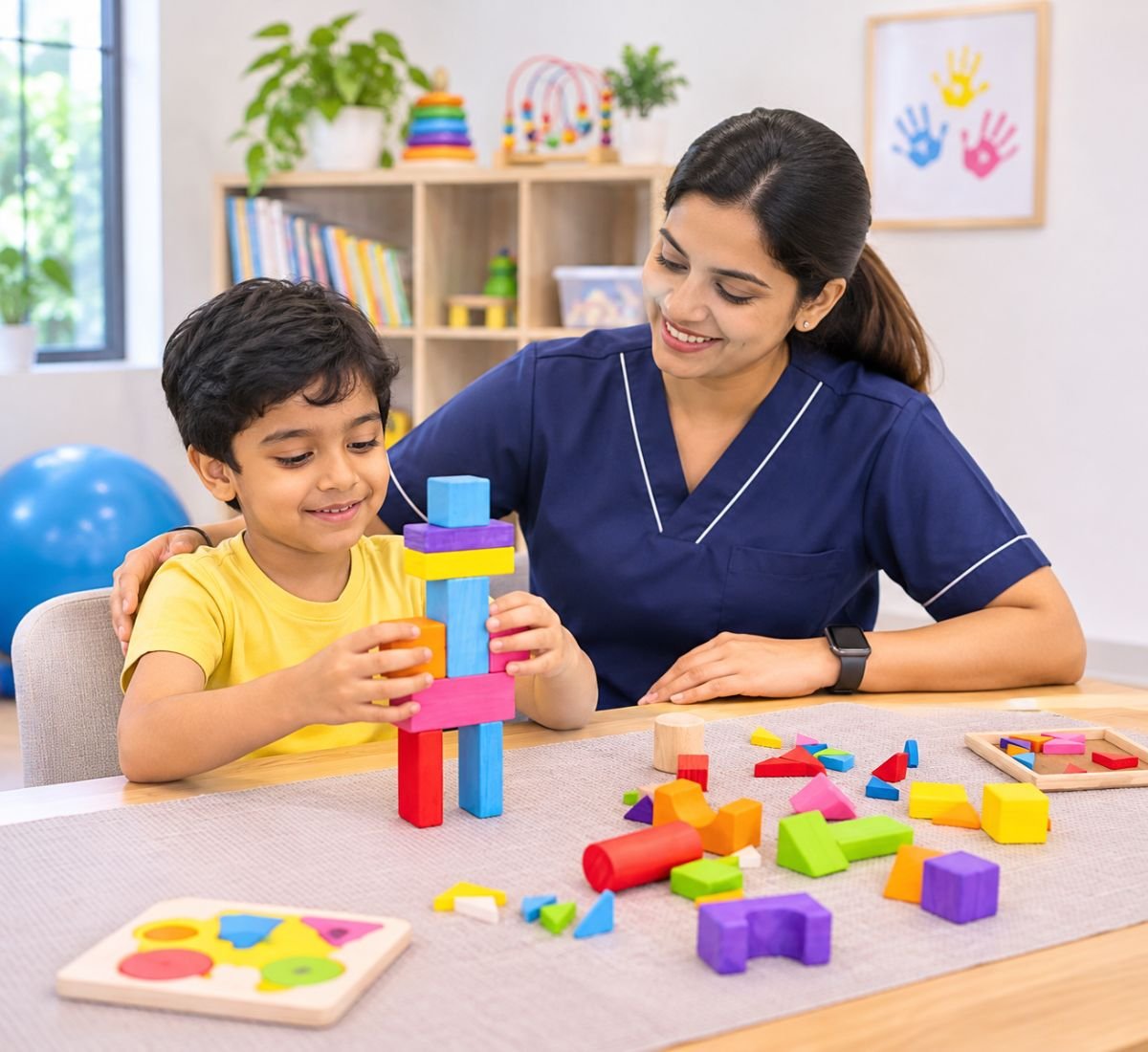 Add hero photo here
What is occupational therapy for kids?
For a child, the main “jobs” are playing, learning and caring for themselves. Occupational therapy builds the hand skills, coordination, focus and sensory comfort behind them, through guided play. An assessment shows what your child needs.
May find hard
- Buttoning a shirt or tying shoes
- Brushing teeth independently
- Following the dressing order
OT builds
- Finger strength and dexterity
- Sequencing and body awareness
- Confidence with routines
May find hard
- Holding a pencil comfortably
- Copying from the board
- Sitting and focusing on tasks
OT builds
- Grip and writing stamina
- Eye-hand coordination
- Posture and attention
May find hard
- Using scissors or building blocks
- Catching, throwing, climbing
- Joining games with others
OT builds
- Coordination and motor planning
- Turn-taking and sharing
- Comfort with movement
May find hard
- Using a spoon or fork neatly
- Certain food textures
- Settling down after meals
OT builds
- Self-feeding skills
- Sensory comfort
- Calm, predictable routines
Things parents often tell us
If any of these sound familiar, an occupational therapy assessment can help you understand what your child needs.
My child holds the pencil very tightly and gets tired quickly.
Buttons, zips and laces are a daily struggle.
His handwriting is slow and hard to read.
Scissors and building blocks feel difficult for her.
Getting dressed takes a lot of help from us.
She avoids certain textures, clothes or foods.
He finds it hard to sit still and finish a task.
She bumps into things and avoids the playground.
Every child develops at their own pace. An assessment shows whether extra support could make daily tasks easier.
Six skills that shape your child’s day
Goals are chosen after assessment. These are the areas occupational therapy commonly supports.
Fine motor skills
Grip, finger strength and hand coordination.
Handwriting
Pencil control, letter formation and writing stamina.
Self-care
Dressing, feeding and grooming with more independence.
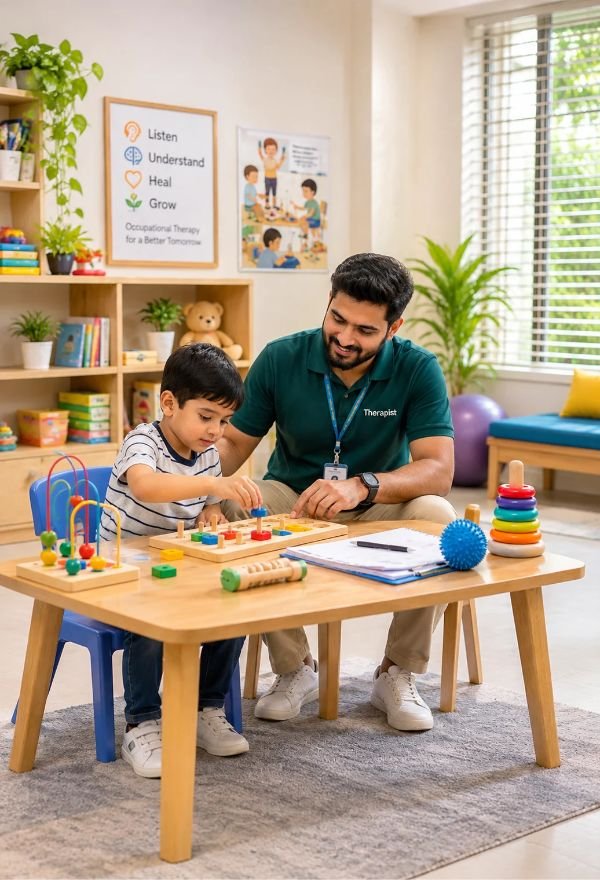
Visual-motor skills
Eye-hand coordination for drawing, copying and catching.
Sensory regulation
Staying calm, attentive and comfortable in everyday settings.
Play and social skills
Turn-taking, sharing and joining in with others.
How occupational therapy at PediGym works
Initial consultation
You share history, routines and daily challenges.
Assessment
The therapist observes hand skills, coordination, attention and sensory responses.
Individualized plan
Goals match your child’s needs and interests.
Therapy sessions
Play-based activities build skills and independence.
Parent guidance
Simple ways to practise at home.
Concerns we support
The concerns parents most often bring to us, by age. Not sure which one applies? An assessment will help you find out.
- Motor milestones arriving later than expected
- Difficulty with self-feeding
- Strong reactions to textures or sounds
- Little interest in playing with objects
- Fine motor delay with grasping and stacking
- Trouble with dressing and toileting
- Difficulty holding crayons or scissors
- Short attention span during play
- Handwriting difficulty
- Clumsiness or poor coordination
- Trouble focusing in class
- Difficulty with routines and organization
Also supported: daily living and motor challenges linked with neurodevelopmental conditions.

Dr. Nitin Gupta
Dr. Nitin Gupta brings extensive experience in child development and therapy, with a focus on helping children build movement, learning, communication and daily living skills. His child-centered approach ensures each child receives the right support at the right time.
Why parents choose PediGym for occupational therapy in Gurugram
Want to know if your child needs support? Our team can help you understand the next steps.
Experienced child development team
Therapy is planned around each child’s developmental needs.
Individualized programs
Goals differ according to the child’s abilities and interests.
Parent involvement
Parents learn ways to build skills at home, between sessions.
Multidisciplinary support
Where appropriate, goals can be coordinated with other developmental therapies.
Occupational therapy center in Gurugram
What parents say about PediGym
“My son struggled to hold a pencil and button his shirt. After a few months he writes more comfortably and dresses himself. The home activities really helped.”
“Our daughter is calmer and more confident with daily tasks. The therapist explained every step and kept us involved.”
“Sessions feel like play, so my son looks forward to going. We get regular updates on his goals.”
Frequently asked questions
Quick answers to what parents ask us most about occupational therapy.
What does an occupational therapist do for children?
They help children build the skills needed for play, learning and self-care, such as hand skills, coordination, attention and sensory regulation, using play-based activities.
When should I consider occupational therapy?
If writing, dressing, eating, focusing or coordination seem much harder for your child than expected for their age, an assessment can clarify whether therapy would help.
What happens in the first assessment?
The therapist talks with you about history and routines, then observes your child through play and simple tasks. You then discuss findings and next steps together.
Is it only for children with a diagnosis?
No. Many children are assessed because parents notice everyday difficulties. The therapist decides what support suits your child.
How long does therapy take?
It varies, because every child’s needs and progress differ. We discuss a plan after the assessment.
What can parents do at home?
Offer play with clay, blocks and drawing, involve your child in simple chores, keep routines predictable and follow your therapist’s suggested activities.
Concerned About Your Child’s Daily Skills?
Every child’s development is different. If you have concerns about your child’s hand skills, focus or everyday independence, our team can help you understand the next steps.