Early identification of disabilities in children plays a vital role in ensuring timely intervention and better developmental outcomes. The early years of life are a crucial period for brain development, learning, and skill formation. When developmental challenges are recognized at the right time, children have a greater chance to build essential abilities with appropriate support.
What is Disability in Children?
A disability in children refers to a condition that affects physical, cognitive, sensory, emotional, or social development and may limit a child’s ability to perform age-appropriate activities independently. These challenges can range from mild to severe and may impact learning, communication, mobility, behavior, or self-care skills. Disabilities may be:
- Congenital (present at birth) due to genetic or prenatal factors
- Developmental, appearing as the child grows
- Acquired, resulting from illness, injury, or environmental factors
Understanding disability as a difference in development—not a lack of potential—is essential. With the right support, children can build skills, confidence, and independence.
Types of Disability in Children
Children’s disabilities can be broadly categorized based on the area of development they affect. Each type presents differently, and some children may experience more than one type simultaneously (known as multiple or associated disabilities). Children’s disabilities can be broadly categorized based on the area of development they affect.
1. Intellectual Disability
Intellectual disability involves limitations in intellectual functioning (such as reasoning, learning, and problem-solving) and adaptive behaviors required for everyday life.
Condition:
Intellectual disability is a developmental condition in which a child has below-average intellectual functioning and difficulty with adaptive skills such as communication, self-care, learning, and social interaction. These challenges affect the child’s ability to function independently in daily life.
Early Signs:
- Delayed milestones like sitting, walking, or talking
- Difficulty understanding simple instructions
- Slow learning compared to peers
- Poor problem-solving and memory skills
Early intervention focuses on improving daily living skills, communication, and social participation.
2. Learning Disabilities
Learning disabilities affect how a child processes information. These difficulties are not related to intelligence but to how the brain understands language, numbers, or symbols.
Condition:
Learning disabilities are neurodevelopmental conditions that affect how the brain processes information related to reading, writing, spelling, or mathematics. Children with learning disabilities usually have normal intelligence but struggle with specific academic skills.
Early Signs:
- Difficulty recognizing letters, sounds, or numbers
- Trouble remembering instructions or sequences
- Poor reading readiness
- Challenges with handwriting, attention, and organization
Support through remedial education and multisensory teaching can significantly improve academic performance.
3. Autism Spectrum Disorder (ASD)
Autism Spectrum Disorder is a neurodevelopmental condition that affects communication, social interaction, sensory processing, and behavior. The severity and presentation vary widely among children.
Condition:
Autism Spectrum Disorder is a developmental condition that affects a child’s ability to communicate, interact socially, and respond to the environment. Children with ASD may show differences in behavior, sensory responses, and play skills, with varying levels of support needs.
Early Signs:
- Limited or no eye contact
- Delayed speech or lack of speech
- Repetitive behaviors such as hand flapping or spinning
- Difficulty responding to name or engaging in play
Early therapies such as speech therapy, occupational therapy, and behavioral intervention help improve communication and social skills.
4. Speech and Language Disability
Speech and language disabilities affect a child’s ability to produce sounds, understand language, or express thoughts clearly.
Condition:
Speech and language disability refers to difficulties in understanding language (receptive skills), expressing thoughts and needs (expressive skills), or producing clear speech sounds appropriate for age.
Early Signs:
- Limited vocabulary for age
- Difficulty forming words or sentences
- Poor understanding of questions or instructions
- Frustration, tantrums, or withdrawal due to communication challenges
Speech and language therapy supports clarity, comprehension, and effective communication.
5. Physical Disability
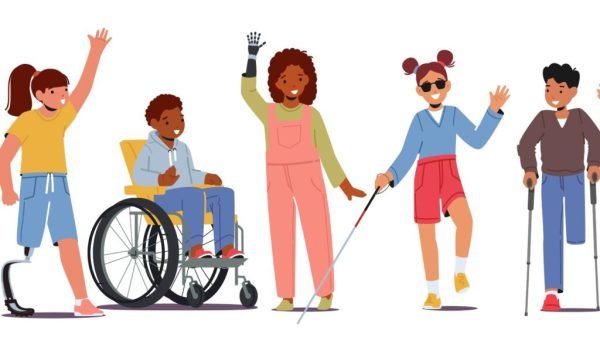
Physical disabilities impact a child’s movement, posture, balance, and muscle coordination. These may affect gross motor and fine motor abilities.
Condition:
Physical disability is a condition that affects a child’s movement, muscle strength, posture, or coordination, making it difficult to perform age-appropriate motor activities and daily tasks.
Early Signs:
- Stiff or floppy muscles
- Difficulty crawling, standing, or walking
- Poor balance and coordination
- Limited use of one side of the body
Physiotherapy and occupational therapy play a key role in improving mobility and functional independence.
6. Sensory Processing Disorder
Sensory Processing Disorder (SPD) occurs when the brain has difficulty receiving, organizing, or responding appropriately to sensory input.
Condition:
Sensory Processing Disorder occurs when a child has difficulty interpreting and responding to sensory input such as touch, sound, movement, taste, or visual stimuli, affecting daily activities and behavior.
Early Signs:
- Overreaction or underreaction to sounds, textures, lights, or movement
- Avoidance of certain clothing, foods, or activities
- Poor body awareness and coordination
- Difficulty with attention, emotional regulation, or transitions
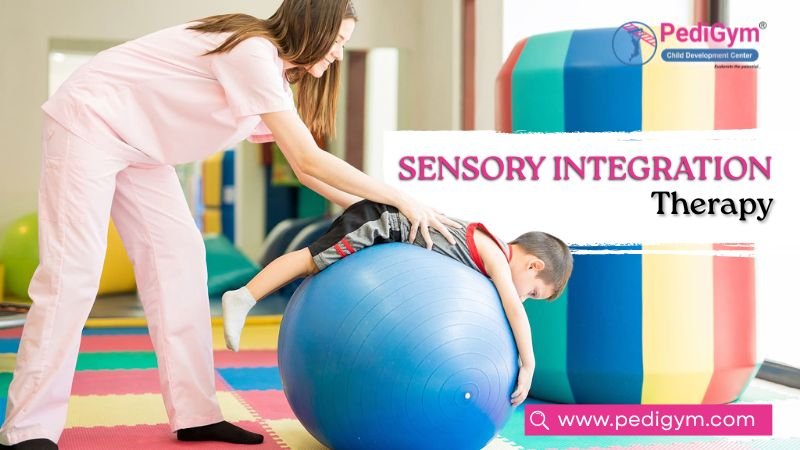
Occupational therapy with sensory integration techniques helps children respond more effectively to sensory information.
7. Hearing and Visual Disabilities
Hearing and visual disabilities affect a child’s ability to receive auditory or visual information, which can influence speech, learning, and social development.
Condition:
Hearing and visual disabilities involve partial or complete difficulty in hearing or seeing, which can interfere with a child’s communication, learning, and social development.
Early Signs:
- Not responding to sounds, voices, or name
- Delayed speech development
- Squinting, rubbing eyes, or holding objects very close
- Difficulty following visual or auditory instructions
Early screening, assistive devices, and therapy support better communication and learning outcomes.
Why Early Identification Is Important?
The early years of a child’s life are a period of rapid brain growth and neural development. During this time, the brain is highly adaptable, making it easier to build new skills and overcome developmental challenges. Identifying disabilities early allows parents and professionals to begin intervention during this critical window, when therapy is most effective.
Benefits of Early Identification:
- Improved learning and developmental skills
Early therapy strengthens foundational abilities such as attention, language, movement, and problem-solving, supporting better academic and daily functioning. - Reduced secondary behavioral and emotional issues
Addressing challenges early reduces frustration, anxiety, and behavioral concerns that often arise when children struggle to express or regulate themselves. - Better school readiness and social participation
Children gain essential pre-academic, communication, and social skills needed for smoother transitions into preschool and school environments. - Increased independence and confidence
Early support helps children perform daily activities more independently, boosting self-esteem and encouraging active participation in family and social life.
Timely therapies such as occupational therapy, speech therapy, physiotherapy, and special education help children reach their fullest potential.
When Parents Should Seek Help?
Parents and caregivers are often the first to notice subtle changes or delays in a child’s development. Trusting your instincts is important—if something feels unusual or concerning, seeking professional guidance early can make a significant difference. Developmental challenges do not always resolve on their own, and early support can prevent future difficulties.
Seek Help if a Child Shows:
- Delayed developmental milestones
Such as late sitting, crawling, walking, talking, or difficulty achieving age-appropriate skills compared to peers. - Persistent behavioral or sensory concerns
Including frequent tantrums, poor emotional regulation, extreme sensitivity to sounds, textures, or movement, or difficulty adapting to changes. - Learning difficulties in preschool or early school years
Trouble recognizing letters, numbers, shapes, following instructions, or keeping up with classroom activities. - Challenges with communication, attention, or social interaction
Limited speech, difficulty understanding language, poor eye contact, lack of peer interaction, short attention span, or difficulty focusing on tasks.
Early consultation with a pediatrician, developmental pediatrician, or child development specialist allows for proper screening, diagnosis, and timely intervention. Getting help early not only supports the child’s development but also provides parents with guidance, reassurance, and a clear plan for the next steps.
How PediGYM Supports Children with Disabilities?
At PediGYM, we provide early assessment and personalized therapy programs designed to support children with developmental challenges. Our multidisciplinary approach focuses on improving functional skills, independence, and overall development in a supportive environment.
Conclusion
Understanding the types of disability in children and recognizing their early signs empowers parents to take proactive steps. Disability does not define a child’s future—early support, consistent therapy, and a nurturing environment can create meaningful and lasting progress.
At PediGYM, we believe every child deserves the opportunity to grow, learn, and thrive. If you have concerns about your child’s development, early action today can make a lifelong difference tomorrow.