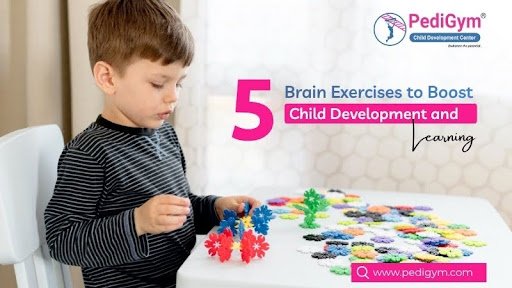
Children who struggle with focus, memory, or learning are not always “weak learners.” In many cases, their brains simply need the right kind of stimulation and repetition to build stronger learning connections.
At PediGym, we regularly work with children facing attention difficulties, delayed learning, sensory challenges, and communication issues — and we’ve seen how simple daily brain exercises can improve focus, confidence, communication, and classroom performance over time.
These 5 Brain Exercises are practical, science-backed activities parents can easily do at home. More importantly, they are designed to strengthen real-life child learning skills like listening, remembering instructions, problem-solving, emotional control, and attention — not just academic performance.
According to Dr. Nitin Gupta, Founder of PediGym and a DMI Level C Certified Therapist, structured brain development exercises help strengthen neural pathways responsible for memory, focus, coordination, and learning behavior.
Why Brain Exercises Matter for Children
In the early years, a child’s brain develops rapidly through everyday experiences. The activities children repeat regularly — how they move, play, listen, and interact — directly affect how they learn and respond to the world around them.
The right brain exercises for kids can help improve:
- Memory retention
- Focus and concentration
- Problem-solving ability
- Language processing
- Emotional regulation
- Motor coordination
- Learning speed
Many parents assume learning only happens through books or worksheets. But children often learn more effectively through movement, storytelling, rhythm, games, and social interaction because these activities engage multiple parts of the brain together.
At PediGym, therapists often combine movement-based therapy with structured cognitive development activities because children learn best when both the body and mind work together.
1. Memory Card Matching Games – Improving Memory and Attention Naturally
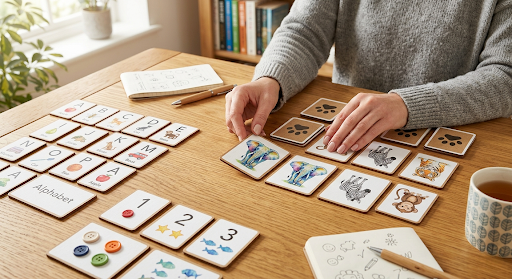
Memory card activities are one of the easiest yet most effective brain exercise games parents can introduce at home. These games help children strengthen visual memory, concentration, and information recall — skills they use every day in school and daily routines.
At PediGym, we often notice that children who practice memory-based activities regularly become better at following instructions, remembering classroom tasks, and staying attentive during conversations.
How to Play at Home
Place matching picture cards face down and ask your child to flip two cards at a time to find the correct pair. Encourage them to remember the card positions instead of guessing randomly. Start with fewer cards and gradually increase difficulty as their memory improves.
You can use:
- Animal cards
- Alphabet cards
- Number cards
- Everyday object pictures
Why It Works
Memory activities strengthen visual recall, attention span, pattern recognition, and processing speed. These types of memory improvement for children activities are especially useful for kids who quickly forget instructions or struggle to retain information during learning.
Parent Tip
Instead of correcting mistakes immediately, give your child time to think and recall independently. This helps improve problem-solving confidence naturally.
Age Guide
Ages 3–5: Start with 4–6 card pairs using simple animal or color images.
Ages 6–9: Increase to 10–15 card pairs with timed challenges.
Ages 10+: Add memory sequences or category-based matching games.
2. Cross-Crawl Movement Activities – Activating Both Sides of the Brain
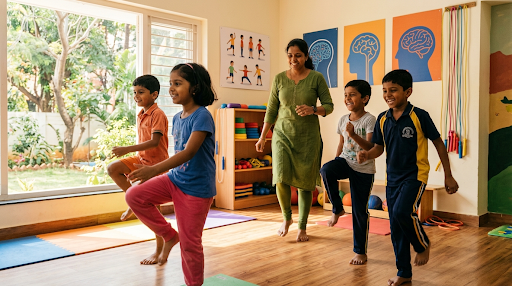
Movement-based activities are some of the most powerful yet overlooked exercises for brain development. Cross-crawl movements improve coordination between both sides of the brain, which supports focus, reading readiness, balance, and motor planning.
At PediGym, therapists frequently include these brain development exercises during Occupational Therapy sessions because physical movement helps strengthen neurological connections while keeping children actively engaged.
Simple Activity to Try
Ask your child to touch their right elbow to their left knee, then switch sides slowly and repeat for 1–2 minutes. You can make it more fun by adding music or counting rhythms.
Why It Works
Cross-body movement activates both brain hemispheres simultaneously, helping improve coordination, concentration, bilateral integration, and body awareness. Children who struggle to sit for long study sessions often respond better when movement breaks are included between learning tasks.
Parent Tip
Try using this activity before homework or study time. Even 2–3 minutes of movement can help children reset attention and stay calmer during learning activities.
Age Guide
Ages 3–5: Keep movements slow and playful with music.
Ages 6–9: Add counting patterns or rhythm challenges.
Ages 10+: Combine cross-crawl with balance exercises or coordination drills.
3. Story Building and Recall Activities – Strengthening Communication and Thinking Skills
Storytelling is one of the most effective learning improvement activities because it improves memory, imagination, language development, and sequencing skills at the same time.
Children learn more effectively when they actively participate instead of only memorizing information.
Easy Home Activity
Start a story with a simple sentence like:
“One day, a rabbit got lost in the forest…”
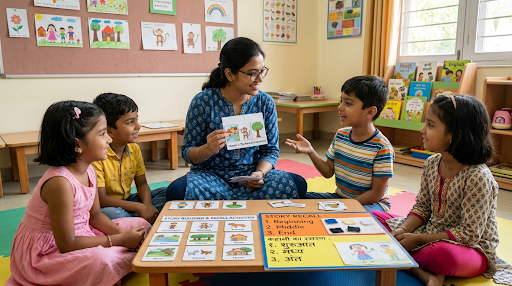
Ask your child to continue the story in their own words. Later, encourage them to retell the complete sequence from memory. You can also use picture cards or daily routines to create storytelling games.
Why It Works
These mental exercises for kids strengthen language processing, listening comprehension, creativity, sequential memory, and communication confidence.
At PediGym, therapists often use storytelling during Speech Therapy and developmental sessions because children engage more naturally when learning feels conversational and playful.
Parent Tip
Avoid interrupting or correcting every sentence. Let children express ideas freely first — confidence often improves before language accuracy does.
Age Guide
Ages 3–5: Use picture storytelling and simple one-line prompts.
Ages 6–9: Encourage longer stories with beginning, middle, and ending sequences.
Ages 10+: Add problem-solving situations or emotional storytelling challenges.
4. Focus and Attention Challenges – Helping Children Stay Engaged Longer
Today’s children are surrounded by constant distractions, making sustained attention more difficult than before. Focus is not something children automatically develop — it improves gradually through structured attention and focus activities.
Activities Parents Can Try
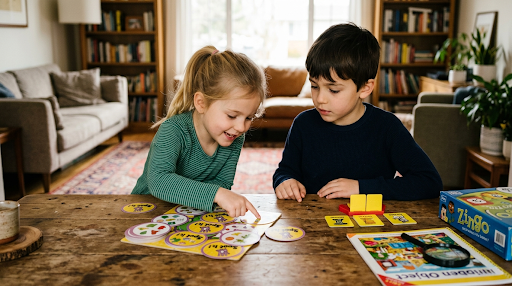
Games like:
- Spot It!
- Simon Says
- Zingo
- Hidden Object Games
- Rush Hour Junior
are highly effective because they train children to process instructions quickly while staying mentally engaged.
You can also create simple home challenges. For example, place 15–20 household objects on a table and ask your child to sort them by color, size, or purpose within a time limit.
Why It Works
These activities help improve concentration, task completion, impulse control, and mental endurance. They also support better classroom participation and listening skills over time.
Parent Tip
Break study sessions into smaller blocks with short movement or sensory breaks in between. Many children learn more effectively this way than during long uninterrupted study sessions.
Age Guide
Ages 3–5: Focus on short 2–3 minute activities with visual instructions.
Ages 6–9: Introduce timed sorting games and rule-based activities.
Ages 10+: Add strategy games like Chess, Checkers, or logic puzzles.
5. Rhythm and Clapping Exercises – Supporting Brain Coordination Through Music
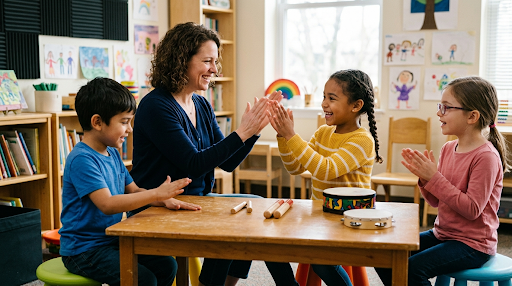
Music and rhythm-based activities are highly engaging brain exercise games because they stimulate multiple areas of the brain simultaneously. Rhythm improves listening skills, coordination, timing, and working memory while making learning enjoyable for children.
Simple Rhythm Activity
Clap a simple rhythm pattern and ask your child to repeat it. Gradually make the patterns longer or faster as they improve.
You can also include:
- Table tapping games
- Action songs
- Dance movements
- Drum beats
- Follow-the-rhythm challenges
Why It Works
Rhythm activities improve auditory processing, coordination, sequencing, timing, and learning flexibility.
At PediGym, therapists often integrate rhythm-based activities into Sensory Integration and developmental enhancement programs because children tend to stay more attentive and emotionally engaged when music and movement are combined together.
Parent Tip
Children who resist sitting activities often participate more actively in rhythm-based games because they feel playful instead of instructional.
Age Guide
Ages 3–5: Use action songs and simple clap-copy games.
Ages 6–9: Add rhythm memory patterns and movement coordination.
Ages 10+: Introduce dance sequences or musical timing challenges.
What Parents Should Know About Brain Development
Many parents try different activities at home but still wonder, “Is this actually helping my child?” The truth is, brain development doesn’t happen overnight. Children improve through repeated experiences, daily interaction, and consistent practice — not by doing one activity perfectly for a single day.
Skills like focus, memory, listening, communication, and problem-solving need regular stimulation to become stronger over time. Just like physical exercise builds body strength gradually, brain exercises for kids help strengthen learning and thinking abilities step by step.
At PediGym, we often see parents focusing heavily on worksheets, study hours, or screen-based learning apps. But children usually respond better to activities that feel natural and engaging — like movement games, storytelling, memory challenges, and rhythm-based play.
The best 5 Brain Exercises are not the most complicated ones. They are the activities children genuinely enjoy and willingly repeat consistently without pressure.
What We Recommend at PediGym
- Keep activities playful and stress-free
- Avoid turning every activity into “study time”
- Reduce excessive passive screen exposure
- Include movement-based activities daily
- Encourage effort instead of constantly correcting mistakes
- Practice consistently, even for 15–20 minutes a day
Most long-term improvement comes from consistency, not intensity. Children who enjoy the learning process are more likely to stay engaged, build confidence, and develop stronger learning skills naturally over time.
When Should Parents Consider Professional Help?
Brain exercises and daily activities support healthy development, but some children may continue struggling with communication, attention, memory, or coordination despite regular practice.
Parents should consider professional guidance if their child consistently shows signs like:
- Limited eye contact
- Delayed speech or unclear communication
- Difficulty understanding instructions
- Very short attention span or constant hyperactivity
- Poor balance or coordination
- Difficulty remembering daily tasks
- Trouble focusing during learning or play
Many parents wait, hoping their child will “catch up naturally,” but early support often makes learning easier and reduces frustration for both the child and family.
At PediGym, therapists identify the root causes behind attention, learning, sensory, and communication difficulties and create personalized therapy plans combined with practical home-based learning improvement activities parents can continue daily.
If your child struggles with focus, speech, memory, or developmental delay challenges, early intervention can make a significant difference in long-term confidence and independence.
Frequently Asked Questions
At what age should brain exercises start?
Simple brain development exercises can begin as early as 2–3 years through movement, storytelling, sensory play, and interactive games.
How long should children practice brain exercises daily?
Most children benefit from 15–20 minutes of structured activities daily rather than long sessions occasionally.
Can brain exercises help children with ADHD or poor attention?
Structured attention and focus activities can support concentration, impulse control, and learning engagement, especially when combined with professional guidance.
Are movement-based activities better than worksheets?
For many young children, movement-based learning improves engagement, memory retention, and participation more effectively than long passive study sessions.
When should parents seek professional assessment?
Parents should seek guidance if difficulties with speech, attention, memory, sensory processing, or coordination continue despite regular home practice.
Final Thoughts
The brain grows through experience. Every puzzle solved, movement repeated, story created, and rhythm copied helps shape a child’s learning ability over time.
These 5 Brain Exercises are simple, practical, and highly effective when practiced consistently. More importantly, they help children build confidence, communication, focus, and independence — not just academic skills.
At PediGym Child Development Center, we believe every child has the potential to grow, learn, and thrive when given the right support at the right time.

Dr. Nitin, Founder of PediGym Child Development Center, is a dedicated pediatric therapy expert and DMI Level C Certified Therapist leading structured, evidence-based therapy programs in Faridabad and Gurgaon. Under his guidance, PediGym provides comprehensive pediatric rehabilitation focused on improving motor skills, coordination, sensory processing, speech clarity, and functional independence through personalized intervention plans.