
Medically reviewed by: Dr. Nitin, Founder of PediGym Child Development Center | DMI Level C Certified Therapist, operating three centers across Faridabad (Sector 85 and Sector 17) and Gurgaon (DLF Phase 2).
Understanding the causes of disability is important because early awareness often leads to earlier support, better treatment decisions, and improved outcomes. For parents, noticing that a child is not walking, speaking, learning, or interacting at the expected pace can raise many questions and concerns. Adults may experience similar uncertainty when an illness or injury suddenly affects movement, communication, or daily activities.
Disability can affect different areas of life, including movement, learning ability, communication, behaviour, hearing, vision, and overall development. Certain conditions are present from birth, while others develop later because of injuries, illnesses, neurological conditions, or environmental factors.
According to the World Health Organization (WHO), approximately 1.3 billion people — nearly 16% of the global population — live with significant disability. WHO and UNICEF estimates also suggest that 317 million children and young people worldwide live with conditions contributing to developmental disability.
Childhood and adult disability causes can involve several factors. Genetic disorders, prenatal complications, maternal infections, developmental conditions, birth-related complications, injuries, poor nutrition, environmental toxins, and chronic illnesses can all contribute.
Understanding these factors helps parents and caregivers identify concerns earlier and seek the right support at the right time.
What Is Disability?
Disability is a condition that affects how a person moves, learns, communicates, behaves, hears, sees, or performs everyday activities.
Think about the small activities children do every day — walking, running, climbing stairs, speaking with family members, learning new things, and playing with friends.
These actions seem simple, but they involve several systems in the body working together. The brain sends signals, muscles respond, bones support movement, and the senses help children understand the world around them.
When one or more of these systems do not work as expected, certain activities can become difficult.
Some Disabilities can affect different areas including movement, communication, learning, emotions, and sensory skills.
Disability also does not define a person’s abilities or future potential. With early intervention, therapy, education, and support, many children continue building important life skills and independence.
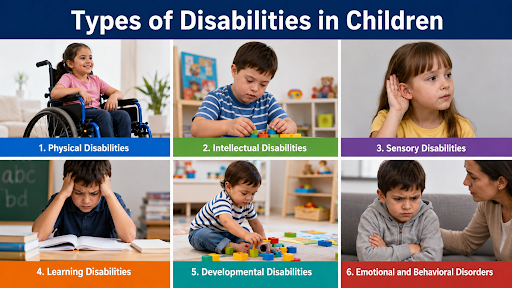
Types of Disabilities in Children
There is a wide range of types of disabilities in children, and each one affects development differently.
Some conditions affect movement. Others influence learning, communication, behaviour, or emotional development.
Understanding these categories helps parents identify challenges and seek timely support.
1. Physical Disabilities
Physical disabilities affect movement, posture, balance, or muscle control. Parents often notice these challenges during daily activities. A child may struggle with sitting independently, walking, climbing stairs, or maintaining balance.
-
Cerebral Palsy: Brain injury before, during, or shortly after birth causes cerebral palsy. It affects muscle tone, posture, and movement control. Cerebral palsy affects approximately 1 in 345 children, making it one of the most common neurological disability conditions in childhood.
-
Spina Bifida: Spina bifida affects spinal development and can influence physical function and mobility.
-
Muscular Dystrophy:Muscular dystrophy gradually weakens muscles over time. Parents often notice difficulties with running, climbing stairs, or standing up from the floor.
2. Intellectual Disabilities
Intellectual disabilities affect learning ability, reasoning skills, and adaptive functioning.
Children may take longer to understand instructions, communicate ideas, or learn new concepts.
Examples include:
- Down syndrome
- Fragile X syndrome
- Global developmental delay
Down syndrome affects approximately 1 in every 700 births worldwide.
These are common intellectual disability causes affecting child development.
3. Sensory Disabilities
Sensory disabilities affect a child’s ability to hear, see, or process information from the environment.
Examples include:
- Visual impairments ranging from reduced vision to complete blindness.
- Hearing impairments involving partial hearing loss or complete deafness.
Children may benefit from hearing aids, speech therapy, sign language, and visual support tools.
4. Learning Disabilities
Learning disabilities affect how information is received and processed by the brain.
Children with learning disabilities may have average intelligence but struggle in specific academic areas.
Examples include:
- Dyslexia (reading difficulties)
- Dyscalculia (mathematics difficulties)
- Dysgraphia (writing difficulties)
These are common causes of learning disabilities identified during school years.
5. Developmental Disabilities
Developmental disabilities begin during childhood and affect multiple areas of development.
-
Autism Spectrum Disorder (ASD): Autism affects communication, social interaction, and behaviour. Recent CDC estimates suggest autism affects approximately 1 in 36 children.
-
ADHD: ADHD affects attention, activity level, and impulse control.
These are examples of common disabilities affecting children.
6. Emotional and Behavioral Disorders
Some disabilities affect emotional regulation and social relationships.
Examples include:
- Anxiety disorders
- Depression
- Oppositional Defiant Disorder (ODD)
Children may become withdrawn, irritable, or have difficulty focusing.
Main Causes of Disability in Children
Children grow rapidly during pregnancy and the first few years of life. During this period, the brain and body continue developing quickly.
Because of this, multiple causes of disability in children can affect development.
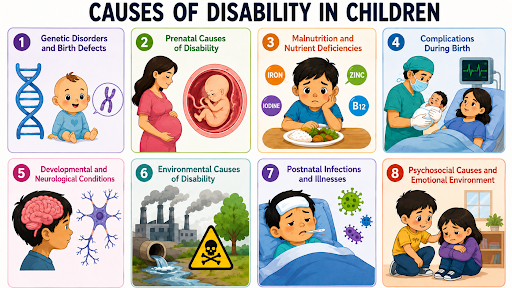
1. Genetic Disorders and Birth Defects
Genes act like instruction manuals for growth and development.
Changes in these instructions can affect physical growth, learning ability, movement, or communication.
Examples include:
- Down syndrome
- Fragile X syndrome
- Muscular dystrophy
Many parents ask:
“Can genetic disorders cause disability?”
Yes. Certain genetic causes of disability affect development, although genetics alone does not determine future outcomes.
2. Prenatal Causes of Disability
A child’s development begins before birth.
Several prenatal causes of disability can affect brain and body development.
Rubella, toxoplasmosis, and Zika virus can cross the placenta and affect fetal development.
Alcohol exposure during pregnancy can lead to Fetal Alcohol Syndrome, which can cause intellectual and behavioural difficulties.
Smoking, uncontrolled medical conditions, and poor prenatal care can also increase risks.
3. Malnutrition and Nutrient Deficiencies
Nutrition plays an important role in development.
Certain nutrient deficiencies contribute to developmental challenges and disability due to illness.
Iodine deficiency may contribute to intellectual disabilities.
Folic acid deficiency increases the risk of neural tube defects such as spina bifida.
Iron deficiency can affect learning and cognitive development.
4. Complications During Birth
Birth complications sometimes affect oxygen supply and brain function.
Examples include:
- Premature birth
- Birth trauma
- Low birth weight
- Reduced oxygen supply during delivery
These are recognized causes of permanent disability in some children.
5. Developmental and Neurological Conditions
In many cases, symptoms only become noticeable as children grow older.
Parents often first notice:
- Delayed speech
- Social interaction difficulties
- Learning challenges
- Delayed milestones
Conditions affecting the nervous system are important mental disability causes and developmental concerns.
6. Environmental Causes of Disability
Children continue developing after birth.
Exposure to harmful substances can affect brain development.
Examples include:
- Lead exposure
- Mercury exposure
- Pesticides
- Air pollution
Research links these factors with certain causes of developmental delay and learning difficulties.
7. Postnatal Infections and Illnesses
Some disability causes develop after birth because of serious infections affecting the brain and nervous system.
Examples include:
- Meningitis
- Brain inflammation
- Severe infections
- Encephalitis
Early treatment can reduce the risk of long-term complications.
8. Psychosocial Causes and Emotional Environment
Children learn through interaction, communication, and play.
Severe neglect, emotional trauma, prolonged stress, and limited stimulation can affect emotional, social, and cognitive growth.
A child’s environment influences development more than many people realize.
Congenital vs Acquired Disabilities
|
Category |
Congenital Disabilities |
Acquired Disabilities |
|
When they appear |
Present at birth |
Develop later |
|
Common causes |
Genetic disorders, prenatal complications |
Injury, illness, chronic disease |
|
Examples |
Down syndrome, cerebral palsy |
Stroke, traumatic brain injury |
|
Treatment focus |
Developmental therapy and support |
Rehabilitation and recovery |
Early Signs Parents Should Watch For
Parents usually notice small differences before anyone else.
Maybe your child avoids eye contact. Maybe speech feels delayed. Maybe walking seems different compared to other children of the same age.
Some signs to watch for include:
- Delayed speech
- Difficulty walking
- Poor balance
- Limited eye contact
- Social interaction difficulties
- Delayed developmental milestones
Trust your instincts.
Parents often notice that something feels different before professionals do. Acting on those concerns — even if the result is reassurance — is always better than waiting.
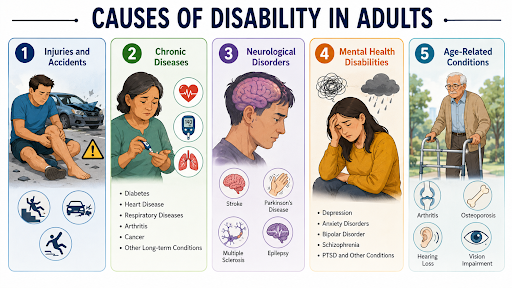
Main Causes of Disability in Adults
Adult disability causes can appear suddenly or develop gradually over time.
Injuries and Accidents
Road accidents, workplace injuries, falls, and sports injuries can affect movement and independence.
Traumatic brain injury may affect speech, memory, movement, and personality.
Spinal cord injuries can significantly affect mobility.
These are common examples of disability caused by accidents and disability due to injury.
Chronic Diseases
Chronic diseases may slowly affect physical functioning over time.
Diabetes can damage nerves and vision.
Arthritis can make movement painful.
Heart disease can affect daily activities and mobility.
These are examples of chronic diseases causing disability.
Neurological Disorders
Stroke interrupts blood supply to the brain and can affect movement, speech, memory, and thinking ability.
Parkinson’s disease and Alzheimer’s disease are also important neurological disorders causing disability.
Mental Health Disabilities
Mental health conditions affect daily life as strongly as physical conditions.
Depression, PTSD, bipolar disorder, and severe anxiety can affect relationships, work, and social participation.
These are recognized mental disability causes in adults.
Age-Related Conditions
As people age, physical changes naturally occur.
Hearing loss, vision changes, dementia, and joint degeneration become more common.
These are among the most common disability causes worldwide.
Frequently Asked Questions
What are the most common causes of disability in children?
Common causes of disability in children include developmental disorders, genetic conditions, birth complications, infections, and neurological conditions.
Can genetic disorders cause disability?
Yes. Certain genetic causes of disability affect movement, learning ability, communication, and development.
What infections during pregnancy can cause disability?
Rubella, toxoplasmosis, and Zika virus can affect fetal development and increase the risk of developmental disabilities.
Can malnutrition cause disability?
Yes. Nutritional deficiencies involving iodine, folic acid, and iron can affect brain and nervous system development.
Is autism considered a disability?
Autism spectrum disorder is considered a developmental disability because it affects communication, behaviour, and social interaction.
What causes physical disability in children?
Common causes of physical disabilities include neurological disorders, birth complications, injuries, and genetic conditions.
What is the difference between congenital and acquired disability?
Congenital disabilities are present at birth, while acquired disabilities develop later because of illness, injury, or health conditions.
Final Thoughts
The causes of disability can be different for every child and adult. Genetics, pregnancy-related factors, developmental conditions, illnesses, injuries, and environmental influences can all play a role.
The most important thing to remember is that understanding the cause is only the first step. Early identification and the right support can help children build skills, improve independence, and reach their potential over time.
If you notice developmental changes or delays in your child, trust your instincts and seek professional guidance early.

Dr. Nitin, Founder of PediGym Child Development Center, is a dedicated pediatric therapy expert and DMI Level C Certified Therapist leading structured, evidence-based therapy programs in Faridabad and Gurgaon. Under his guidance, PediGym provides comprehensive pediatric rehabilitation focused on improving motor skills, coordination, sensory processing, speech clarity, and functional independence through personalized intervention plans.