Every Parent Wants the Same Thing
Whether you’re a parent in Gurgaon juggling school schedules and work commitments or a family in Faridabad trying to make sense of the endless parenting advice online, one question comes up again and again:
“Am I giving my child the right nutrition to help them grow, learn, and thrive?”
It’s a valid concern.
Today, parents are thinking beyond height and weight. They’re paying attention to focus in the classroom, speech and language development, emotional regulation, confidence, immunity, and overall well-being.
And while there’s no single food that can magically make a child taller, smarter, or more successful, nutrition does play a powerful role in how children grow and how their brains develop.
Over the years at PediGym, while working with children across different developmental stages, we’ve noticed something important:
Children don’t need a perfect diet. They need a consistently nourishing one.
The small choices made every day often matter far more than expensive supplements, health drinks, or the latest nutrition trend on social media.
Many parents look for one “superfood” that will improve growth or boost concentration.
The reality is that healthy development comes from a combination of nutrients working together. The foods below are the ones we most often discuss with families because they provide many of the building blocks children need for growth, learning, memory, and overall development.
Why Nutrition Matters for Both Growth and Brain Development
A child’s body and brain are growing at an extraordinary pace, especially during the early years.
According to research highlighted by UNICEF and other early childhood development organisations, approximately 80% of brain development occurs during the first three years of life, making early nutrition and stimulation especially important. During this period, the brain forms millions of neural connections that influence learning, communication, memory, attention, and behaviour.
But nutrition doesn’t stop mattering after the toddler years.
School-age children need nutrients that support concentration, energy, and learning. Teenagers require additional nutritional support during periods of rapid physical growth and hormonal change.
That’s why a balanced, nutrient-rich diet remains one of the most important investments parents can make in their child’s future.
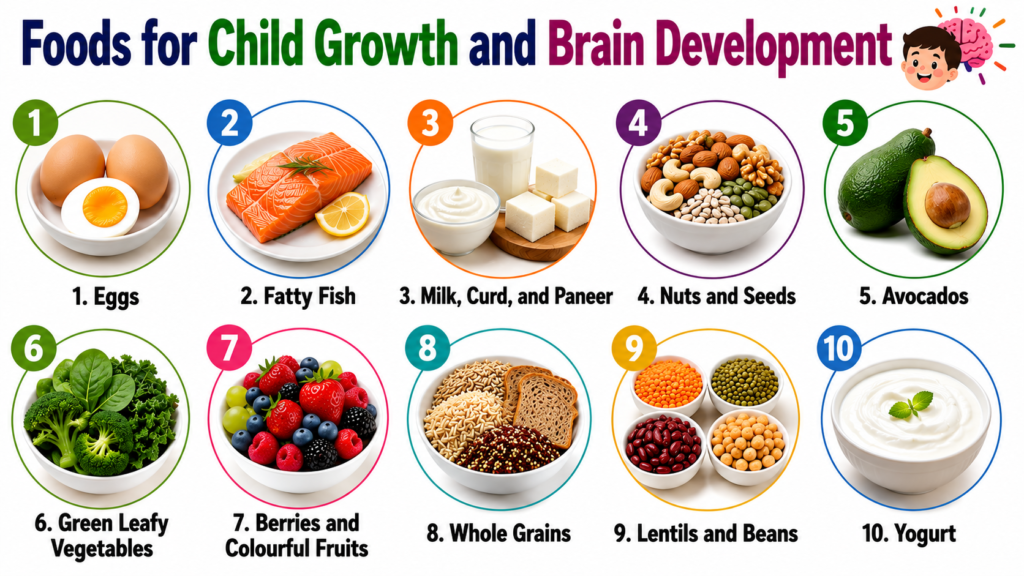
1. Eggs: One of the Most Complete Foods for Growing Children
If there is one food that earns a permanent place on our recommendation list, it’s eggs.
Eggs provide high-quality protein along with choline, a nutrient that plays an important role in brain development. A single egg contains approximately 125 mg of choline, which the brain uses to produce acetylcholine—a neurotransmitter involved in memory, learning, and attention.
They’re also rich in vitamin B12 and vitamin D, both of which contribute to healthy development.
Many parents tell us their child refuses vegetables but happily eats an omelette loaded with finely chopped spinach, carrots, or capsicum. That’s a practical win.
Especially helpful for: Toddlers (1–3 years), preschoolers (3–5 years), and school-age children (6–12 years).
Parent tip: Serve boiled eggs, vegetable omelettes, egg bhurji, or egg rolls for a simple and nutritious breakfast.
2. Fatty Fish: Fuel for the Developing Brain
The brain is made up largely of fat, and certain fats are especially important during childhood.
Fish such as salmon, sardines, and mackerel contain DHA and EPA omega-3 fatty acids. DHA is a major structural component of the brain and supports healthy communication between brain cells.
Studies have consistently linked omega-3 intake with cognitive development, attention, and learning.
For many Indian families, fish isn’t eaten regularly, which means children may miss out on these important nutrients.
Even one or two servings per week can help support healthy development.
Especially helpful for: School-age children, teenagers, and children with demanding academic schedules.
Parent tip: Fish cutlets, fish fingers, or fish sandwiches are often easier for children to accept than traditional preparations.
3. Milk, Curd, and Paneer: Everyday Foods That Support Growth
Parents often ask whether expensive health drinks are necessary. In most cases, everyday foods do the job remarkably well. Milk and dairy products provide calcium, protein, phosphorus, and vitamin D—nutrients that support healthy bones, muscles, and teeth.
During periods of rapid growth, children require a consistent supply of these nutrients to support physical development.
If your child doesn’t enjoy drinking milk, don’t worry. Curd, paneer, and yogurt can offer many of the same nutritional benefits.
Especially helpful for: Toddlers, school-age children, and adolescents during growth spurts.
Parent tip: Add paneer to sandwiches, wraps, parathas, or pulao for an easy protein boost.
4. Nuts and Seeds: Tiny Foods with Big Benefits
Almonds, walnuts, pumpkin seeds, flaxseeds, and chia seeds may be small, but they’re packed with nutrition.
These foods provide healthy fats, protein, zinc, magnesium, and vitamin E, an antioxidant that helps protect brain cells from oxidative stress.
Walnuts deserve special mention because they contain plant-based omega-3 fatty acids that support brain health.
One strategy many busy parents find useful is preparing a homemade nut and seed powder that can be added to milk, porridge, smoothies, or chapati dough.
Especially helpful for: School-going children and active children involved in sports.
Parent tip: Mix powdered nuts into familiar foods if your child is hesitant to eat them whole.
5. Avocados: Healthy Fats for Growing Minds
A few years ago, avocados were difficult to find in most Indian cities. Today, they’re available in many supermarkets across Gurgaon, Faridabad, and Delhi NCR—and for good reason.
Avocados contain healthy monounsaturated fats, folate, and vitamin B6, nutrients that support brain function and nervous system development.
They’re also naturally energy-dense, making them useful for children who struggle to meet their calorie needs. The mild flavour makes them surprisingly easy to include in meals.
Especially helpful for: Preschoolers, school-age children, and selective eaters.
Parent tip: Mash avocado onto toast, blend it into smoothies, or use it as a sandwich spread.
6. Green Leafy Vegetables
Let’s be honest. Very few children get excited about spinach. Yet leafy greens remain one of the most valuable foods for both growth and brain development.
They’re rich in iron and folate, nutrients that help support energy production, oxygen transport, and healthy brain cell development.
Low iron intake can sometimes contribute to fatigue, reduced concentration, and poor attention.
Rather than forcing large servings, try incorporating vegetables into foods your child already enjoys.
Small, consistent exposure often works better than mealtime battles.
Especially helpful for: Toddlers, school-age children, and picky eaters.
Parent tip: Spinach parathas, soups, pasta sauces, and smoothies are often more successful than serving vegetables on their own.
7. Berries and Colourful Fruits: Nature's Brain Protectors
Children’s brains work hard every day. Whether they’re learning new words, solving maths problems, or navigating social situations, their brains are constantly processing information. Colourful fruits contain antioxidants that help protect brain cells and support overall health.
Berries are especially rich in anthocyanins, compounds that have been linked to memory and cognitive function. They also provide vitamin C, which supports immunity and helps the body absorb iron.
While imported berries are popular, local fruits can be just as valuable.
Guava, oranges, pomegranate, strawberries, papaya, and seasonal fruits all deserve a place on a child’s plate.
Especially helpful for: Children of all ages.
Parent tip: Keep cut fruit visible and easily accessible after school instead of reaching for packaged snacks.
8. Whole Grains: Helping Children Stay Focused for Longer
Many children experience energy highs and lows throughout the day. One reason is that highly processed foods tend to provide quick energy followed by a crash. Whole grains release energy more gradually.
Foods such as oats, millets, whole wheat, and brown rice provide B vitamins and fibre, which support nervous system function and help children maintain steady energy levels.
Think of whole grains as slow-burning fuel for a growing body and brain.
Especially helpful for: School-going children and teenagers.
Parent tip: Start by replacing one refined grain option each day with a whole-grain alternative.
9. Lentils and Beans: Traditional Foods That Still Matter
In a world filled with imported superfoods, it’s easy to overlook the nutritional value of foods that have been part of Indian kitchens for generations.
Lentils and beans provide protein, iron, zinc, and fibre, making them excellent foods for healthy child growth.
For vegetarian families, they are especially important because they help meet daily protein and iron requirements.
The good news is that most Indian households already know how to cook them well.
Especially helpful for: Growing toddlers, school-age children, and vegetarian families.
Parent tip: Rotate different dals, rajma, chana, and legumes throughout the week to provide a wider range of nutrients.
10. Yogurt: Supporting the Gut-Brain Connection
One of the most interesting areas of child health research today is the connection between the gut and the brain.
Scientists continue to study how gut health may influence mood, behaviour, and overall well-being.
Yogurt contains probiotics, beneficial bacteria that support digestive health and help maintain a healthy gut microbiome.
It also provides calcium, protein, and vitamin B12.
For many children, it’s one of the simplest nutrient-rich foods to include regularly.
Especially helpful for: Children of all ages, particularly picky eaters.
Parent tip: Choose plain yogurt and add fresh fruit rather than buying heavily sweetened flavoured varieties.
Key Nutrients Every Parent Should Know About
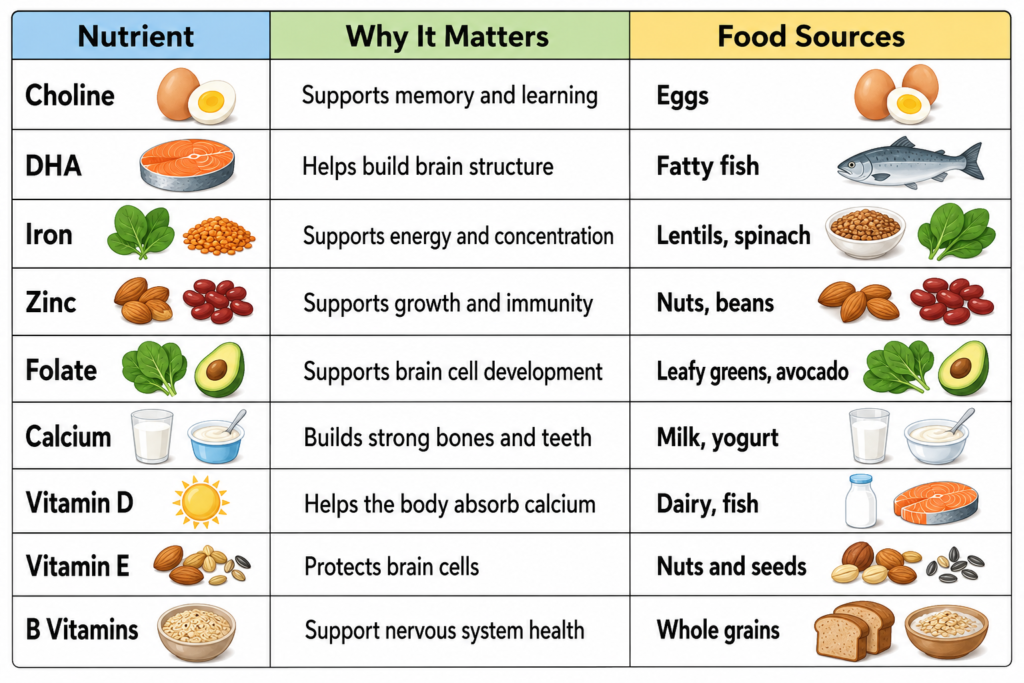
Parents often hear terms like omega-3, iron, folate, and choline but aren’t always sure why they matter.
Here’s a simple guide:
Nutrient | Why It Matters | Food Sources |
Choline | Supports memory and learning | Eggs |
DHA | Helps build brain structure | Fatty fish |
Iron | Supports energy and concentration | Lentils, spinach |
Zinc | Supports growth and immunity | Nuts, beans |
Folate | Supports brain cell development | Leafy greens, avocado |
Calcium | Builds strong bones and teeth | Milk, yogurt |
Vitamin D | Helps the body absorb calcium | Dairy, fish |
Vitamin E | Protects brain cells | Nuts and seeds |
B Vitamins | Support nervous system health | Whole grains |
What We've Learned from Working with Children
Here’s something many nutrition articles don’t mention. Children rarely struggle because of one missing food. More often, we see challenges linked to a combination of factors:
- Irregular meal schedules
- Excessive processed foods
- Poor sleep habits
- Limited physical activity
- High screen exposure
- Sensory challenges affecting food acceptance
For some children, difficulties with eating aren’t simply about being “picky.” Sensory sensitivities, oral-motor challenges, or developmental differences can influence how children respond to certain foods and textures. This is one reason why many families seek support through PediGym’s Sensory Integration Therapy and developmental programs.
Nutrition is incredibly important, but it works best when combined with movement, play, learning opportunities, and healthy daily routines.
At PediGym, we often remind parents that food provides the fuel, but experiences help build skills. Children also need quality sleep, physical activity, social interaction, and, when required, developmental support to reach their full potential. When parents have concerns about milestones, learning, communication, attention, or behaviour, an early Developmental Assessment can help identify areas where additional support may be beneficial.
That’s why child development should always be viewed as a complete picture rather than a single solution.
Foods That Are Best Kept as Occasional Treats
Parents often ask us whether certain foods can work against healthy development.
No food needs to be completely banned, but some are best kept as occasional treats rather than everyday habits.
Packaged Juices
These often contain more sugar than whole fruits and far less fibre.
Sugary Breakfast Cereals
They can cause rapid energy spikes followed by crashes that affect focus and mood.
Refined Flour (Maida) Snacks
Frequent consumption of biscuits, chips, and highly processed snacks can reduce appetite for more nutrient-rich foods.
Screen-Time Snacking
Children often eat more than they realise when distracted by screens.
Instead of focusing on restrictions, we encourage families to focus on adding more nutritious foods to everyday meals.
A Simple Rule for Parents
Instead of asking:
“Which food will make my child smarter?”
Ask:
“How can I help my child eat a wider variety of nutritious foods each week?”
That small shift in thinking often leads to better long-term outcomes. Children don’t need perfect meals. They need balanced nutrition, consistency, and supportive environments where they can grow, learn, and thrive.
How Nutrition Fits Into Child Development
Nutrition Is Important, But It’s Only One Piece of the Puzzle
One of the biggest misconceptions we see among parents is the belief that nutrition alone can solve developmental challenges.
While healthy eating provides the foundation for growth and brain development, children also need opportunities to move, communicate, explore, play, and build new skills.
At PediGym, we pair nutritional guidance with hands-on developmental support, including occupational therapy, speech and language therapy, sensory integration therapy, developmental enhancement programs, and parent coaching.
Our goal is always the same: helping children build the skills they need to participate confidently at home, in school, and in everyday life.
Frequently Asked Questions
Which food is best for brain development in children?
There isn’t a single best food. Children benefit most from a balanced diet that includes eggs, fish, dairy products, fruits, vegetables, nuts, legumes, and whole grains. Together, these foods provide the nutrients needed for healthy brain development.
How many eggs can children eat in a week?
For most healthy children, one egg per day can be part of a balanced diet. If your child has allergies or specific health concerns, consult your paediatrician before making dietary changes.
Do children need supplements for brain development?
Most children can meet their nutritional needs through a balanced and varied diet. Supplements should only be used when recommended by a healthcare professional.
What foods help improve concentration in school?
Foods rich in protein, iron, omega-3 fats, and B vitamins—such as eggs, fish, dairy products, nuts, lentils, and whole grains—can help support steady energy levels and focus.
Can poor nutrition affect learning and behaviour?
Yes. Inadequate intake of nutrients such as iron, zinc, protein, and omega-3 fatty acids may affect attention, memory, energy levels, and overall development.
My child is a picky eater. Should I be worried?
Picky eating is common during childhood. However, if your child consistently avoids entire food groups, struggles with certain textures, or experiences significant mealtime stress, it may be worth discussing these concerns with a child development or feeding specialist.
Final Thoughts
The best foods for child growth and brain development aren’t expensive supplements or the latest products promoted on social media.
They’re often the simple, everyday foods that families have relied on for generations.
Eggs. Lentils. Dairy products. Fruits. Vegetables. Nuts. Whole grains.
When these foods are combined with quality sleep, active play, and a supportive environment, children are given the strongest possible foundation for healthy growth and development.
And as parents, that’s really what we’re aiming for—not just bigger growth charts, but happier, healthier, and more confident children who are ready to thrive in the years ahead.

Dr. Nitin, Founder of PediGym Child Development Center, is a dedicated pediatric therapy expert and DMI Level C Certified Therapist leading structured, evidence-based therapy programs in Faridabad and Gurgaon. Under his guidance, PediGym provides comprehensive pediatric rehabilitation focused on improving motor skills, coordination, sensory processing, speech clarity, and functional independence through personalized intervention plans.