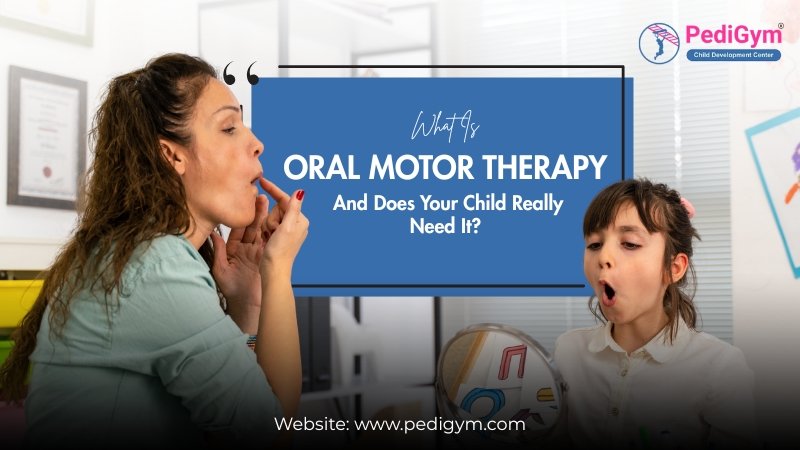
Oral motor therapy is a targeted therapy approach that improves the movement and coordination of the lips, tongue, jaw, and cheeks — but not every child needs it. It’s typically recommended only after an assessment identifies a specific functional difficulty with chewing, feeding, oral coordination, or a related concern.
Parents often hear the term oral motor therapy when their child has difficulty with feeding, chewing, drooling, oral movements, or sometimes speech. Naturally, one of the first questions parents ask is: “Does my child really need oral motor therapy?”
Every child with speech delay, unclear speech, feeding difficulty, or a developmental concern does not automatically need oral motor therapy. The most important first step is to understand what your child is struggling with and why. A professional assessment can help determine whether oral motor therapy is appropriate or whether your child may benefit more from speech therapy, feeding support, or another intervention.
What Is Oral Motor Therapy?
Oral motor therapy addresses the movement and coordination of the mouth’s structures — the lips, tongue, jaw, and cheeks — when a child has an identified functional difficulty affecting chewing, feeding, saliva control, or oral coordination.
Children use these structures throughout the day. They help a child close their lips around food or a cup, move food around the mouth, chew different textures, manage saliva, and perform many of the coordinated movements involved in speech.
This is an important distinction for parents: oral motor therapy is not simply a collection of mouth exercises that every child should do. The activities and therapy goals should be based on the child’s individual concerns and assessment findings.
For example, a child who struggles to chew may have very different therapy needs from a child who has difficulty with oral coordination. Similarly, a child with unclear speech may need direct speech therapy rather than oral motor therapy.
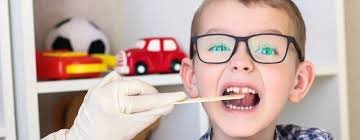
Why Oral Motor Skills Are So Important?
Oral motor skills affect far more than speech clarity — they influence eating and swallowing safety, jaw stability, saliva control, and even facial development. Most children develop these skills naturally without any intervention, which is exactly why assessment matters more than assumption.
Strong oral motor skills affect a child’s ability to:
- Eat and swallow efficiently (preventing choking or gagging)
- Use proper tongue placement for sounds like “t,” “d,” “k,” and “g”
- Maintain jaw stability for chewing and articulation
- Regulate drooling and saliva control
- Develop facial symmetry and expression
For most children, these skills develop naturally through everyday eating, chewing, and speaking — without needing any therapy at all. When they don’t develop as expected, that’s the specific gap an assessment is designed to identify.
What Causes Oral Motor Difficulties?
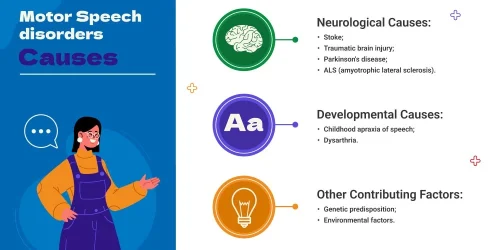
Oral motor difficulties can stem from several distinct factors — including prematurity, developmental delays, neurological conditions, sensory processing differences, and early feeding habits — which is exactly why the underlying cause needs to be identified before deciding on a therapy approach.
Premature birth or low muscle tone (hypotonia): May delay the development of essential oral motor skills for sucking, swallowing, and early speech.
Developmental delays: Slower growth in fine motor coordination can impact speech clarity and feeding ability.
Neurological conditions: (such as cerebral palsy or Down syndrome): These can affect muscle control and coordination, leading to long-term oral motor difficulties.
Sensory processing differences: Children who are overly or under-sensitive to touch in the mouth may struggle with textures, chewing, or oral awareness.
Prolonged bottle or pacifier use: Extended use can interfere with jaw and tongue development.
Limited oral exploration in early years: Less chewing or mouthing play may slow oral motor skill development.
Because these causes are so different from one another, the same surface symptom — say, difficulty chewing — can point to entirely different root causes in different children. This is exactly why an individual assessment, not a generic exercise routine, is the right starting point.
What Causes Oral Motor Difficulties?
Oral motor difficulties can stem from several distinct factors — including prematurity, developmental delays, neurological conditions, sensory processing differences, and early feeding habits — which is exactly why the underlying cause needs to be identified before deciding on a therapy approach.
- Premature birth or low muscle tone (hypotonia): May delay the development of essential oral motor skills for sucking, swallowing, and early speech.
- Developmental delays: Slower growth in fine motor coordination can impact speech clarity and feeding ability.
- Neurological conditions: (such as cerebral palsy or Down syndrome): These can affect muscle control and coordination, leading to long-term oral motor difficulties.
- Sensory processing differences: Children who are overly or under-sensitive to touch in the mouth may struggle with textures, chewing, or oral awareness.
- Prolonged bottle or pacifier use: Extended use can interfere with jaw and tongue development.
- Limited oral exploration in early years: Less chewing or mouthing play may slow oral motor skill development.
Because these causes are so different from one another, the same surface symptom — say, difficulty chewing — can point to entirely different root causes in different children. This is exactly why an individual assessment, not a generic exercise routine, is the right starting point.
How Do You Know If Your Child May Need an Oral Motor Assessment?
Common signs include difficulty chewing or managing food, persistent drooling beyond toddler age, strong avoidance of certain food textures, difficulty with lip or tongue movements, and unclear speech — though none of these alone confirms an oral motor difficulty.
Parents are often the first to notice that something is not quite right during mealtimes or everyday activities. These signs do not automatically confirm an oral motor difficulty. However, they may be a reason to seek professional advice.
Difficulty chewing or managing food
A child who avoids age-appropriate textures, prefers only soft foods, or takes unusually long to finish meals may have an oral motor, sensory, or behavioral feeding difficulty — professional assessment can identify which.
You may also notice that food remains in the side of the mouth or that your child needs frequent reminders to clear their mouth. When this happens, it is important to understand the reason behind the difficulty. The concern may be related to oral motor function, sensory sensitivity, feeding behaviour, or another factor.
Persistent drooling or difficulty managing saliva
Drooling is normal in early development, but persistent or excessive drooling — especially alongside other concerns — may warrant an oral motor evaluation of lip closure, oral awareness, and tongue coordination.
A clinician may consider lip closure, oral awareness, tongue movement, and overall oral coordination as part of the assessment. Drooling alone does not mean that a child needs oral motor therapy.
Difficulty with food textures
Strong avoidance of crunchy, chewy, or mixed-texture foods can stem from sensory sensitivity, a past negative feeding experience, behavioral factors, or oral motor difficulty not simply “picky eating.”
Parents often describe these children as “picky eaters,” but food refusal can have different causes. Understanding why a child avoids a food is more important than simply trying to make the child eat it.
Difficulty with oral movements
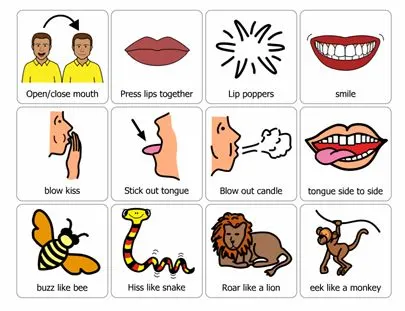
Trouble coordinating specific lip or tongue movements during functional activities may be relevant to an oral motor assessment, but a clinician evaluates overall function rather than judging one isolated movement.
These observations may be relevant during an oral motor assessment. However, a clinician will look at the child’s overall function and coordination, rather than making a decision based on one isolated movement.
Speech concerns
Unclear speech does not automatically mean a child needs oral motor therapy — it may instead require speech sound therapy, language support, or a full speech-language assessment.
Speech concerns can have different causes. Some children need speech sound therapy, while others may need language support or a more detailed speech-language assessment. If you’re specifically concerned about clarity of speech, our speech therapy for kids page covers how that assessment process works.
Does Every Child With Speech or Feeding Difficulties Need Oral Motor Therapy?
No. Similar-looking symptoms can have entirely different underlying causes, so therapy should always be based on individual assessment rather than assumption.
A child may have a feeding difficulty because of sensory sensitivity. Another child may have difficulty chewing because of oral coordination. A third child may have unclear speech and need direct speech therapy. The symptoms may appear similar to a parent, but the underlying reason may be completely different.
For example, if a child has a speech sound difficulty, the clinician may focus on producing and practising specific speech sounds. If a child has difficulty chewing or managing food, the assessment may focus on feeding and oral function. The right therapy depends on the child’s actual needs.
Oral Motor Therapy vs Speech Therapy vs Feeding Therapy
Speech therapy targets speech sounds, language, and communication; feeding therapy targets eating, food acceptance, and mealtime skills; oral motor therapy targets the physical movement and coordination of the mouth itself — and a child may need one, two, or all three.
Speech therapy Speech therapy may focus on speech sounds, language development, communication, fluency, or social communication. Learn more on our speech therapy for kids page.
Feeding therapy Feeding therapy may address difficulties related to eating, food acceptance, textures, chewing, and mealtime skills.
Oral motor therapy Oral motor therapy addresses oral movement and coordination when a relevant functional difficulty has been identified. Our oral motor therapy program at PediGym is built around individualized assessment first.
There can be overlap between these areas — a child may need speech therapy and feeding support, or speech therapy but not oral motor therapy at all. The purpose of assessment is to understand which approach is appropriate for your child.
What Happens During an Oral Motor Assessment?
An oral motor assessment involves reviewing your child’s developmental, feeding, and speech history, then observing relevant oral movements and functional skills — the goal is identifying the underlying difficulty, not testing individual exercises.
The clinician may ask about your child’s developmental history, feeding history, chewing, food textures, drooling, speech, and mealtime behaviour. Depending on the child’s concerns, the clinician may also observe relevant oral movements and functional skills.
If feeding is a concern, the clinician may also consider how the child manages food and different textures. If speech is the main concern, the clinician may determine whether oral motor function is relevant or whether a direct speech-language assessment is more appropriate.
The goal is not to prescribe exercises
Assessment isn’t about whether a child can perform a specific oral exercise — it’s about identifying the functional difficulty and what kind of support will actually help.
This is why a personalised therapy plan is important.
What Happens During Oral Motor Therapy?
Oral motor therapy is individualized; there’s no single program suitable for every child and it targets the specific aspects of oral movement and coordination relevant to that child’s chewing, feeding, or coordination goals.
Therapy depends on the child’s assessment findings and goals. Parents may also receive guidance about how to support their child’s therapy goals at home. The focus should be on meaningful functional improvement, rather than simply completing a fixed number of exercises.
For example, a child with difficulty chewing may have different therapy goals from a child who has difficulty managing saliva or coordinating certain oral movements.
Should Parents Try Oral Motor Exercises at Home?
It’s best not to start oral motor exercises found online without first understanding your child’s specific difficulty random exercises without a diagnosed goal are unlikely to help and may not target the right issue.
The important question is not whether an exercise looks simple or harmless. The important question is: What specific functional problem is this activity intended to address?
Before beginning a home programme, parents should understand:
- What is my child’s specific difficulty?
- What is the goal of this activity?
- How will progress be measured?
- What should we practise at home?
This helps parents become part of the therapy process and ensures that home activities are connected to the child’s actual therapy goals.
When Should You Speak With a Clinician?
Speak with a clinician if your child has persistent difficulty with chewing, feeding, drooling, oral coordination, or speech — you don’t need to wait until the concern becomes severe.
A professional assessment can help you understand whether your child may benefit from oral motor therapy, speech therapy, feeding support, or another developmental intervention. The goal is not to choose the most popular therapy. The goal is to choose the right support for your child.
Looking for Oral Motor Therapy in Faridabad And Gurugram?
PediGym provides individualized oral motor therapy assessments and treatment in Faridabad and Gurugram, starting with understanding your child’s specific needs rather than a one-size-fits-all program.
PediGym provides paediatric therapy and developmental support for children with a range of developmental, speech, feeding, and functional concerns. The therapy approach is planned according to the child’s individual needs and assessment findings — learn more about our oral motor therapy program.
Concerned about your child’s chewing, feeding, oral coordination, or speech development?
Book an oral motor therapy assessment in Faridabad and Gurugram
If you are searching for child speech and feeding therapy in Faridabad and Gurugram, an assessment can also help you understand which type of therapy may be appropriate for your child.
Frequently Asked Questions
Does every child need oral motor therapy?
No. Oral motor therapy is not required for every child. It may be recommended when an assessment identifies a specific oral motor or functional difficulty.
What are the signs my child might need oral motor therapy?
Possible signs include persistent difficulty chewing, difficulty managing food, excessive drooling, limited texture progression, or concerns with oral coordination. These signs do not confirm an oral motor difficulty and should be assessed professionally.
Can oral motor therapy help a child with speech delay?
It depends on the cause of the child’s speech difficulty. Not every child with speech delay needs oral motor therapy. A speech-language assessment can help identify the most appropriate intervention.
Is oral motor therapy the same as speech therapy?
No. Speech therapy focuses on speech, language, and communication skills. Oral motor therapy addresses oral movement and coordination when a relevant functional difficulty has been identified.
Is oral motor therapy the same as feeding therapy?
No. Feeding therapy focuses on eating and drinking skills. Oral motor therapy may be considered when oral movement or coordination contributes to a functional feeding concern.
Can oral motor therapy help children with autism?
Some children with autism may have feeding or oral motor concerns. However, not every autistic child needs oral motor therapy. Therapy should be based on the child’s individual needs and assessment.
Can oral motor therapy help children with Down syndrome?
Some children with Down syndrome may have oral motor or feeding-related concerns. Therapy should be personalised according to the child’s specific assessment findings.
How long does oral motor therapy take?
The duration varies from child to child. It depends on the nature of the difficulty, the child’s therapy goals, and their progress over time.
Where can I get oral motor therapy in Faridabad?
PediGym provides paediatric therapy services in Faridabad and Gurugram. Parents can request an assessment to understand their child’s oral motor, feeding, or developmental needs.
Final Thoughts
Not every child needs oral motor therapy. If your child has persistent difficulty with chewing, feeding, saliva control, oral coordination, or related concerns, a professional assessment can help identify the underlying difficulty and the most appropriate support.
The goal is not to follow generic oral motor exercises. It is to understand your child’s individual needs and choose the right therapy approach—whether that involves oral motor therapy, speech therapy, feeding support, or another intervention.

Dr. Nitin, Founder of PediGym Child Development Center, is a dedicated pediatric therapy expert and DMI Level C Certified Therapist leading structured, evidence-based therapy programs in Faridabad and Gurgaon. Under his guidance, PediGym provides comprehensive pediatric rehabilitation focused on improving motor skills, coordination, sensory processing, speech clarity, and functional independence through personalized intervention plans.