
Medically reviewed by Dr. Nitin Gupta, DMI Level C Certified Therapist and Founder & Lead Pediatric Therapist, PediGym
Hypotonia means reduced muscle tone. In children, it can make the body feel unusually floppy and may affect head control, posture, balance, strength, coordination and motor development. Some children with low muscle tone have difficulty sitting, crawling, standing, walking or keeping up with age-appropriate physical activities.
Hypotonia is not a disease by itself. It is a clinical sign that can occur for many different reasons, including genetic conditions, neurological disorders, neuromuscular diseases, brain injury, infections and other medical conditions. Finding the underlying cause is important because treatment depends on the child’s individual needs.
Early assessment and individualized pediatric therapy can help children develop better movement skills and participate more independently in everyday activities.
What Is Hypotonia in Children?
Hypotonia means reduced muscle tone, which can affect how easily a child maintains posture and controls movement. Muscle tone is the natural tension in muscles that helps the body stay stable and prepare for movement.
When a child has low muscle tone, maintaining positions against gravity may require more effort. However, hypotonia can look different from one child to another, and it does not always mean the child has muscle weakness.
Is Hypotonia a Diagnosis?
Hypotonia is usually a clinical sign rather than a diagnosis itself. It can be associated with genetic, neurological, neuromuscular, developmental, or other medical conditions.
This is why two children with hypotonia may have different underlying causes and require different treatment approaches. A proper assessment helps determine the cause and identify the child’s specific functional needs.
Common Hypotonia Symptoms
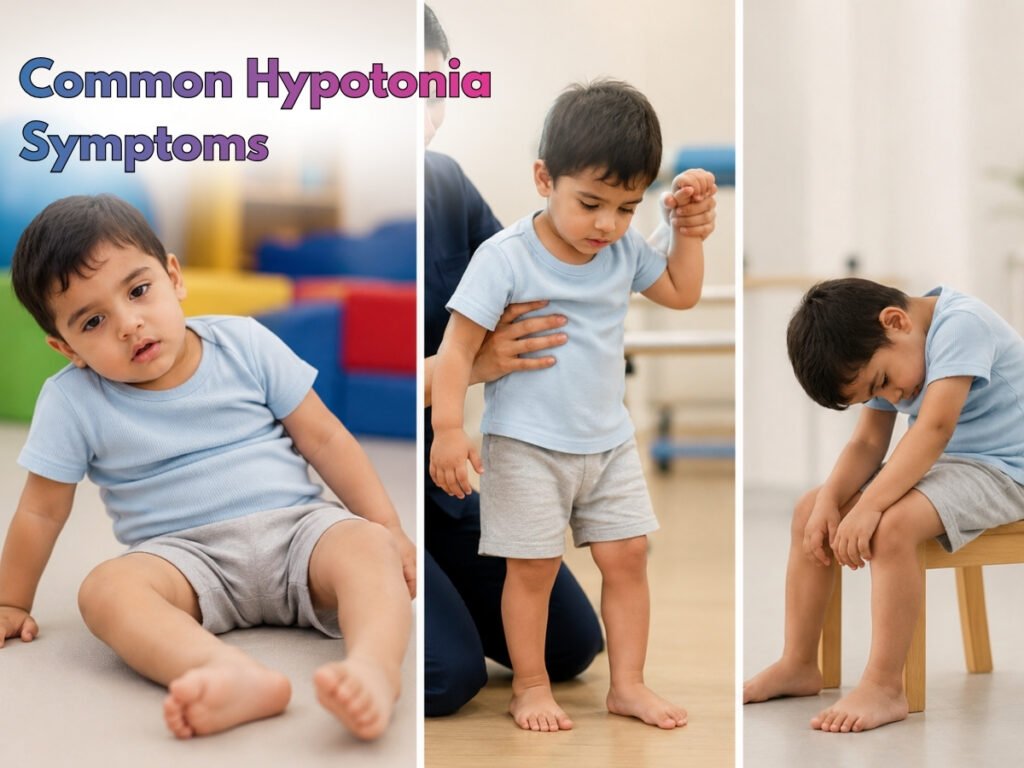
The most common symptoms of hypotonia in children include poor postural control, delayed motor development, reduced endurance, balance difficulties, and problems with functional movements. The exact symptoms depend on the child’s age, underlying cause, and overall development.
Common Signs of Hypotonia
- Poor head or trunk control, particularly in babies and younger children
- Delayed motor milestones, such as sitting, crawling, standing, or walking
- Poor posture, including slouching or difficulty staying upright
- Balance and coordination difficulties
- Reduced strength or physical endurance
- Difficulty getting up from the floor
- Difficulty climbing stairs, running, jumping, or keeping up with peers
- Difficulty supporting body weight through the legs
- Increased joint flexibility or loose joints
- Feeding, sucking, chewing, or swallowing difficulties in some children
The symptoms of hypotonia can range from mild movement difficulties to more noticeable challenges with everyday activities. Not every child will experience the same combination of symptoms.
Hypotonia Symptoms by Age
Age/Stage | Possible Signs |
Babies | Poor head control, floppy posture, feeding difficulties |
Toddlers | Delayed sitting, crawling, standing, or walking |
Young children | Poor balance, posture, coordination, or reduced endurance |
Older children | Difficulty with running, jumping, stairs, sports, or prolonged physical activity |
A clinical assessment may also identify reduced strength, lower activity tolerance, delayed motor development, postural difficulties, and increased flexibility in children with hypotonia.
When Should Parents Seek Professional Help?
Parents should consider an assessment if their child consistently struggles with age-appropriate movement or if something about the child’s posture, strength or coordination seems unusual.
An evaluation becomes particularly important when a child:
- Has significant difficulty controlling their head.
- Cannot maintain sitting or standing as expected.
- Frequently collapses or leans while sitting.
- Has difficulty bearing weight through the legs.
- Has persistent feeding or swallowing difficulties.
- Becomes unusually tired during physical activity.
- Loses a developmental skill they previously achieved.
Loss of an already acquired skill should not simply be attributed to low muscle tone. It requires appropriate medical evaluation.
Hypotonia in Babies
Hypotonia in babies commonly affects head control, posture, body stability, and early movement. A baby with low muscle tone may appear unusually floppy or have difficulty maintaining a stable position when being held or moved.
Common Signs in Babies
Parents may notice:
- Poor head control or persistent head lag
- Difficulty lifting and holding the head
- A floppy feeling when the baby is picked up
- Difficulty maintaining a stable body position
- Less active movement against gravity
- Difficulty with feeding, sucking, or swallowing
- Arms and legs appearing unusually relaxed
The term “floppy infant” is sometimes used when hypotonia is clearly noticeable during infancy. In some babies, poor muscle tone can also make them slip through an adult’s hands when lifted under the arms.
Safe Handling of a Baby With Hypotonia
Babies with significant hypotonia may need additional head, neck, and body support when being lifted or carried. Parents should ask their pediatrician or pediatric therapist to demonstrate safe handling techniques.
Lifting a hypotonic baby only from under the arms may not provide adequate support because the baby may have difficulty maintaining their body position.

What Causes Hypotonia?
Hypotonia can result from genetic conditions, neurological disorders, neuromuscular diseases, or certain medical and birth-related factors. The underlying problem may involve the brain, spinal cord, nerves, muscles, or a combination of these systems.
1. Genetic and Chromosomal Conditions
Some genetic and chromosomal conditions are associated with low muscle tone. Examples include:
- Down syndrome
- Prader-Willi syndrome
- Spinal muscular atrophy
- Tay-Sachs disease
- Trisomy 13
- Achondroplasia
Genetic conditions are an important consideration when evaluating unexplained hypotonia, particularly when a child has additional developmental or physical features that may suggest a genetic disorder. Hypotonia can occur as part of many different genetic conditions, so the child’s overall clinical presentation is important when determining whether genetic evaluation is appropriate.
2. Neurological Conditions
Disorders affecting the brain, spinal cord, or nervous system can affect muscle tone and movement. Examples include:
- Cerebral palsy
- Brain injury
- Abnormal brain development
- Certain spinal cord disorders
The impact on movement depends on the area and severity of the neurological condition.
3. Neuromuscular Conditions
Conditions affecting muscles or the nerves that control them can contribute to reduced muscle tone and motor difficulties. Spinal muscular atrophy is one example and may present with significant movement challenges, particularly during infancy and early childhood.
4. Other Medical and Birth-Related Causes
Prematurity, certain infections, reduced oxygen around birth, congenital hypothyroidism, and metabolic disorders may also be associated with low muscle tone. The relevance of these factors depends on the child’s medical history and overall clinical picture.
Because there are many possible causes of hypotonia, identifying the underlying reason is important before deciding on an appropriate treatment approach.
How Is Hypotonia Diagnosed?
A clinical and developmental assessment is the first step in identifying hypotonia. The healthcare professional reviews the child’s medical history, developmental progress, and movement patterns before deciding whether additional evaluation is needed.
What Does the Assessment Include?
The assessment may examine:
- Muscle tone and strength
- Reflexes
- Head and trunk control
- Posture
- Balance and coordination
- Gross and fine motor skills
- Developmental milestones
- Feeding and swallowing, when relevant
The clinician also considers whether the child’s movement difficulties may involve the central nervous system, peripheral nerves, muscles, or another part of the motor system.
There is no single clinical feature that explains every case. A detailed assessment helps determine the child’s specific difficulties and whether further investigation is appropriate.
Tests Used to Diagnose Hypotonia
The tests used to investigate hypotonia depend on the child’s symptoms, clinical examination, medical history, and suspected underlying cause. Not every child needs every test, and investigations should be selected based on individual findings.
MRI or CT Scan
Brain or spinal imaging may help identify structural or neurological problems when the clinical assessment suggests a need for further investigation.
EMG and Nerve Conduction Studies
EMG and nerve conduction studies assess how the nerves and muscles are functioning together. These tests may be considered when a neuromuscular condition is suspected.
Genetic Testing
Genetic testing can help identify specific genetic conditions associated with low muscle tone. Depending on the child’s presentation, a doctor may recommend targeted testing or a broader genetic panel.
Blood and Laboratory Tests
Blood tests may help investigate metabolic, endocrine, muscular, infectious, or other medical causes. The specific tests depend on the child’s symptoms and clinical findings.
Does Every Child Need These Tests?
No. The appropriate tests vary from child to child. Some children may need only clinical monitoring, while others may require several investigations to understand the underlying cause.
The purpose of testing is not simply to confirm low muscle tone. It is to help healthcare professionals identify or rule out possible causes and guide the child’s treatment plan.
Hypotonia Treatment Options
Treatment for hypotonia depends on the child’s underlying cause, developmental needs, and specific functional difficulties. There is no single therapy that works for every child, so the treatment plan should be individualized.
Physical Therapy
Pediatric physical therapy helps children improve movement, posture, balance, strength, and functional mobility. Depending on the child’s needs, therapy may work on:
- Head and neck control
- Trunk stability
- Postural control
- Balance
- Strength and endurance
- Weight bearing
- Movement transitions
- Standing and walking
- Functional mobility
The focus should not be only on increasing strength. The larger goal is to help the child perform everyday movements with greater stability and independence.
For example, therapy goals may include sitting independently, getting up from the floor, standing without support, walking, climbing stairs, or participating in active play.
Occupational Therapy
Occupational therapy supports the skills children need for play, learning, and everyday activities. Depending on the child’s needs, it may address:
- Fine motor skills
- Hand coordination
- Play skills
- Sensory processing
- Functional activities
- Independence in daily routines
Speech and Feeding Therapy
Speech and feeding therapy can help when low muscle tone affects oral-motor skills, feeding, or communication. Support may be recommended for difficulties with sucking, chewing, swallowing, or speech.
Treatment for the Underlying Cause
When a specific medical, neurological, genetic, or neuromuscular condition is identified, managing that condition is an important part of treatment. The child may therefore benefit from care involving several specialists alongside pediatric therapy.
What Is the Goal of Treatment?
The goal is functional improvement, not simply increasing muscle tone. A successful treatment plan should help the child move more efficiently, participate in daily activities, and become as independent as possible.
How PediGym Approaches Therapy
PediGym uses individualized pediatric therapy programs based on each child’s developmental level, movement abilities, and functional goals. Dr. Nitin Gupta, DMI Level C Therapist and Founder of PediGym, focuses on selecting therapeutic strategies according to the child’s specific needs rather than following the same routine for every child.
Role of DMI Therapy
Dynamic Movement Intervention (DMI) may be included when clinically appropriate to support postural control, functional movement, and motor development. The therapy plan may work toward practical goals such as:
Head control → trunk stability → sitting → transitions → standing → walking
The pace and activities are adjusted according to the child’s abilities, response to therapy, and functional goals.
What Parents Can Do at Home
Parents can support motor development by providing safe, age-appropriate opportunities for movement throughout the day. Depending on the child’s therapy plan, activities may include:
- Floor play
- Reaching for toys
- Supported sitting
- Weight shifting
- Crawling practice
- Movement transitions
- Supported standing
- Active play
The aim is to make movement a natural part of daily routines rather than treating every activity as a formal exercise.
What Parents Should Avoid
Parents should avoid starting intensive strengthening exercises without professional guidance. Children with low muscle tone can have different underlying conditions and movement needs, so an activity suitable for one child may not be appropriate for another.
If a therapist provides a home program, follow the recommended technique, level of support, repetitions, and frequency.
Can Children Improve With Hypotonia?
Many children can make meaningful functional progress with appropriate intervention, but the outcome depends on the underlying cause and the child’s individual needs.
Factors that can influence progress include:
- Underlying condition
- Severity of the difficulties
- Age and developmental level
- Other developmental challenges
- Strength and endurance
- Consistency of therapy
- Response to intervention
- Family participation
Progress may include better postural control, improved balance, greater mobility, or increased independence in daily activities.
Focus on Functional Progress
The most useful measure of progress is what the child can do more independently. Instead of focusing only on whether muscle tone has changed, therapy goals can target practical skills such as:
- Sitting independently
- Moving from sitting to standing
- Walking with greater stability
- Climbing stairs
- Joining age-appropriate play
Every child develops differently, so therapy goals should be realistic, measurable, and tailored to the child’s current abilities.
Frequently Asked Questions About Hypotonia
Is hypotonia the same as muscle weakness?
No. Hypotonia describes reduced muscle tone, while weakness describes reduced ability to generate force. They can occur together, but they are not identical. A professional assessment should evaluate both.
Is hypotonia a serious condition?
Hypotonia can have many causes. Some are relatively mild, while others are associated with significant neurological, genetic or neuromuscular conditions. The seriousness depends largely on the underlying cause and the child’s overall development.
Can hypotonia be cured?
There is no universal cure because hypotonia can result from many different conditions. Some children improve significantly with development and appropriate therapy, while others may have long-term movement difficulties.
Does hypotonia mean my child has Down syndrome?
No. Down syndrome is one condition associated with hypotonia, but there are many other possible causes. Hypotonia alone cannot diagnose Down syndrome or another specific condition.
When should therapy begin?
If a child has persistent motor delays or signs of low muscle tone, early professional assessment is generally preferable to simply waiting. The appropriate therapy depends on the child’s assessment and underlying needs.
Final Takeaway
Hypotonia in children requires an individualized approach because reduced muscle tone can have different causes and affect each child differently. The priority is to understand the underlying cause, identify the child’s functional challenges, and provide appropriate support.
Key Steps for Parents
- Recognize the signs: Pay attention to persistent difficulties with movement, posture, balance, or motor development.
- Get an assessment: Consult a qualified healthcare professional when concerns continue or affect daily activities.
- Understand the cause: Identifying the underlying condition can help guide appropriate management.
- Set functional goals: Focus therapy on practical skills that improve the child’s daily participation and independence.
- Support therapy at home: Follow the home activities and handling techniques recommended by the child’s therapist.
Measure Functional Progress
The most meaningful measure of progress is what the child can do more independently over time. Improvements may include:
- Better head and trunk control
- More stable sitting
- Easier movement transitions
- Improved standing balance
- More confident walking
- Greater participation in play and daily activities
Every child’s progress is different. The goal is not simply to change muscle tone, but to help the child move more effectively, participate in everyday activities, and develop greater independence.
Medical Disclaimer
This article provides general educational information and does not replace an individual medical, neurological or pediatric therapy assessment. Parents should consult an appropriately qualified healthcare professional for diagnosis and treatment recommendations.
References
- MedlinePlus. Hypotonia. U.S. National Library of Medicine. MedlinePlus: Hypotonia

Dr. Nitin, Founder of PediGym Child Development Center, is a dedicated pediatric therapy expert and DMI Level C Certified Therapist leading structured, evidence-based therapy programs in Faridabad and Gurgaon. Under his guidance, PediGym provides comprehensive pediatric rehabilitation focused on improving motor skills, coordination, sensory processing, speech clarity, and functional independence through personalized intervention plans.