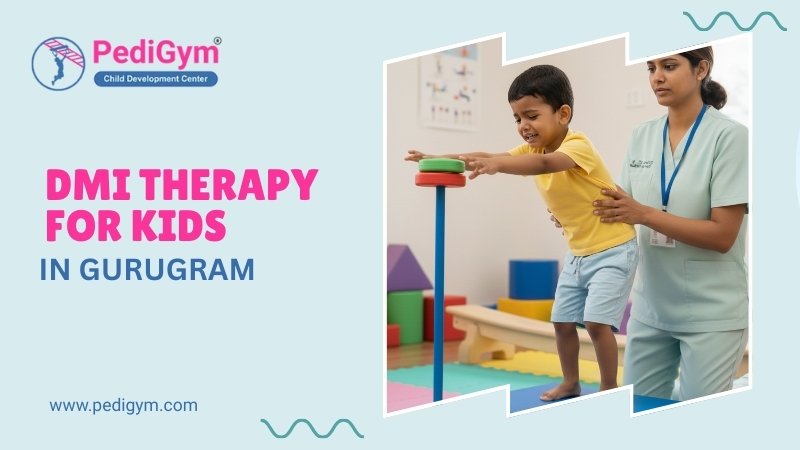
Dynamic Movement Intervention (DMI) to Support Motor Development, Balance & Functional Independence
If your child is finding it difficult to achieve movement milestones such as head control, sitting, crawling, standing, or walking, Dynamic Movement Intervention (DMI) Therapy may help support stronger movement patterns and greater functional independence.
At PediGYM in Gurugram, DMI Therapy is delivered through structured, therapist-guided movement activities designed to encourage motor development, improve postural control, and support everyday movement skills.
DMI may be considered for children experiencing:
- Delayed motor milestones
- Low muscle tone (hypotonia)
- Balance and coordination difficulties
- Challenges with posture and movement transitions
- Neurological or developmental delay concerns
Every therapy plan is personalised based on your child’s developmental stage, current movement abilities, and long-term goals.
“Our aim is to help children develop movement skills that improve participation, confidence, and independence in everyday life.”
Dr. Nitin Gupta, DMI Level C Therapist & Founder, PediGYM
What Is DMI Therapy?
Dynamic Movement Intervention (DMI) is a hands-on therapeutic approach that uses structured movement challenges to activate the nervous system and encourage more efficient movement patterns.
DMI is built around the principle of neuroplasticity—the nervous system’s ability to adapt and strengthen through repeated movement experiences. Rather than passive exercise, DMI encourages children to actively respond to movement opportunities while developing stronger postural control, movement coordination, and functional mobility.
DMI may help support:
- Head and trunk control
- Balance and postural stability
- Motor planning and coordination
- Functional mobility
- Movement confidence
- Greater participation in everyday life
The goal is to help children build movement skills that transfer beyond therapy sessions and support long-term participation.
How DMI Therapy Works
Dynamic Movement Intervention (DMI) Therapy helps children improve movement by combining targeted physical challenges with repeated motor practice. The goal is to encourage the nervous system to develop stronger movement responses that support posture, balance, coordination, and functional independence.
Unlike passive exercises that focus mainly on positioning, DMI encourages children to actively respond, adjust, and participate during movement tasks. Therapy activities are designed to strengthen how the body organises movement during everyday actions such as sitting, transitioning, standing, and walking.
The Principles That Guide DMI Therapy
Neuroplastic Learning
DMI is based on neuroplasticity—the nervous system’s ability to adapt through repeated movement experiences. When children practise purposeful movement repeatedly, the body receives opportunities to improve motor control, coordination, postural responses, and functional movement patterns.
Gravity-Based Movement Challenges
Children participate in carefully supported activities that encourage them to react to gravity and maintain control of their bodies. These movement experiences may help support balance reactions, trunk activation, upright posture, and movement confidence.
Progressive Skill Development
DMI activities follow a gradual progression. Therapists begin at the child’s current movement level and introduce increasingly challenging tasks as control improves.
Minimal Support Approach
Therapists provide only the support necessary to encourage active participation and independent movement.
Whole-Body Functional Activation
DMI focuses on coordinated movement patterns rather than isolated muscle training so movement skills become more transferable into daily activities.
Common Techniques Used During DMI Sessions
Depending on developmental goals and current abilities, DMI sessions may include:
- Supported standing activities
- Balance practice on blocks or movement surfaces
- Transitional movement sequences (lying → sitting → standing)
- Crawling pattern development
- Assisted stepping and walking practice
- Reach-and-hold challenges
- Dynamic balance responses
- Controlled postural adjustments
- Weight-shifting activities
- Responses to movement and position changes
Each activity is selected to encourage active participation, sensory engagement, and functional movement development.
Benefits of DMI Therapy for Children
DMI Therapy focuses on strengthening the movement foundations children rely on during daily activities. Rather than training isolated movements, therapy encourages coordinated movement patterns that support participation, mobility, and independence.
Improve Head, Neck, and Trunk Control
Strong postural control creates the foundation for movement development. Children who experience challenges with sitting, standing, or transitioning between positions often require stronger activation of the muscles that support alignment and stability.
During therapy, movement activities may engage:
- Abdominal muscles for trunk stability
- Back extensors for upright posture
- Hip stabilisers for standing and weight bearing
- Shoulder girdle muscles for upper-body support
- Core musculature for coordinated movement
Improved postural control may support sitting balance, standing, transitions, and everyday movement.
Encourage Better Balance and Stability
Balance develops through movement experience. DMI activities expose children to structured movement challenges that encourage the body to organise and respond more effectively.
Children may practise:
- Protective reactions
- Weight shifting
- Anticipatory balance
- Postural recovery strategies
These experiences may support greater movement confidence.
Support Gross Motor Development
Gross motor development builds progressively. DMI may support movement patterns involved in:
- Rolling
- Crawling
- Sitting
- Standing
- Cruising
- Walking
Therapy focuses on strengthening movement foundations that contribute to developmental progression.
Promote Functional Independence
Movement skills are practised in ways that encourage participation in daily activities.
Examples may include:
- Getting up from the floor
- Standing with less support
- Moving between positions
- Climbing onto a chair
- Walking across uneven surfaces
- Participating more confidently during play and school routines
Strengthen Motor Planning and Coordination
DMI encourages children to practise movement planning, initiating actions, coordinating body responses, and improving body awareness.
Support Neuroplasticity and Movement Learning
Repeated movement experiences encourage the nervous system to practise adapting and refining movement responses over time.
Build Confidence Through Movement Success
As children experience successful movement opportunities, they often become more willing to explore, participate, and attempt new activities.
DMI Therapy Milestones & Expectations
Parent Question | Quick Answer | What This Means |
What age can DMI Therapy start? | DMI may begin as early as 3–4 months when developmental concerns are identified. | Readiness depends on assessment and developmental needs. |
How often are sessions recommended? | Many children begin with 2–3 sessions per week. | Frequency is adjusted individually. |
How long does a session last? | Sessions commonly run 30–45 minutes. | Duration depends on age and goals. |
Is DMI painful? | No—DMI is designed to challenge movement, not create pain. | Activities are adapted to support comfort. |
When can progress be expected? | Some children show early changes within several weeks of consistent participation. | Broader outcomes may develop gradually. |
What milestones can DMI support? | DMI supports movement foundations. | Therapy may support sitting, standing, balance, and mobility. |
Developmental Milestones DMI Therapy May Support
Developmental Milestone | Therapy Focus | Functional Goal |
Head Control | Neck activation and postural alignment | Better upright positioning |
Independent Sitting | Core stability and trunk control | Improved sitting participation |
Crawling & Transitions | Bilateral coordination | Greater movement independence |
Standing | Weight shifting and posture | Improved stability |
Walking Skills | Stepping control and balance | Increased mobility |
Signs Your Child May Benefit From DMI Therapy
You may consider an assessment if your child:
✓ Has difficulty maintaining head or trunk control
✓ Is delayed in achieving movement milestones
✓ Avoids crawling or transitions
✓ Shows poor balance
✓ Frequently walks on toes
✓ Appears weaker on one side
✓ Tires quickly during movement activities
✓ Finds physical play more challenging than expected
Frequently Asked Questions
How does DMI differ from traditional movement exercises?
DMI focuses on active movement responses rather than passive positioning and encourages children to organise posture and movement through guided challenges.
What happens during the first DMI assessment?
The therapist evaluates motor abilities, posture, balance responses, movement patterns, and developmental priorities before building an individual plan.
Does DMI only focus on walking?
No. Walking is one part of movement development. DMI also supports posture, stability, transitions, coordination, and confidence.
Can DMI be combined with other therapies?
Depending on goals, DMI may be integrated with broader developmental support programs.
Do parents receive home guidance?
Yes. Families receive practical recommendations to support consistency outside therapy sessions.
How is progress monitored?
Therapists review movement quality, functional participation, postural changes, developmental goals, and parent observations.
What Happens During a DMI Session at PediGYM?
At PediGYM, every Dynamic Movement Intervention (DMI) session is carefully designed to strengthen your child’s motor skills, postural control, and functional independence. Sessions are structured, high-energy, and engaging to ensure maximum progress.
- Warm-up postural exercises
- Therapist-led movements using minimal support
- Quick repetition of targeted tasks
- Balance and coordination challenges
- Functional task training
- Cool-down alignment activities
Parents are guided on home techniques they can safely use for continuity.
Why Choose PediGYM for Dynamic Movement Intervention?
Our Dynamic Movement Intervention (DMI) program is designed to offer the highest level of support, expertise, and care to help children reach their developmental milestones with confidence.
Certified and Experienced DMI Therapists
Our team is trained in advanced neurodevelopmental techniques to support children with varied motor challenges.
Child-Friendly and Motivating Therapy Environment
We provide a bright, engaging, and safe setup that encourages movement, exploration, and confidence-building.
Personalised Treatment Plans
Every child receives a customised DMI plan based on their strengths, developmental needs, and therapy goals.
Active Parent Involvement & Home Program Support
We guide parents with simple home-based exercises to help maintain consistency and speed up progress.
Regular Assessments and Progress Tracking
Therapists continuously monitor milestones, adjust goals, and ensure measurable improvement over time.
“Our approach focuses on creating meaningful movement opportunities that help children build confidence, participation, and long-term functional independence.”
Dr. Nitin Gupta, DMI Level C Therapist & Founder, PediGYM
Final Thoughts
Dynamic Movement Intervention (DMI) Therapy is designed to support children in developing stronger movement patterns, improved confidence, and greater independence.
At PediGYM, therapy plans are personalised to help children build practical movement skills that support everyday life and developmental progress.
Book a DMI assessment at PediGYM Gurugram to understand your child’s movement needs and explore suitable next steps.

Dr. Nitin, Founder of PediGym Child Development Center, is a dedicated pediatric therapy expert and DMI Level C Certified Therapist leading structured, evidence-based therapy programs in Faridabad and Gurgaon. Under his guidance, PediGym provides comprehensive pediatric rehabilitation focused on improving motor skills, coordination, sensory processing, speech clarity, and functional independence through personalized intervention plans.