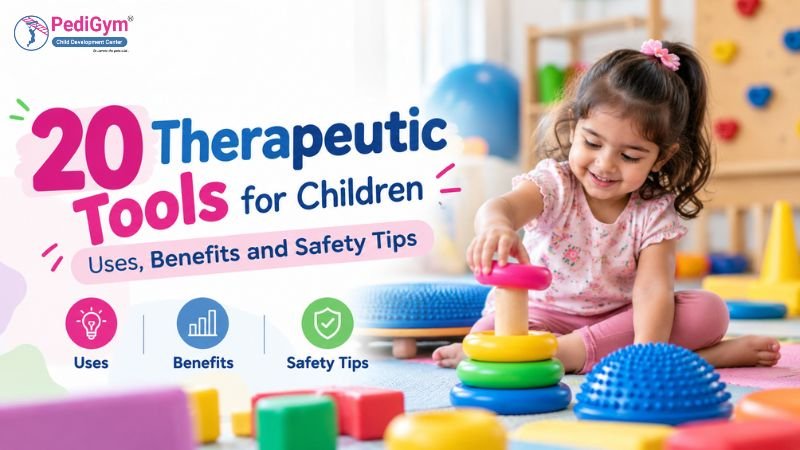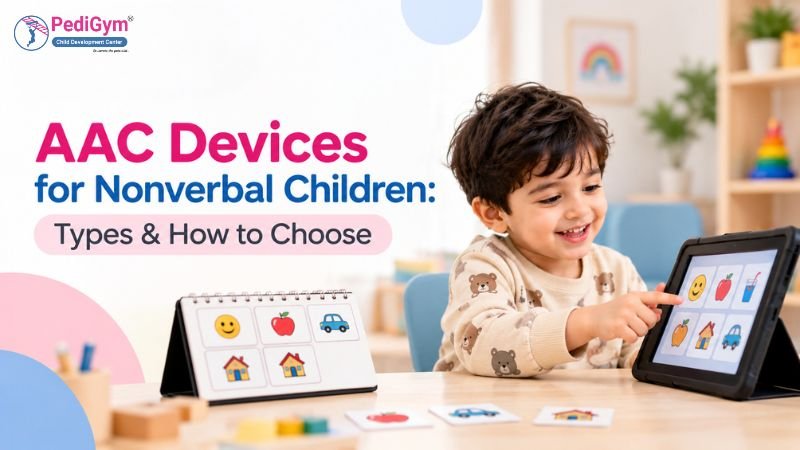
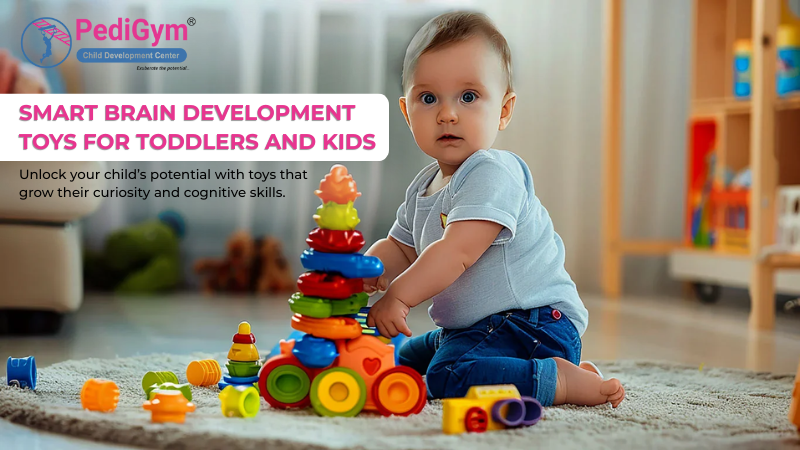
The best brain development toys for toddlers are toys that encourage problem-solving, movement, sensory exploration, language development, and creativity. Shape sorters, building blocks, puzzles, sensory toys, musical instruments, pretend-play sets, and beginner STEM toys help children develop important cognitive and motor skills during the early years. However, toys alone do not build a child’s brain. The greatest benefits come when parents actively engage with their children during play through conversation, encouragement, and shared exploration.
Why Play Matters More Than You Think
Imagine your toddler sitting on the floor with a shape sorter. They pick up a square block and try to fit it into a circular hole. It doesn’t work. They try again. Still no success. After a few attempts, they rotate the block, find the matching opening, and proudly push it through.
To adults, this may seem like a simple game.
To a developing brain, it is a powerful learning experience.
In those few minutes, your child is learning how to solve problems, understand shapes, improve hand-eye coordination, and persist through challenges. Every attempt helps strengthen the connections in their growing brain.
This is why play is so important during the early years. Toddlers learn best by exploring, experimenting, and interacting with the world around them. The right toys create opportunities for these experiences, helping children build the skills they need for future learning, communication, and independence.
- Strengthens memory pathways
- Improves attention and concentration
- Encourages curiosity and exploration
- Supports emotional and social development
This makes play-based learning one of the most effective ways to support early brain growth.
What Science Says About Brain Development
The first three years of life are among the most important periods of brain development. During this time, children’s brains rapidly build and strengthen neural connections that support learning, memory, movement, language, and emotional development.
Researchers describe this process as neuroplasticity, which refers to the brain’s ability to adapt and grow based on experiences. Every conversation, movement, and play activity helps shape these developing neural pathways.
This does not mean children need expensive gadgets or advanced educational devices. Research consistently shows that meaningful interactions and hands-on experiences are far more valuable than passive entertainment.
A simple puzzle, a set of blocks, or a pretend tea party can provide rich learning opportunities when children are actively engaged. Even more importantly, responsive interactions with parents and caregivers help children get the most developmental value from play.
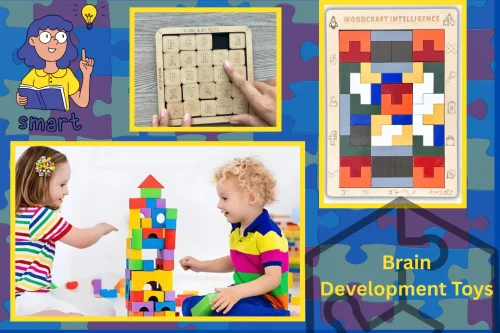
Best Brain Development Toys for Toddlers
1. Shape Sorters: Building Early Problem-Solving Skills
Shape sorters are among the most effective developmental toys for toddlers because they teach children how to think through challenges.
When a child tries to fit different shapes into matching openings, they learn to compare, test, and adjust their approach. This process develops problem-solving abilities while also improving visual perception and spatial awareness.
Shape sorters also introduce important early concepts such as matching, sorting, and categorisation. These foundational skills later support mathematics, reading readiness, and logical thinking.
For many toddlers, successfully fitting a shape into the correct space is one of their first experiences of solving a problem independently.
2. Building Blocks and Stacking Toys
Building blocks may look simple, but they support a wide range of developmental skills.
When toddlers stack blocks, they learn about balance, cause and effect, and coordination. If a tower falls, they observe what happened and try a different approach. This process encourages experimentation and persistence.
Blocks also support creativity. A child may begin by building a tower but later use the same blocks to create a house, bridge, or imaginary city.
Because there is no single “correct” way to play with blocks, they continue to challenge and engage children as they grow.
3. Puzzles: Strengthening Memory and Focus
Puzzles encourage toddlers to slow down, observe details, and think carefully about solutions.
Large-piece puzzles help children recognise patterns, identify shapes, and understand how different pieces fit together. While searching for the correct piece, toddlers practice visual memory and concentration.
Puzzles also teach patience. Children learn that some challenges take time and repeated effort to solve.
These experiences help develop attention span and persistence, which are valuable skills both in school and everyday life.
4. Sensory Toys and Activities
Toddlers learn through their senses long before they learn through textbooks.
Sensory play introduces children to different textures, sounds, movements, and materials. Activities involving playdough, sand, water, textured balls, or sensory bins stimulate multiple areas of the brain at the same time.
Sensory experiences help children process information about the world around them. They also support fine motor development, attention, and self-regulation.
For example, squeezing playdough strengthens hand muscles needed for future writing skills, while water play encourages exploration and scientific thinking through observation and experimentation.
Sensory activities are particularly valuable because they combine learning with enjoyment, making children eager to participate.
5. Musical Toys and Instruments
Music is one of the most engaging ways for young children to learn.
Simple instruments such as drums, xylophones, tambourines, and shakers encourage toddlers to listen carefully, recognise patterns, and coordinate movements.
As children clap, tap, and sing along to rhythms, they develop auditory processing skills that support language development and memory.
Music also encourages social interaction. Singing songs together, copying rhythms, and dancing with caregivers create opportunities for communication and bonding while supporting cognitive growth.
The goal is not to teach musical expertise but to provide rich sensory and learning experiences through sound and movement.
6. Pretend Play Toys: Developing Language and Imagination
Pretend play is one of the most powerful forms of learning during early childhood.
Whether children are using a toy kitchen, doctor set, tool kit, or dollhouse, they are doing much more than simply playing.
When a toddler pretends to cook dinner or care for a teddy bear, they create stories, practice communication, and explore social situations. This type of play strengthens language skills, creativity, and emotional understanding.
For example, a child pretending to be a doctor may learn new vocabulary, practice taking turns, and develop empathy by caring for a “patient.”
These experiences help children understand the world around them while building confidence and imagination.
STEM Toys for Curious Young Minds
As children approach preschool age, many parents begin looking for toys that support early STEM learning.
STEM stands for Science, Technology, Engineering, and Mathematics. For young children, STEM learning should always be hands-on, playful, and age-appropriate.
Construction sets encourage children to build, experiment, and solve problems. Pattern games introduce early mathematical thinking, while simple science activities encourage curiosity and observation.
Popular options available in India include brands such as Smartivity, Skillmatics, and ThinkFun, which offer engaging activities designed to develop critical thinking and creativity.
The purpose of STEM toys is not to accelerate academics. Instead, they help children ask questions, test ideas, and develop confidence in exploring how things work.
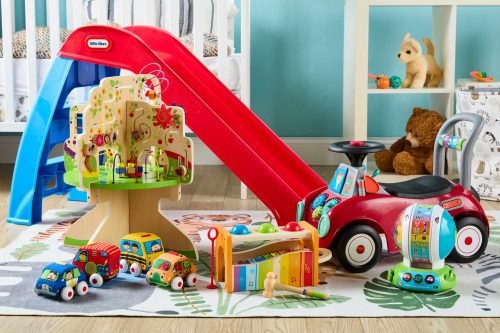
The Toy Doesn't Teach—Interaction Does
Many parents assume that buying an educational toy automatically supports development.
In reality, the way a child uses the toy matters far more than the toy itself.
Consider two children playing with the same set of blocks.
Child A builds quietly alone for ten minutes.
Child B builds with a parent who asks questions such as:
“What colour is that block?”
“Can you make the tower taller?”
“What do you think will happen if we put this block on top?”
Both children are learning, but the second child receives additional language exposure, problem-solving opportunities, and social interaction.
This does not mean parents must guide every moment of play. Rather, it highlights the importance of being present, responsive, and engaged whenever possible.
The most powerful developmental tool is not the toy itself—it is the interaction that happens around it.
Frequently Asked Questions
Which toys are best for a 1-year-old’s brain development?
Shape sorters, stacking cups, sensory toys, musical instruments, and large building blocks are excellent choices for one-year-olds. These toys encourage exploration, coordination, problem-solving, and early cognitive development through hands-on play.
Do brain development toys really work?
Yes, developmental toys can support learning when they encourage active engagement, exploration, and problem-solving. However, the greatest benefits occur when children interact with caregivers during play rather than simply using toys independently.
Are STEM toys good for toddlers?
Age-appropriate STEM toys can be beneficial because they encourage curiosity, experimentation, and logical thinking. Construction toys, sorting activities, and simple science exploration are often suitable introductions to STEM learning.
How much time should toddlers spend playing with educational toys?
There is no perfect number of minutes. Multiple short play sessions throughout the day are often more effective than one long session. Quality interaction and active engagement are more important than duration.
Are expensive educational toys better than simple toys?
Not necessarily. Simple toys such as blocks, puzzles, shape sorters, and pretend-play materials often provide greater opportunities for creativity and problem-solving than expensive electronic toys that do most of the work for the child.
Final Thoughts
The best brain development toys help children explore, solve problems, communicate, and learn through play. Simple toys such as blocks, puzzles, shape sorters, sensory materials, and pretend-play sets often provide the greatest developmental value because they encourage active engagement rather than passive entertainment.
Remember, toys are tools—not teachers. The most powerful ingredient in early learning is meaningful interaction with parents and caregivers.
If you have concerns about your child’s developmental milestones, sensory skills, or learning abilities, early support from developmental specialists can help identify challenges and build essential skills through structured, play-based intervention.
With expert guidance and purposeful play, PediGYM helps children build smarter, stronger brainsone playful moment at a time.

Dr. Nitin, Founder of PediGym Child Development Center, is a dedicated pediatric therapy expert and DMI Level C Certified Therapist leading structured, evidence-based therapy programs in Faridabad and Gurgaon. Under his guidance, PediGym provides comprehensive pediatric rehabilitation focused on improving motor skills, coordination, sensory processing, speech clarity, and functional independence through personalized intervention plans.