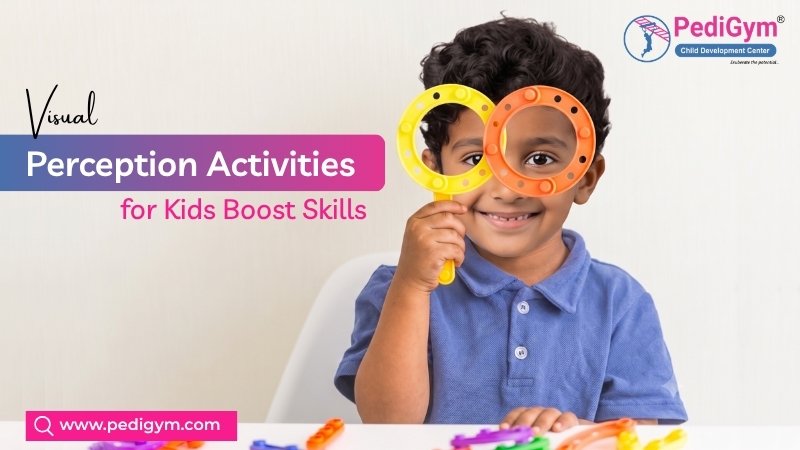
The visual perception enables a child to comprehend and react to all kinds of information that he comes across every day. Be it letter or number recognition, puzzles, or classroom activities; strong visual perception skills play a crucial role in success.
While parents may concentrate on reading, writing, and gross motor skills, visual processing is just as crucial. The silver lining is that visual skills can be enhanced through fun play-based activities. This blog post will provide an insight into what Visual Perception Activities are and their role in child development.
What Are Visual Perception Skills?
Visual Perception Skills refer to the brain’s ability to process and make sense of visual information received through the eyes. These skills allow children to identify shapes, recognize patterns, remember visual details, and understand spatial relationships.
Important visual perceptual abilities include:
- Visual discrimination
- Visual memory
- Visual-spatial awareness
- Visual sequencing
- Figure-ground perception
- Visual closure
Developing strong Visual Perceptual Skills for Children helps improve learning, communication, and problem-solving abilities.
Why Are Visual Perceptual Skills Important for Children?
Visual perception is essential in everyday living and learning. Children make use of their visual perception skills whenever they:
- Read books and worksheets
- Write letters and numbers correctly
- Complete puzzles and matching games
- Follow directions in the classroom
- Participate in sports and playground activities
- Organize school supplies and personal belongings
Strong visual perception supports confidence, independence, and better academic performance.
Signs Your Child May Need Visual Perception Support
Some children may struggle with visual processing. Common signs include:
- Difficulty recognizing letters or words
- Problems completing puzzles
- Poor handwriting and spacing
- Frequently losing their place while reading
- Trouble copying shapes or patterns
- Difficulty finding objects in a busy environment
If these challenges persist, parents may consider professional support through Occupational Therapy Activities for Kids designed to improve visual processing abilities.
6 Effective Visual Perception Activities for Kids
1. Spot-the-Difference Games
Spot-the-difference puzzles are excellent Visual Perception Activities that encourage children to identify small changes between similar images.
2. Jigsaw Puzzles
One of the best Brain Development Activities for Kids is puzzles. Children learn how to observe shapes and figure out patterns and spatial relations
Start with simple puzzles and gradually increase difficulty as your child’s skills improve.
3. Memory Matching Games
Memory card games help strengthen visual memory and concentration.
Children must remember the location of matching cards while paying attention to visual details. These games are excellent Learning Activities for Preschoolers and school-age children alike.
4. Hidden Object Challenges
Activities such as “I Spy” books and hidden-picture games help children develop figure-ground perception.
Real Example:
Six-year-old Myra struggled to locate items in a crowded classroom. After regularly playing hidden-object games at home, she became more efficient at finding materials and following visual instructions.
5. Pattern Copying Activities
Pattern recognition is an important component of visual perception.
Children can:
- Copy bead patterns
- Arrange colored blocks in sequences
- Draw repeating shapes
These exercises are valuable Child Development Activities because they improve observation, sequencing, and problem-solving skills.
6. Maze Activities
Mazes help children practice visual tracking and planning skills.
Either through worksheets or activity books, solving maze puzzles helps kids concentrate and think before making their moves.
Combine Visual Perception and Fine Motor Development
Many visual tasks also strengthen hand control and coordination. Combining Fine Motor Skills Activities with visual perception exercises can produce even better developmental outcomes.
Examples include:
- Coloring within lines
- Cutting shapes with scissors
- Tracing patterns
- Building with blocks
- Connecting dots
These activities improve hand-eye coordination while supporting visual processing.
Sensory and Occupational Therapy Activities
Most therapists use sensory activities in combination with training on visual perception. Sensory activities assist children in processing information better as well as increasing their attention.
Examples include:
- Sensory bins with hidden objects
- Sand tracing activities
- Texture matching games
- Water play with sorting tasks
Similarly, Occupational Therapy Activities for Kids often use puzzles, obstacle courses, visual tracking exercises, and interactive games to strengthen visual perceptual abilities in a fun and structured way.
Visual Perception Activities at Home
Parents can easily support visual development through everyday play. Some simple ideas include:
- Playing matching games
- Completing puzzles together
- Organizing toys by color or shape
- Reading picture books and discussing details
- Creating treasure hunts around the house
These enjoyable Learning Activities for Preschoolers and older children help reinforce visual skills while encouraging family interaction.
Benefits of Visual Perception Activities
Regular participation in Visual Perception Activities can help children:
- Improve reading and writing skills
- Strengthen concentration and attention
- Enhance problem-solving abilities
- Develop better hand-eye coordination
- Build confidence in learning environments
- Support overall cognitive growth
As children strengthen their Visual Perceptual Skills for Children, they become more capable of handling academic tasks and daily activities independently
Conclusion
Visual Perception Abilities are critical skills for learning and communication as well as success in life in general. These abilities can be improved by participating in engaging activities like puzzles, memory games, mazes, hidden object games, and pattern activities.
With the help of Visual Perception Activities, Fine Motor Skills Activities, Brain Building Activities for Kids, and Sensory Activities for Children, parents have a useful resource in assisting their children’s growth in a fun manner. Apart from developing their vision processing abilities, such activities also contribute towards confidence building and future success.

Dr. Nitin, Founder of PediGym Child Development Center, is a dedicated pediatric therapy expert and DMI Level C Certified Therapist leading structured, evidence-based therapy programs in Faridabad and Gurgaon. Under his guidance, PediGym provides comprehensive pediatric rehabilitation focused on improving motor skills, coordination, sensory processing, speech clarity, and functional independence through personalized intervention plans.