Physical movement supports nearly every part of daily life—from walking to school and climbing stairs to holding objects and participating in play activities. When movement becomes difficult because of limitations affecting muscles, joints, bones, limbs, or related body systems, it can influence how a person performs routine activities.
However, movement difficulties do not look the same for everyone. Some individuals may struggle with posture and coordination, while others may experience reduced muscle strength or limited limb function. Understanding the Types of Locomotor Disability helps families, caregivers, and educators recognize different needs and provide better support.
At Pedigym, one important observation seen in child development support is that families often focus only on visible movement challenges. In many cases, subtle signs such as balance difficulties, coordination issues, or delays in motor activities can also indicate mobility-related concerns.
Why Understanding Types of Locomotor Disability Is Important
Mobility challenges can influence a person’s participation in school, work, social activities, and daily routines. Identifying the specific condition helps in planning appropriate therapies, rehabilitation methods, and support systems.
Understanding the different Types of Locomotor Disability can help in:
- Early identification of movement difficulties
- Planning suitable rehabilitation approaches
- Improving educational support
- Encouraging independence
- Creating accessible environments
Each condition has different requirements, which is why understanding its characteristics becomes essential.
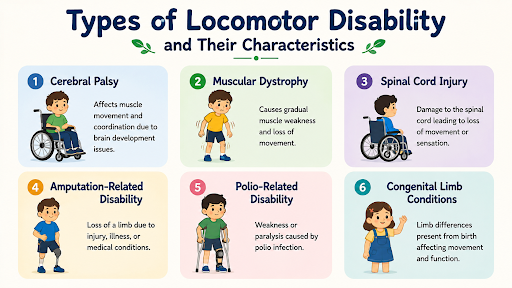
Types of Locomotor Disability and Their Characteristics
1. Cerebral Palsy
Cerebral Palsy is a neurological condition that affects movement, posture, and muscle coordination due to damage during brain development. It is among the commonly recognized mobility-related conditions in children.
Characteristics of Cerebral Palsy:
- Muscle stiffness or tightness
- Poor body coordination
- Difficulty maintaining posture
- Involuntary body movements
- Delayed motor development
- Balance difficulties
The level of impact varies among individuals. Some people may walk independently, while others may require movement support.
2. Muscular Dystrophy
Muscular Dystrophy is a group of inherited conditions that gradually weaken the muscles over time. Muscle strength may decrease progressively and affect movement abilities.
Characteristics of Muscular Dystrophy:
- Progressive muscle weakness
- Difficulty walking
- Frequent falls
- Reduced endurance
- Difficulty climbing stairs
- Physical fatigue
Early therapeutic support often helps improve physical functioning and maintain mobility.
3. Spinal Cord Injury
Spinal cord injuries may occur because of accidents, trauma, infections, or medical conditions. Damage to the spinal cord can affect communication between the brain and body.
Characteristics of Spinal Cord Injury:
- Reduced movement below the affected area
- Muscle weakness
- Loss of sensation
- Coordination difficulties
- Balance problems
- Limited mobility
The level of movement limitation usually depends on the location and severity of the injury.
4. Amputation-Related Disability
Loss of a limb due to injury, illness, congenital conditions, or medical procedures may affect physical movement and everyday activities.
Characteristics of Amputation-Related Disability:
- Balance difficulties
- Changes in movement patterns
- Difficulty performing certain physical activities
- Need for prosthetic support
- Reduced mobility in some situations
Rehabilitation and adaptive support can help improve independence and functional skills.
5. Polio-Related Disability
Polio is a viral condition that can affect the nervous system and lead to muscle weakness or paralysis. Although cases have reduced significantly due to vaccination programs, some individuals continue to experience long-term effects.
Characteristics of Polio-Related Disability:
- Muscle weakness
- Reduced limb strength
- Walking difficulties
- Joint abnormalities
- Fatigue during movement
The effects may vary depending on the severity of the condition.
6. Congenital Limb Conditions
Certain movement-related conditions may be present at birth and affect the development of bones, joints, or limbs.
Characteristics of Congenital Limb Conditions:
- Missing limbs
- Shortened limbs
- Joint abnormalities
- Restricted movement
- Physical limitations in some activities
Early intervention programs can help improve daily functioning and mobility skills.
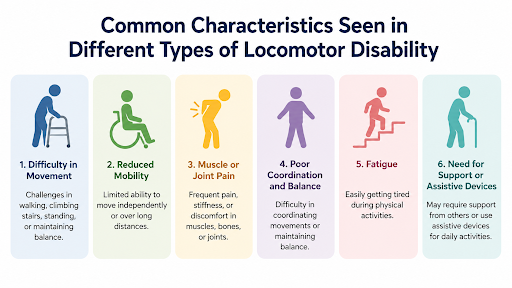
Common Characteristics Seen in Different Types of Locomotor Disability
Although the Types of Locomotor Disability differ, some common signs may be observed across multiple conditions.
These include:
- Difficulty walking
- Reduced balance
- Muscle weakness
- Poor coordination
- Frequent falls
- Delayed movement milestones
- Difficulty performing daily physical activities
- Reduced mobility
Recognizing these signs at an early stage may help families seek appropriate professional guidance and support.
Understanding Disability Severity and Functional Assessment
The impact of a Locomotor Disability is commonly measured through a certified assessment process that determines the level of movement limitation and its effect on everyday functioning. This assessment plays an important role in legal classification and in accessing disability-related support and benefits.
The evaluation is generally conducted by authorized medical boards using standardized guidelines. Factors considered during assessment may include:
- Muscle strength and control
- Joint movement and flexibility
- Functional use of affected limbs
- Balance and mobility
- Pain and fatigue levels
- Impact on daily living activities
Some examples include:
- Loss of an arm above the elbow may receive a disability assessment of around 70–80%, as it can significantly affect daily activities and movement.
- Severe movement limitation in both legs may receive around 80–90% because mobility and independence can become highly restricted.
- Mild stiffness or limited movement in one arm or leg may receive around 20–35%, especially when the person can still perform most daily activities independently.
In India, individuals with 40% or more certified disability may qualify for benchmark disability status, which can provide access to benefits such as educational reservations, employment opportunities, welfare schemes, and assistive support services.
Supporting Individuals with Locomotor Disability
Managing a Locomotor Disability often involves creating an environment that supports movement, learning, and independence. The goal is not only to improve physical abilities but also to reduce barriers in daily life.
Support may include:
- Movement-based therapies to strengthen mobility and improve coordination
- Adaptive tools and mobility aids that make daily activities easier
- Customized rehabilitation programs designed according to a person’s specific needs and functional goals
- School and workplace accommodations for better participation
- Family and community support to encourage confidence and social inclusion
Appropriate support at the right stage can help individuals perform daily activities more independently and participate actively in different aspects of life.

Final Thoughts
Understanding the Types of Locomotor Disability goes beyond identifying movement difficulties. Every condition affects individuals differently, which is why awareness, early support, and accessible environments play an important role.
With the right guidance and support systems, individuals with Locomotor Disability can develop skills, improve participation, and lead more independent lives.

Dr. Nitin, Founder of PediGym Child Development Center, is a dedicated pediatric therapy expert and DMI Level C Certified Therapist leading structured, evidence-based therapy programs in Faridabad and Gurgaon. Under his guidance, PediGym provides comprehensive pediatric rehabilitation focused on improving motor skills, coordination, sensory processing, speech clarity, and functional independence through personalized intervention plans.