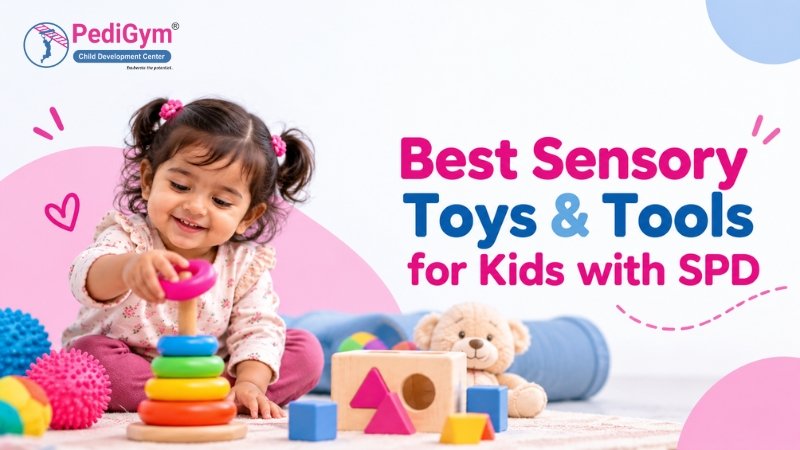

Fine motor skills delay refers to difficulty developing or using the small, controlled movements of the hands and fingers expected for a child’s age. Signs can include difficulty with grasping, drawing, using utensils, dressing, manipulating toys or completing other age-appropriate hand tasks. Children develop at different rates, but persistent difficulties or a lack of progress may warrant an assessment by a pediatrician or child development professional.
At PediGym Child Development Center, Dr. Nitin, Founder of PediGym Child Development Center and a DMI Level C Certified Therapist, supports children through structured, evidence-based pediatric therapy programs in Faridabad and Gurgaon.
What Are Fine Motor Skills?
Fine motor skills involve controlled movements of the smaller muscles of the hands, fingers and wrists. These movements require coordination between muscles, joints, nerves, vision and the brain.
Children use these skills throughout the day. Picking up a small toy, holding a crayon, turning a page or using a fork may look simple, but each activity requires coordination and precision.
Fine Motor Skills Support:
- Finger and hand strength
- Grasp and release
- Drawing and pre-writing
- Writing and classroom tasks
- Self-feeding
- Dressing and fastening clothes
- Playing with toys and puzzles
- Everyday independence
Because these abilities are closely connected to daily activities, difficulties may affect a child’s participation at home, preschool or school.
Signs of Fine Motor Skills Delay in Children
A fine motor skills delay in children does not automatically mean that a child has a developmental disorder. Children develop at different rates, and one isolated difficulty may not indicate a problem. However, persistent challenges or a lack of progress can be a reason to seek professional advice.
Signs in infants
Depending on age, parents may notice that a baby:
- Has difficulty reaching toward or grasping objects.
- Has limited interest in manipulating toys.
- Struggles to transfer an object between hands.
- Has difficulty bringing objects toward the mouth.
- Is not developing increasingly controlled finger movements.
Signs in toddlers
A toddler experiencing difficulty with hand coordination may:
- Struggle to stack blocks.
- Have difficulty turning pages one at a time.
- Find using a spoon or cup challenging.
- Struggle to put objects into containers.
- Have difficulty using both hands together during play.
- Avoid toys that require manipulation.
Signs in preschool and school-age children
Older children may experience difficulty with:
- Holding and controlling crayons or pencils.
- Drawing or copying simple shapes.
- Using scissors.
- Completing age-appropriate puzzles.
- Opening containers or turning knobs.
- Buttoning or unbuttoning clothes.
- Using zippers.
- Handling classroom materials.
- Writing comfortably or efficiently.
A child may also avoid drawing, crafts or other hand-based activities because they feel difficult. The important point is to look at the overall pattern and progress, rather than judging development from a single task.
Fine Motor Skills Milestones: What Should Parents Expect?
Fine motor skills milestones are general developmental reference points, not a rigid checklist. Children do not all acquire individual abilities at exactly the same age, and healthcare professionals consider a child’s overall development when assessing concerns. The CDC provides child development milestone checklists across different ages and recommends acting early when parents have developmental concerns.
Some Examples Of Progressively Developing Skills Include:
Age | Examples of developing skills |
Infancy | Reaching, grasping and gradually improving control of objects |
Around 1 year | Developing a more precise pincer grasp and manipulating smaller objects |
Around 2 years | Stacking blocks, turning pages and using utensils with increasing control |
Around 3 years | Beginning to copy simple shapes, thread objects and use a fork |
Around 4 years | Improving drawing, crayon control and dressing-related hand skills |
Around 5 years | Developing greater control for writing, buttoning and other self-care activities |
These examples are broad developmental landmarks rather than diagnostic criteria. Cleveland Clinic notes that children develop at their own pace, and concerns about developmental milestones should be discussed with a child’s healthcare provider.
If your child is behind in several skills, is making very little progress or has lost a previously acquired ability, professional guidance is appropriate.
What Causes Fine Motor Skills Delay?
There is no single cause of delayed fine motor development. Difficulties can be related to coordination, muscle strength, motor planning, sensory processing, vision or neurological and physical factors.
Fine motor difficulties can sometimes occur alongside developmental or neurological conditions, but difficulty with handwriting, drawing or dressing alone does not establish a diagnosis.
This is why an individualized assessment is valuable. A professional can look at how your child moves, grasps, plans and completes functional tasks instead of focusing on one isolated activity.
Early identification can also help children receive appropriate support sooner when support is needed.
Fine Motor Skills Activities Parents Can Try at Home
Play and everyday routines provide natural opportunities for fine motor skills development. Activities should be enjoyable, age-appropriate and adjusted to your child’s current abilities.
1. Encourage your child to build with blocks
Encourage your child to stack, connect, separate and arrange blocks. This can provide practice with grasping, releasing, coordination and hand strength.
2. Encourage your child to play with play dough
Rolling, squeezing, pinching and flattening play dough can encourage children to use their fingers and hands in different ways.
3. Practise transferring objects
Ask your child to move safe, age-appropriate objects between containers. This encourages controlled grasp and release.
For younger children, avoid small objects that may create a choking hazard and always supervise activities appropriately.
4. Encourage your child to draw
Provide crayons, washable markers or other suitable drawing tools. Let younger children scribble and experiment rather than expecting them to produce perfect shapes.
As control improves, you can introduce simple lines, circles and other pre-writing activities.
5. Practise dressing skills
Give your child opportunities to practise age-appropriate tasks such as pulling a zipper, opening larger buttons or putting on simple clothing.
These activities have an advantage: children are developing hand skills while working toward greater independence.
6. Encourage your child to try simple puzzles
Puzzles encourage children to pick up, rotate and position pieces while coordinating what they see with how their hands move.
7. Encourage your child to practise self-feeding
Using a spoon, fork and cup under appropriate supervision can naturally practise grasp, wrist control and hand-to-mouth coordination.
8. Encourage your child to take part in simple craft activities
Tearing paper, using stickers, threading larger objects and using child-safe scissors can provide varied opportunities to practise controlled hand movements.
The goal is not to turn play into a test. Short, regular and enjoyable practice is often more useful than forcing a child to repeat an activity after becoming frustrated.
Also Read This Blog: https://pedigym.com/motor-skills-activities-for-children/
Fine Motor Skills Exercises: When Structured Support May Help
Home activities can support development, but some children need more individualized guidance. Occupational therapy and other forms of pediatric therapy may be appropriate when fine motor difficulties persist or interfere with everyday participation.
A therapist may assess areas such as:
- Hand and finger strength
- Grasp development
- Bilateral coordination
- Hand-eye coordination
- Visual-motor integration
- Motor planning
- Pre-writing and handwriting readiness
- Dressing and self-care
- Play and classroom participation
Based on the child’s needs, therapy may include targeted fine motor skills exercises alongside functional activities.
Occupational therapy can address practical abilities such as dressing, feeding, writing, pre-writing and scissor skills. The American Occupational Therapy Association also provides evidence-based practice resources covering occupational therapy interventions for children and youth.
The purpose is not simply to make a child perform more exercises. The focus should be on helping the child participate more successfully and independently in meaningful everyday activities.
When Should You Seek Professional Help?
Consider discussing your concerns with your child’s pediatrician or child development professional if:
- Your child consistently struggles with several age-appropriate hand skills.
- Fine motor difficulties interfere with eating, dressing, play or schoolwork.
- Your child frequently avoids activities involving their hands.
- Your child appears noticeably behind other children of a similar age in everyday fine motor tasks.
- There is a noticeable lack of progress despite regular opportunities to practise.
- You are concerned about several areas of development, not just fine motor abilities.
Pay particular attention to regression. If your child loses a fine motor skill they previously had, especially if the change is sudden, contact a healthcare professional promptly. The CDC also advises parents to act early and discuss concerns with their child’s doctor when a child has lost skills they once had.
Seeking an assessment does not necessarily mean that your child has a disorder. It can provide a clearer understanding of their strengths, challenges and whether additional support would be useful.
Fine Motor Skills Support in Faridabad and Gurgaon
Every child develops differently. Therefore, the most useful approach is to understand what your child can currently do, where they are experiencing difficulty and what functional goals matter most to the family.
At PediGym Child Development Center, therapy programs are structured around the individual needs of the child. Dr. Nitin, Founder of PediGym Child Development Center and a DMI Level C Certified Therapist, leads evidence-based pediatric therapy programs supporting children and families in Faridabad and Gurgaon.
Rather than relying only on online milestone checklists, parents can discuss their observations with a qualified pediatric professional who can help determine whether further assessment or targeted support may be appropriate.
What Parents Can Do Next
If you are noticing persistent difficulties with your child’s fine motor skills, consider arranging an individualized developmental assessment. Bring examples of the activities your child finds difficult, such as drawing, using utensils, dressing, puzzles or classroom tasks, so the professional can better understand your concerns.
If you are looking for pediatric developmental support in Faridabad or Gurgaon, you can contact PediGym Child Development Center to discuss your child’s needs and enquire about an assessment.
Frequently Asked Questions
What are fine motor skills in children?
Fine motor skills are the precise movements of the hands, fingers and wrists that help children perform tasks such as grasping objects, drawing, writing, eating, dressing and manipulating toys.
What are common signs of fine motor delay?
Common signs can include difficulty grasping objects, using utensils, drawing, handling scissors, completing puzzles or managing age-appropriate dressing tasks. Persistent difficulties should be discussed with a qualified professional.
Can fine motor skills be improved?
Children can develop these abilities through play, everyday activities, appropriate practice and, when necessary, individualized pediatric therapy. The type of support should match the child’s developmental level and needs.
Which activities improve fine motor skills?
Play dough, blocks, puzzles, drawing, stickers, threading, age-appropriate crafts and dressing activities can provide useful opportunities to practise hand control and coordination.
When should I consult a therapist?
Consider seeking professional guidance when fine motor difficulties persist, interfere with daily activities or school participation, or when your child loses a previously acquired skill. A pediatrician or qualified child development professional can help determine the appropriate next step.
Medical Disclaimer
This article is intended for general educational purposes and should not replace an individualized medical or developmental assessment. Developmental milestones are general reference points, and children can progress at different rates. If you have concerns about your child’s development, speak with their pediatrician or a qualified child development professional.

Dr. Nitin, Founder of PediGym Child Development Center, is a dedicated pediatric therapy expert and DMI Level C Certified Therapist leading structured, evidence-based therapy programs in Faridabad and Gurgaon. Under his guidance, PediGym provides comprehensive pediatric rehabilitation focused on improving motor skills, coordination, sensory processing, speech clarity, and functional independence through personalized intervention plans.