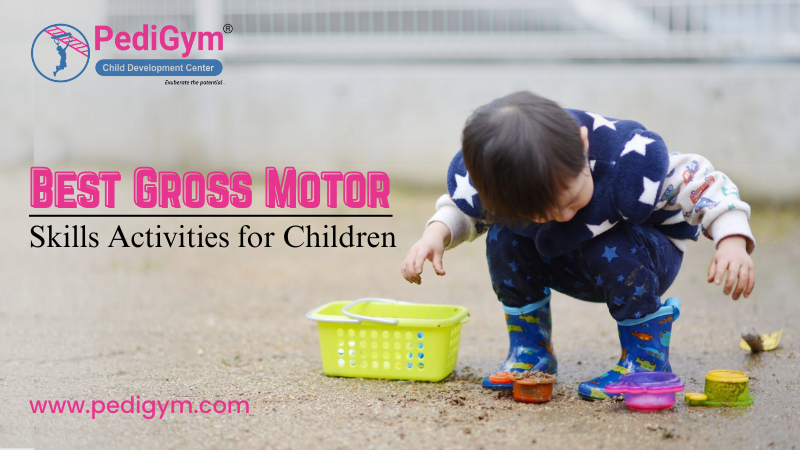
Gross motor skills help children develop balance, coordination, strength, posture, and body awareness.
Children use these movements every day while walking, running, jumping, climbing, throwing, and playing with others. If your child struggles with balance, coordination, or movement confidence, regular play-based activities can help improve gross motor development naturally.
In addition, simple daily movement games can build strength, confidence, and body awareness over time. Many parents look for simple activities they can do at home to support their child’s physical development. This guide includes age-wise gross motor activities, developmental milestones, common signs of delay, and practical tips used by therapists at PediGym.
What Are Gross Motor Skills?
Gross motor skills are the large muscle movements children use to control their arms, legs, and trunk.
These movements allow children to sit upright, crawl, walk, run, jump, climb, balance, throw, and catch.
Unlike fine motor skills, which involve small hand and finger movements, gross motor skills involve the
whole body moving through space. These movements depend on the muscles, bones, balance system,
and nervous system working together properly.
Gross motor development forms the foundation for everyday activities at home, in school, and on the
playground.
Gross Motor Development Milestones by Age
Every child develops at their own pace, but most children achieve certain movement milestones within
general age ranges.
| Age | Expected Milestones |
|---|---|
| 0–6 months | Lifting the head, rolling over, sitting with support |
| 6–12 months | Crawling, pulling to stand, walking with support |
| 12–18 months | Standing independently, first independent steps |
| 2 years | Running, climbing stairs with support, kicking a ball |
| 3 years | Jumping with both feet, riding a tricycle |
| 4 years | Balancing on one foot, catching a large ball |
| 5 years | Hopping, skipping, improved throwing and catching |
| 6 years | Jumping rope, riding a bicycle, balance beam walking |
Gross motor skills develop gradually in a predictable sequence. For example, early skills such as head control and crawling form the foundation for later movements like standing, walking, running, and jumping.
Gross Motor Skills Activities by Age Group
Gross Motor Activities for Babies (0–2 Years)
1. Tummy Time Reaches
During tummy time, keep toys slightly out of reach to encourage lifting the head, reaching, and turning. This helps strengthen the neck, shoulders, and core muscles.
2. Cushion Crawling
Create a soft crawling path using cushions or blankets. Crawling across uneven surfaces improves coordination and body awareness.
3. Balloon Kicking
Use a balloon for gentle kicking games. Balloons move slowly, making it easier for babies and toddlers to practice coordination and balance.
4. Pull-to-Stand Play
You can also keep toys on a low sofa or table to encourage your child to pull into standing. This helps improve leg strength and balance.
Gross Motor Activities for Toddlers (2–5 Years)
5. Simon Says
Simon Says is a fun way to improve listening skills, body awareness, and movement planning. Ask your child to jump, clap, hop, balance, or touch different body parts.
6. Dancing
Dancing helps children improve rhythm, coordination, balance, and motor planning while keeping movement fun and engaging.
7. Animal Walks
Ask your child to move like different animals such as a bear, crab, frog, or bunny. Animal walks help strengthen the core, shoulders, and legs.
8. Tape Jumping Game
Place strips of tape on the floor and encourage your child to jump from one strip to another with both feet together. Increase the distance as skills improve.
9. Obstacle Course
Use pillows, tunnels, chairs, or tape lines to create a simple obstacle course. Children can crawl under, jump over, balance, and climb through different challenges.
At PediGym, obstacle courses are one of the most effective therapy activities because children enjoy them while practicing important movement skills.
10. Bubble Chasing
Blow bubbles at different heights and encourage your child to jump, run, squat, or reach to pop them. This improves balance, coordination, and visual tracking.
11. Pillow Stepping Stones
Another fun option is arranging pillows across the floor for stepping or jumping games without touching the ground.
12. Ball Toss Games
Throw soft balls into baskets or buckets placed at different distances. This helps improve hand-eye coordination and balance.
Gross Motor Activities for Preschoolers and Older Children (5–12 Years)
Children between 5–8 years usually enjoy playful movement games such as hopscotch, relay races, and balance activities, while older children between 9–12 years may prefer sports-based activities like cycling, skating, badminton, swimming, or agility games.
13. Hopscotch
Hopscotch improves single-leg balance, coordination, and jumping skills. You can draw a hopscotch grid outdoors with chalk or create one indoors using tape.
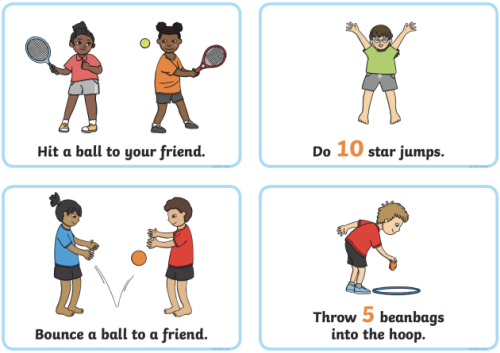
14. Catching and Throwing Games
Start with balloons or large soft balls and gradually use smaller balls as coordination improves.
15. Jump Rope
Jump rope activities improve coordination, rhythm, endurance, and timing.
16. Balance Beam Walk
Use a tape line, wooden plank, or low balance beam and encourage children to walk forward, backward, or sideways.
17. Relay Races
Running, hopping, skipping, and side-stepping races improve agility, endurance, and coordination.
18. Climbing Activities
Playground climbing activities strengthen the arms, legs, and core while improving motor planning and confidence.
19. Scooter Board or Wheelbarrow Walks
These activities strengthen the upper body and core muscles while improving coordination.
20. Yoga for Kids
Simple yoga poses such as tree pose or downward dog help improve posture, flexibility, balance, and body awareness.
Gross Motor Activities for Children With Developmental Delays or Low Muscle Tone
Children with developmental delays, coordination difficulties, sensory challenges, or low muscle tone often benefit from structured movement activities with repetition and sensory input.
At PediGym, we often use heavy-work activities before balance tasks because they help children feel calmer and more regulated. As a result, many children are better prepared for movement challenges and coordination activities.
Helpful activities include:
- Pushing or pulling laundry baskets
- Carrying cushions or weighted toys
- Tunnel crawling
- Trampoline jumping
- Sensory obstacle courses
- Therapy ball activities
- Movement songs and action rhymes
These activities can improve coordination, attention, body awareness, and sensory regulation.
Indoor Gross Motor Activities
Indoor movement activities are useful during bad weather or when outdoor play is limited. At the same time, they help children continue practicing important movement skills at home.
Easy indoor gross motor activities include:
- Freeze dance for balance and listening skills
- Balloon volleyball for hand-eye coordination
- Animal walks for core and shoulder strength
- Yoga for posture and body awareness
- Tunnel crawling for coordination and motor planning
- Obstacle courses for balance and movement control
- Marching games for rhythm and coordination
- Simon Says for movement planning and attention
Outdoor Gross Motor Activities
Outdoor play naturally encourages larger movements and active exploration. In addition, outdoor environments help children practice balance, coordination, and endurance more naturally.
Good outdoor gross motor activities include:
- Running races to improve endurance and speed
- Cycling for balance and leg strength
- Playground climbing for confidence and coordination
- Hopscotch for jumping and single-leg balance
- Soccer games for agility and foot coordination
- Skipping rope for rhythm and timing
- Nature walks for balance and body awareness
- Ball games for coordination and reaction skills
Gross Motor Delay Signs by Age
You may benefit from a professional assessment if your child shows these signs consistently.
By 18 months
- Not walking independently
- Frequent falls while standing or walking
By 2 years
- Trouble running or climbing stairs
- Limited interest in physical play
By 3 years
- Unable to jump with both feet together
- Poor balance during play
By 5 years
- Challenges with hopping, skipping, or catching a ball
- Tires much faster than other children
Dr. Nitin Gupta, PediGym’s lead physiotherapist, recommends seeking support if multiple movement concerns are present consistently over time.
What Causes Gross Motor Delays in Children?
Some children develop gross motor skills more slowly than others. In many cases, delays are temporary and improve with regular practice. However, some children may have an underlying condition affecting muscle strength, coordination, balance, or motor planning.
Common causes of gross motor difficulties include:
- Developmental coordination disorder (dyspraxia)
- Cerebral palsy
- Low muscle tone (hypotonia)
- Sensory processing difficulties
- Premature birth
- Down syndrome and other genetic conditions
At PediGym, assessments help identify whether the difficulty is related to strength, balance, coordination, sensory processing, or motor planning so therapy can be tailored to the child’s specific needs.
How PediGym Helps
At PediGym, we help children improve balance, coordination, posture, motor planning, strength, and confidence through play-based occupational therapy and physiotherapy.
We work with children who have:
- Developmental delays
- Cerebral palsy
- Low muscle tone
- Sensory processing difficulties
- Coordination and balance difficulties
Parents are also guided with home activities that support progress outside therapy sessions.
If you have questions about your child’s movement development or concerns about balance, coordination, or physical milestones, you can reach out to the PediGym team to arrange an assessment and receive personalised guidance.
Frequently Asked Questions
Which activities improve gross motor skills?
Activities such as jumping, climbing, dancing, obstacle courses, ball games, and balancing activities help
improve gross motor development.
What is the difference between gross motor and fine motor skills?
These movements involve the arms, legs, and trunk working together during physical activities such as running, climbing, and balancing. In contrast, fine motor skills involve smaller and more precise hand and finger movements such as writing, drawing, buttoning clothes, or using scissors.
Children usually develop gross motor control before fine motor skills. Strong balance, posture, and core
stability provide the foundation for later fine motor development.
How do I know if my child has gross motor delays?
Frequent falls, poor balance, delayed movement milestones, difficulty jumping, or avoiding physical
play may indicate gross motor difficulties. If two or more of these signs are present consistently over
several weeks, a professional assessment is recommended instead of a wait-and-see approach.
Can gross motor delays improve?
Yes. Consistent movement practice and therapy support can significantly improve coordination,
balance, strength, and confidence over time. Early intervention — especially before school age — often
leads to faster and more lasting improvement because the brain is highly adaptable during early
childhood.

Dr. Nitin, Founder of PediGym Child Development Center, is a dedicated pediatric therapy expert and DMI Level C Certified Therapist leading structured, evidence-based therapy programs in Faridabad and Gurgaon. Under his guidance, PediGym provides comprehensive pediatric rehabilitation focused on improving motor skills, coordination, sensory processing, speech clarity, and functional independence through personalized intervention plans.