
By Dr Nitin Gupta
Updated: 23 June 2026
Kinesio tape is a gentle, elastic therapeutic tape used in pediatric rehabilitation to support movement, body awareness, and participation in everyday activities. Unlike rigid sports tape, it stretches and moves with the body so children can continue playing, learning, and moving more naturally.
Parents often ask what kinesio tape is and how kinesio tape works. When applied correctly, the tape provides light sensory input and gentle support without restricting movement. In pediatric therapy, kinesio taping may be used to support goals related to posture, movement quality, body awareness, comfort during activity, and participation.
Some of the most common kinesio tape uses for children include support for the knee, ankle, elbow, back, neck, wrist, and selected developmental therapy goals.
Because every child responds differently, kinesio tape is usually used alongside exercises, movement practice, and therapy—not as a standalone treatment.
Professional pediatric kinesio taping services are available at PediGYM centres in Faridabad and Gurugram.
What Is Kinesio Tape?
Kinesio tape is a soft, elastic therapeutic tape designed to move with the body while providing gentle support during activity.
Made from breathable cotton with a medical-grade adhesive, the tape is designed to stretch in a way that feels similar to normal skin movement. Unlike traditional athletic tape that aims to restrict motion, kinesio tape allows children to continue participating in play, therapy, and daily routines more comfortably.
In pediatric settings, therapists may use kinesio tape to provide additional sensory input, support movement patterns, encourage body awareness, and reinforce goals being practiced during therapy sessions.
Its effects are thought to come from a combination of movement support, sensory feedback, and changes in how the body responds during activity, although research findings remain mixed across different conditions.
Key Features & Benefits of Kinesio Tape
Kinesio tape is designed to support movement while keeping children comfortable and active during therapy and everyday life.
Some potential benefits of kinesio taping include:
Supports Natural Movement
Kinesio tape stretches and moves with the body, allowing children to stay active during play, therapy, and everyday routines without feeling restricted.
Feels Comfortable to Wear
The soft, breathable material and medical-grade adhesive are designed for comfortable wear throughout normal daily activities.
May Support Fluid Movement
When applied appropriately, kinesio tape may gently influence movement of the skin and underlying tissues, which therapists sometimes use as part of swelling-management approaches.
Provides Gentle Muscle and Joint Support
The tape offers light support without limiting normal movement, making it suitable for children who are working on movement quality and participation.
Encourages Body Awareness
By creating continuous sensory input at the skin level, kinesio tape may help children become more aware of body position and movement during activities.
At PediGYM, kinesio taping is incorporated into a broader therapy approach focused on movement, participation, and functional goals—not as a replacement for exercise or rehabilitation.

History of Kinesio Tape
Kinesio Tape (also called kinesiology tape) was developed in the 1970s by Dr. Kenzo Kase, a Japanese chiropractor. He created this elastic therapeutic tape to support muscles and joints while still allowing natural movement—a different approach from the rigid athletic tapes commonly used at the time.
Over the years, kinesio taping expanded beyond sports medicine and is now used across rehabilitation settings, including orthopedic care, neurological therapy, and pediatric rehabilitation. Today, therapists may incorporate kinesio tape as one component of a broader treatment plan to support movement, participation, and functional goals rather than as a standalone treatment.
Reference:
Research and clinical use of the Kinesio Taping Method were originally described by Kase K, Wallis J, and Kase T in Clinical Therapeutic Applications of the Kinesio Taping Method (3rd Edition).
How Does Kinesio Tape Work?
Kinesio tape works by giving children gentle support while helping them move more comfortably and become more aware of their body position during activity. Unlike rigid athletic tape, it stretches and moves with the body instead of restricting movement.
Therapists commonly use kinesio tape in pediatric rehabilitation to support posture, encourage movement awareness, and provide light support during everyday activities and therapy sessions. Its effects are thought to come from a combination of mechanical support, sensory input, and movement guidance.
Mechanical Support
Kinesio tape provides light support to muscles and joints without holding them rigidly in place. Because the tape stretches and recoils during movement, it supports the body while still allowing children to walk, run, climb, and play naturally.
This makes it different from traditional sports taping, where the goal is often to restrict movement around an injured area.
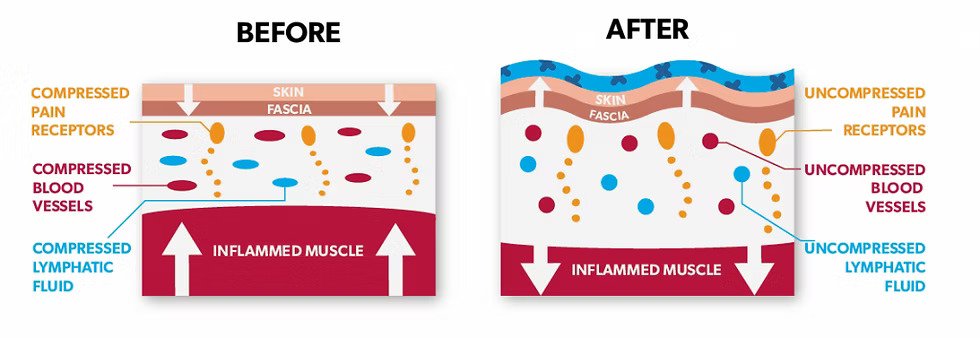
Lymphatic Support
Another commonly discussed effect of kinesio tape relates to circulation and fluid movement.
When the tape is applied, its elastic properties may create subtle lifting at the skin surface. Therapists believe this can slightly change pressure in the tissues underneath, which may support normal blood flow and lymphatic movement. This approach is sometimes included when children are recovering from mild swelling or post-activity fatigue, although research findings remain mixed.
Sensory Feedback (Proprioception)
One of the most relevant concepts in pediatric therapy is sensory feedback.
The skin constantly sends information to the brain about movement and body position. Kinesio tape adds gentle sensory input that may help children become more aware of how they move and position their body during activities.
This process is called proprioception, and it is one reason taping may sometimes be included alongside movement training and developmental therapy.
Pain Modulation
Kinesio tape may also influence how movement-related sensations are experienced.
Some therapists suggest that the sensory input created by the tape can change how signals are processed during movement, which may make certain activities feel more comfortable for some children. Rather than acting as a treatment on its own, taping is typically used to support participation while children continue exercises and therapy.
Because responses vary between individuals, kinesio tape is usually combined with a broader rehabilitation or therapy plan rather than used as a standalone intervention.
What Research Says About Kinesio Tape
Current research suggests that kinesio taping may provide short-term support for comfort, movement, and rehabilitation outcomes, especially when used alongside exercise or therapy.
A 2014 systematic review and meta-analysis (Montalvo et al., American Journal of Sports Medicine) found modest short-term pain improvements in some conditions, although evidence for broader and long-term effects remains limited.
For this reason, kinesio tape is best used as a supportive tool—not a replacement for exercise, rehabilitation, strengthening programs, or medical care. At PediGYM, taping is incorporated within a complete therapy plan based on each child’s needs.
Most Common Kinesio Tape Uses for Kids
At PediGYM, kinesio tape therapy is a gentle, effective way to support children’s muscles and joints while encouraging natural movement. It is widely used to manage discomfort, enhance posture, and promote safe play during growth and physical activity.
1. Kinesio tape knee
Children often experience knee pain due to patellar tracking issues, growing pains, or mild instability caused by rapid growth, uneven muscle strength, or active sports participation. Kinesio tape knee applications:
- Provide gentle support to the quadriceps and surrounding muscles
- Improve alignment and movement efficiency during activities like running, jumping, or cycling
- Reduce discomfort from repetitive strain or overuse
- Encourage safer play and help children regain confidence in sports or physical activities
2. Kinesio tape ankle sprain
Ankle sprains are common in children who are active in sports, dance, or playground activities. Taping can help manage both acute and chronic conditions. Kinesio tape ankle sprain applications:
- Stabilize ligaments without restricting natural movement
- Enhance proprioception, helping children sense foot placement and avoid re-injury
- Reduce swelling, discomfort, and muscle fatigue around the joint
- Support gradual return to activity, whether walking, running, or playing sports
3. Kinesio tape tennis elbow
Repetitive movements of the forearm and elbow in sports, writing, or gaming can lead to strain and discomfort. Kinesio tape tennis elbow applications:
- Reduce strain on elbow tendons and surrounding muscles
- Support proper movement mechanics during play or physical activity
- Allow continued participation in sports or school tasks without worsening pain
- Help prevent chronic overuse injuries
4. Kinesio tape back pain
Children may develop back pain from prolonged sitting, carrying heavy school bags, poor posture, or muscle weakness. Kinesio tape back applications:
- Provide gentle support for lumbar and thoracic muscles
- Reduce muscular fatigue and discomfort during daily activities
- Encourage proper upright posture and alignment
- Alleviate kinesio tape back pain caused by postural strain
5. Kinesio tape for neck pain
Forward-head posture, screen use, or muscle tension can cause discomfort in the neck and upper shoulders. Kinesio tape for neck pain applications:
- Reduce neck muscle strain and tension
- Encourage proper head and neck alignment
- Provide gentle support during study, screen time, or active play
- Promote better posture habits early in life, preventing long-term issues
6. Kinesio taping for wrist pain
Wrist pain in children can result from overuse during gymnastics, prolonged screen time, or repetitive tasks like writing or typing. Kinesio taping for wrist pain applications:
- Support wrist tendons and joints without limiting natural movement
- Reduce strain and discomfort during play, writing, or sports
- Improve grip strength and fine motor coordination
- Aid in recovery from minor overuse injuries
Kinesio Tape for Sensory & Developmental Conditions
Low Muscle Tone (Hypotonia)
Children with low muscle tone often need additional support to maintain posture and sustain movement during everyday activities.
Kinesio tape may provide gentle sensory input that helps improve awareness of body position and encourages more efficient muscle activation during movement practice. Taping is typically combined with strengthening, functional activities, and developmental therapy rather than used independently alongside Development Enhancement Program.
Cerebral Palsy
Children with cerebral palsy may experience differences in posture, movement control, and muscle coordination.
In selected cases, kinesio tape may be incorporated into therapy programs to reinforce positioning strategies and support movement patterns practiced during treatment sessions with Neurodevelopmental Therapy.
Sensory Processing Challenges
For some children with sensory processing differences, additional tactile input can support movement awareness and participation.
The gentle sensation created by kinesio tape may act as a body-awareness cue that helps certain children recognise positioning and engage more comfortably in movement-based activities with Sensory Integration Therapy.
Erb’s Palsy
Children recovering from Erb’s palsy often work on improving shoulder positioning, muscle activation, and functional arm use.
Kinesio tape may be incorporated alongside guided therapy activities to reinforce movement goals and support positioning during practice with ERB’s Palsy Program
Dynamic Movement Intervention (DMI)
Dynamic Movement Intervention focuses on building more effective movement responses through active participation.
In selected situations, kinesio tape may be used to reinforce posture and body awareness while children practice movement goals during therapy sessions.
Because every child responds differently, kinesio taping should always be assessed and applied individually as part of a broader therapy plan.
Kinesio Tape Therapy at PediGYM
At PediGYM, our kinesio tape therapy is designed specifically for children, combining safety, effectiveness, and fun. Unlike generic taping, our approach is tailored to each child’s unique needs, ensuring that taping supports their growth, comfort, and overall development.
Child-Friendly
We explain taping in age-appropriate ways and make the experience comfortable and engaging. Children may choose tape colours or be gradually introduced to taping if they have sensory sensitivities.
Individualised
Each taping plan is based on your child’s assessment, movement patterns, posture, and therapy goals.
Integrated
Kinesio tape is used alongside exercises, play, therapy activities, and parent education—not as a standalone solution.
Available at PediGYM Centres
Faridabad – Sector 85
3rd Floor, D-72, Greater Faridabad, Sector 85, Faridabad, Haryana 121007
Faridabad – Sector 17
382, Sector 17, Faridabad, Haryana 121002
Gurugram – DLF Phase 2
Site No. 2120, Udgam Pre-School, 1st Floor, Behind Police Station, DLF Phase 2, Gurugram, Haryana 122002
Book an assessment to understand whether kinesio taping may be appropriate for your child’s therapy goals.
How to apply kinesio tape?
inesio tape works best when it is applied based on your child’s movement goals and positioned correctly on the body. While the exact technique varies by condition and age, the general process is simple and should feel comfortable—not restrictive.
Step 1 Understand the Goal
Before applying the tape, identify what you want to support—such as posture, movement, body awareness, comfort during activity, or a specific therapy goal.
Step 2 Prepare Your Child’s Skin
Clean and dry skin helps the tape stay in place longer and reduces irritation. Avoid applying over lotions, oils, or broken skin.
Step 3 Cut and Prepare the Tape
Measure the tape for the target area and round the edges to help prevent peeling during play and daily activities.
Step 4 Use the Right Amount of Stretch
Kinesio tape is designed to work with gentle tension—not by pulling tightly. Many general applications use light to moderate stretch (around 25–50%), although the exact amount depends on your child’s needs and should be guided by a therapist.
Step 5 Apply and Position Carefully
Place the tape while your child is in the recommended position and keep the beginning and end of the tape relaxed to improve comfort.
Step 6 Smooth and Activate the Adhesive
Rub gently over the tape after application to warm the adhesive and help it bond to the skin.
Step 7 Check Comfort During Movement
Your child should be able to move naturally while wearing the tape. If the tape causes discomfort, itching, or excessive pulling, remove it and seek guidance before reapplying.
Parents often find it helpful to watch a therapist demonstrate the first application before trying kinesio taping at home.
Kinesio Tape vs Athletic Tape
Kinesio tape and athletic tape are designed for different purposes. Kinesio tape is made to support movement while allowing flexibility, whereas athletic tape is typically used to stabilise and limit movement around a joint or injured area.
If Your Child Needs… | Kinesio Tape | Athletic Tape |
Freedom to move during play and daily activities | ✓ Designed to move with the body | Usually limits movement |
Gentle support without feeling restricted | ✓ Lightweight and flexible | More structured and firm |
Support for posture, body awareness, or therapy goals | ✓ Commonly used in rehabilitation and pediatric therapy | Less commonly used |
Extra joint stability after injury | Sometimes | ✓ More commonly used |
Longer wear during everyday routines | Often worn for several days | Usually worn for shorter periods |
Safety, duration and removal
How Long Can Children Wear Kinesio Tape?
Kinesio tape is designed to stay in place during normal daily activities and can usually be worn for 2–5 days, depending on your child’s activity level, skin sensitivity, and the area being taped.
Patch Testing Before First Use
If your child is trying kinesio tape for the first time, start with a small test application.
✓ Apply a small section first
✓ Check for redness, itching, or irritation
✓ Remove the tape if discomfort developsChildren with sensitive skin may benefit from shorter wear times initially.
How to Remove Kinesio Tape
Kinesio tape should come off slowly and comfortably.
Gently peel the tape back in the direction of hair growth while supporting your child’s skin with your hand. If needed, baby oil or a skin-safe oil can help loosen the adhesive and make removal easier.
Important Precautions
Kinesio tape should only be applied to healthy, intact skin.
Avoid using the tape if your child has:
✓ Broken or damaged skin
✓ Redness, rashes, or irritation
✓ Active skin infections
✓ A known sensitivity to adhesives
For infants and very young children, always speak with your therapist before applying kinesio tape to ensure the technique and wear time are appropriate.
FAQs
Q: Is kinesio tape painful?
A: No — when applied correctly it’s not painful. It may feel strange at first, but children usually tolerate it well.
Q: Can kinesio tape help knee pain?
A: Yes — kinesio tape knee applications can reduce pain and improve tracking for mild conditions.
Q: Does kinesio tape treat an ankle sprain?
A: It supports recovery for mild sprains and improves proprioception — for severe sprains always see a clinician. (See kinesio tape ankle sprain.)
Q: Will kinesio tape fix tennis elbow?
A: It can reduce load on the tendon and help symptoms when combined with exercises — useful for kinesio tape tennis elbow management.
Practical tips for parents
Kinesio tape works best when it supports your child’s everyday movement—not when it becomes the focus of treatment.
✓ Follow your therapist’s guidance before applying tape at home
✓ Use taping as one part of your child’s overall therapy plan
✓ Keep reference photos if your therapist recommends home application
✓ Remove the tape if irritation or discomfort develops
✓ Encourage your child to continue normal play and movement while wearing the tape
Final thoughts
Kinesio tape can be a helpful addition to pediatric therapy when the goal is to support movement, body awareness, and participation while keeping children active.
At PediGYM, taping is never used in isolation—it is combined with movement practice, exercises, play-based activities, and parent education to support meaningful functional goals.
If you would like to know whether kinesio taping is appropriate for your child, book an assessment with our team in Faridabad or Gurugram.

Dr. Nitin, Founder of PediGym Child Development Center, is a dedicated pediatric therapy expert and DMI Level C Certified Therapist leading structured, evidence-based therapy programs in Faridabad and Gurgaon. Under his guidance, PediGym provides comprehensive pediatric rehabilitation focused on improving motor skills, coordination, sensory processing, speech clarity, and functional independence through personalized intervention plans.