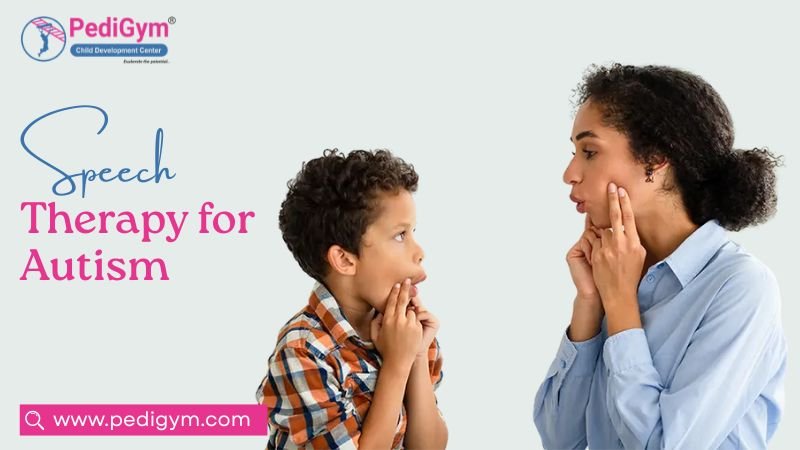
Speech and communication challenges are one of the core characteristics of Autism Spectrum Disorder (ASD). Many parents searching for speech therapy in Faridabad look for effective, evidence-based support that can help their child communicate better. Many children with autism struggle to express their needs, understand language, or interact socially. Speech therapy for autism plays a vital role in helping children develop communication skills, build confidence, and improve their overall quality of life. At PediGYM, our goal is to support children step by step through structured, child‑centered speech therapy programs.
What Is Speech Therapy for Autism?
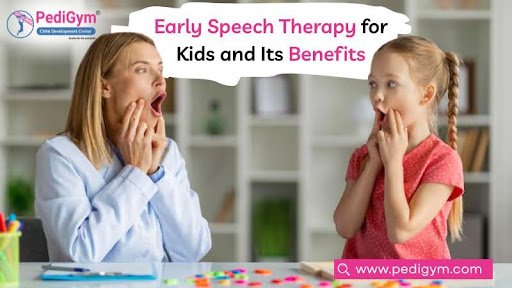
Speech therapy for autism, also known as speech language therapy for autism, is a specialized intervention that helps children improve their verbal and non-verbal communication skills. It is an essential part of early intervention and ongoing support for children on the autism spectrum. This form of speech therapy for kids focuses on:
- Building functional communication skills.
- Improving speech clarity and pronunciation.
- Enhancing understanding of spoken language.
- Encouraging meaningful social interaction.
- Supporting alternative communication methods when verbal speech is limited.
A qualified speech therapy centre designs therapy plans based on the child’s age, abilities, challenges, and daily communication needs.
Common Communication Challenges in Children
Children who require speech therapy for kids may experience a wide range of speech and language difficulties, especially those on the autism spectrum. These challenges can affect a child’s ability to express needs, understand others, and participate in social or learning environments. Children with autism may experience communication difficulties such as:
- Delayed speech development or absence of speech, where the child may speak very late or not use spoken words at all.
- Limited vocabulary or repetitive language (echolalia), including repeating words, phrases, or TV dialogues without understanding their meaning.
- Difficulty starting, maintaining, or ending conversations, making social interaction challenging.
- Poor understanding of instructions or questions, especially multi-step directions.
- Challenges with social communication, such as turn-taking, maintaining eye contact, understanding emotions, or responding appropriately in conversations.
These communication difficulties can often lead to frustration, emotional outbursts, or withdrawal from social situations. Through structured and individualized speech therapy for children, therapists help address these challenges in a supportive, encouraging, and developmentally appropriate manner.
How Speech Therapy Helps Children with Autism?
A structured and consistent speech therapy program can make a significant difference in a child’s overall development. At a professional speech therapy centre, therapy is delivered step by step, with clear goals and regular monitoring, to ensure steady and measurable progress. Each session is tailored to the child’s communication level, learning style, and everyday needs.
1. Improving Expressive Language
Speech therapy for autism helps children learn how to express their needs, emotions, thoughts, and ideas using words, sounds, signs, or pictures. Therapists gradually encourage purposeful communication, whether it is asking for help, making choices, or sharing experiences. Even small improvements in expressive language can greatly increase a child’s confidence, independence, and willingness to interact.
2. Strengthening Receptive Language Skills
Receptive language refers to understanding what others say. Through speech therapy for children, kids learn to follow instructions, understand questions, and respond appropriately. This skill is especially important in classroom environments, play situations, and daily routines at home, such as dressing, eating, and following safety instructions.
3. Enhancing Social Interaction and Pragmatic Skills
Speech therapy places strong emphasis on social communication. Children are guided to develop skills such as greeting others, taking turns, maintaining eye contact, using appropriate tone of voice, and understanding social rules. These pragmatic skills help children build friendships, participate in group activities, and feel more comfortable in social settings.
4. Supporting Non-Verbal and Minimally Verbal Children
For children who are non-verbal or minimally verbal, therapists introduce alternative and augmentative communication (AAC) methods. These may include picture exchange systems, gestures, visual cues, or communication devices. AAC supports help children express themselves effectively while also encouraging the development of spoken language when possible.
5. Improving Speech Clarity and Pronunciation
Some children with autism have difficulty producing clear speech sounds. Targeted speech therapy techniques focus on articulation, oral-motor coordination, and sound sequencing. Over time, this helps improve speech clarity, making it easier for others to understand the child.
6. Reducing Behavioral Challenges
Communication difficulties often lead to frustration, which may appear as tantrums, aggression, or withdrawal. When children learn effective ways to communicate their needs and feelings, these frustration-related behaviors often reduce significantly. Improved communication supports better emotional regulation and overall behavior.
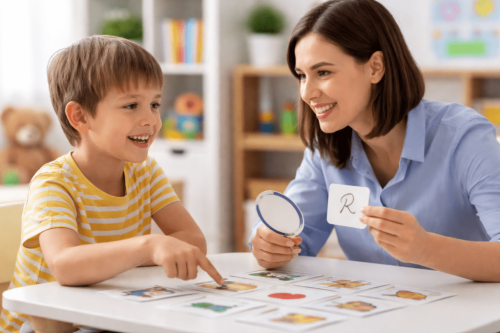
Techniques Used in Speech Therapy for Autism
Speech therapists use a wide range of evidence-based speech therapy techniques to support children with autism. These techniques are selected based on the child’s learning style and developmental level. Common techniques include:
- Play-based therapy: Encourages natural communication through play and interaction. Children learn language skills while playing with toys, games, and activities they enjoy, which increases motivation and participation.
- Visual supports: Use of pictures, charts, flashcards, and visual schedules to aid understanding. Visual tools are especially helpful for children with autism, as they support comprehension and reduce anxiety during transitions.
- Modeling and imitation: Therapists demonstrate correct speech sounds, words, and social behaviors, encouraging children to imitate them. This method helps build vocabulary, sentence formation, and appropriate social responses.
- Social stories: Simple, structured stories are used to explain social situations, routines, or expected behaviors. These stories help children understand emotions, social rules, and appropriate communication in real-life scenarios.
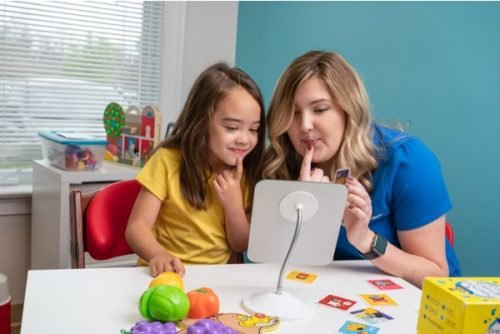
- Articulation and oral-motor exercises: These exercises focus on strengthening the muscles of the mouth, lips, and tongue. They help improve speech clarity, sound production, and overall intelligibility.
- Routine-based language training: Communication skills are taught within daily activities such as eating, dressing, playing, or classroom tasks. This helps children apply what they learn directly to their everyday routines.
By using a combination of these approaches, speech therapy for children becomes engaging, structured, and highly effective, helping children with autism communicate more confidently and meaningfully.
Importance of Early Intervention
Early intervention plays a crucial role in the success of speech therapy for autism. During early childhood, the brain has high neuroplasticity, meaning it can adapt and learn new skills more easily. This makes the early years an ideal time to build strong foundations in communication, language, and social interaction. Benefits of early speech therapy include:
- Faster development of speech and language skills, allowing children to communicate their needs more effectively
- Improved social engagement and interaction, helping children connect with peers and caregivers
- Better readiness for school and learning environments, including improved attention, understanding, and classroom participation
- Increased independence in daily activities, such as following instructions, expressing choices, and managing routines
Families seeking reliable speech therapy in Faridabad are encouraged to begin therapy as soon as communication delays or concerns are noticed. Early action can make a lasting and positive difference in a child’s overall development.
Role of Parents in Speech Therapy Success
Parents and caregivers play a vital role in the effectiveness of speech therapy. Consistency between therapy sessions and home routines leads to better outcomes. Speech therapists guide parents on:
- Using simple and clear language at home, so children can better understand and respond.
- Encouraging communication during everyday activities such as eating, bathing, playing, or traveling.
- Reinforcing therapy goals through play and conversation, making learning natural and enjoyable.
- Creating a supportive and patient communication environment.
This collaborative approach ensures that speech therapy for kids extends beyond the therapy room.
Why Choose PediGYM for Speech Therapy?
If you are looking for reliable speech therapy in Faridabad, PediGYM offers comprehensive and child-focused therapy programs. As a trusted speech therapy centre, we specialize in speech therapy for autism and communication development for children. At PediGYM, we offer:
- Experienced speech therapists trained in autism intervention
- Individualized therapy plans
- A child‑friendly, supportive environment
- Collaboration with parents and caregivers
Our holistic approach focuses on helping children communicate confidently and meaningfully.
Final Thoughts
Speech therapy for autism is a life-changing intervention that supports communication, social interaction, and emotional development. With the right guidance, structured therapy, and family involvement, children with autism can make meaningful progress.
If you are searching for a trusted speech therapy centre or professional speech therapy in Faridabad, PediGYM is committed to providing compassionate, evidence-based care. Our goal is to help every child communicate confidently and reach their full potential.