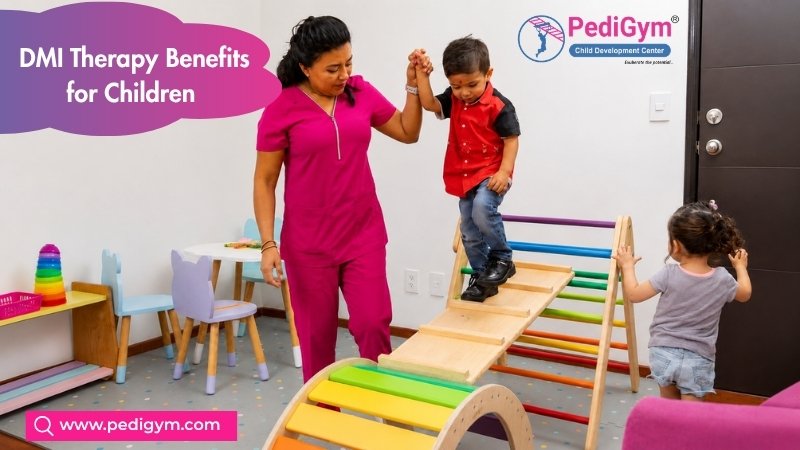
DMI Therapy Benefits For Children Are Gaining Momentum Among Parents And Pediatric Rehab Specialists Searching For Effective Ways To Help Their Kids With Developmental Delays. Dynamic Movement Intervention (DMI) Is A Specialized Pediatric PT Approach That Helps Improve Gross Motor Skills, Balance, Posture & Functional Mobility Through Guided Movement Activities.
Kids reach their motor milestones in their own time, but some may be delayed when it comes to rolling, sitting, crawling, standing or walking because of conditions like CP, Down syndrome, hypotonia, genetics or other neurological issues. When kids are behind on their milestones, early intervention and evidenced based rehab can help make movements easier and encourage more independence.
One of the many benefits of DMI therapy for kids is that it’s all about moving! Each session, therapists create an exciting “movement challenge” where kids get to work hard to build strength, improve posture, learn to balance, and master motor planning.
Everything You Need to Know About DMI Therapy
Dynamic Movement Intervention (DMI) is a pediatric physical therapy approach that encourages children to actively engage in movement-based learning. It supports:
- Balance development
- Muscle activation
- Postural control
- Motor coordination
Unlike passive stretching, DMI requires active participation from the child, guided by a trained therapist.
Main objectives include:
- Improving head and neck control
- Enhancing trunk stability
- Developing balance reactions
- Encouraging standing and walking
- Supporting functional mobility
- Promoting motor learning
Who May Benefit from DMI Therapy?
Every child develops movement skills differently but sometimes they miss out on reaching certain milestones, such as head control, sitting, crawling, standing or walking. If that’s the case, your healthcare provider might suggest Dynamic Movement Intervention (DMI) as part of a broader pediatric rehabilitation plan. But you should confirm suitability of this therapy from a certified pediatric physiotherapist or rehab specialist first.
Dynamic Movement Intervention (DMI) isn’t a “one-size-fits-all” approach. Typically used for kids who need extra help in building gross motor skills, posture, balance, and function, it’s personalised based on their diagnosis, age, and developmental level.
Conditions Where DMI Therapy May Be Considered
|
Condition |
Possible Area of Support |
|
Cerebral palsy |
Improves posture, balance, and motor control |
|
Down syndrome |
Supports coordination and muscle activation |
|
Hypotonia (low muscle tone) |
Helps build strength and stability |
|
Developmental delay |
Encourages gross motor milestone progression |
|
Brain injury |
Supports functional movement recovery |
|
Genetic disorders |
Improves postural alignment and control |
|
Premature birth |
Supports early motor development |
When DMI Therapy May NOT Be Suitable
DMI therapy may not be recommended in certain medical conditions such as:
- Uncontrolled seizures
- Acute illness or infection
- Severe pain or medical instability
- Doctor-restricted physical activity
- Serious cardiopulmonary conditions without clearance
A pediatric specialist must always evaluate safety before starting therapy.
Key Benefits of DMI Therapy for Children
1. Improved Head and Neck Control
DMI exercises may help strengthen neck and upper trunk muscles, supporting better head control needed for feeding, vision tracking, and interaction.
2. Stronger Core Stability
Core strength is essential for sitting, crawling, and standing. DMI encourages active engagement of abdominal and back muscles to improve stability and posture.
3. Better Balance and Postural Control
Children are exposed to controlled movement challenges that help develop automatic balance reactions, improving safety and confidence during movement.
4. Support for Walking Development
Therapy may include weight shifting, stepping practice, and standing activities that support early walking skills and gait preparation.
5. Increased Muscle Activation
Instead of passive movement, children actively participate, helping improve muscle strength and functional engagement during activities.
6. Improved Motor Planning
Repeated movement practice helps the brain organize and coordinate actions more efficiently, improving transitions like sitting to standing or crawling to walking.
7. Greater Participation in Daily Activities
As motor skills improve, children may become more independent in daily routines such as play, school activities, and social interaction.
Limitations and Considerations
DMI therapy:
- Does not work the same for every child
- Requires trained professionals
- May cause temporary fatigue
- Should never replace medical treatment
- Does not guarantee results
Progress depends on diagnosis, age, therapy frequency, and consistency.
What Does Research Say?
Current research on DMI therapy is still developing. Early studies suggest potential improvement in gross motor function, but strong clinical evidence is limited.
DMI is best understood as:
- A complementary therapy
- Not a standalone treatment
- Highly individualized approach
Pediatric Motor Development – Key Statistics
- 1 in 6 children may experience developmental disabilities (CDC)
- Cerebral palsy affects 1–4 per 1,000 live births globally
- Early intervention improves long-term motor outcomes in many cases
When to See a Doctor?
Consult a pediatric specialist if your child:
- Does not meet motor milestones on time
- Has difficulty sitting, crawling, or walking
- Shows low muscle tone or poor balance
- Has asymmetrical movement patterns
Early diagnosis improves therapy outcomes.
Is DMI Therapy Safe for Children?
DMI therapy is usually very safe if you work with a trained and certified pediatric therapist who knows your child well and designs the right exercises for them. Your therapist will be watching your child closely during the session to make sure they’re moving in control.
But there are times when we need to be extra careful. If this is the case, we might modify the therapy or get further medical clearance before we start.
Conclusion
DMI therapy is a developing pediatric rehabilitation approach that may support motor skills, balance, and functional movement in children with developmental delays. It should always be used under professional supervision and as part of a complete treatment plan.
Reference: Physiopedia – Dynamic Movement Intervention (DMI) Overview
https://www.physio-pedia.com/Dynamic_Movement_Intervention

Dr. Nitin, Founder of PediGym Child Development Center, is a dedicated pediatric therapy expert and DMI Level C Certified Therapist leading structured, evidence-based therapy programs in Faridabad and Gurgaon. Under his guidance, PediGym provides comprehensive pediatric rehabilitation focused on improving motor skills, coordination, sensory processing, speech clarity, and functional independence through personalized intervention plans.