Reviewed by Dr. Nitin Gupta
Founder of PediGym | Dynamic Movement Intervention (DMI) Level C Therapist
This article has been reviewed by Dr. Nitin Gupta, Founder of PediGym and a Dynamic Movement Intervention (DMI) Level C Therapist. Along with his team, he works with children experiencing developmental, sensory, motor and behavioural challenges. The guidance below combines evidence-based behaviour principles with practical strategies commonly used in pediatric therapy and parent coaching.
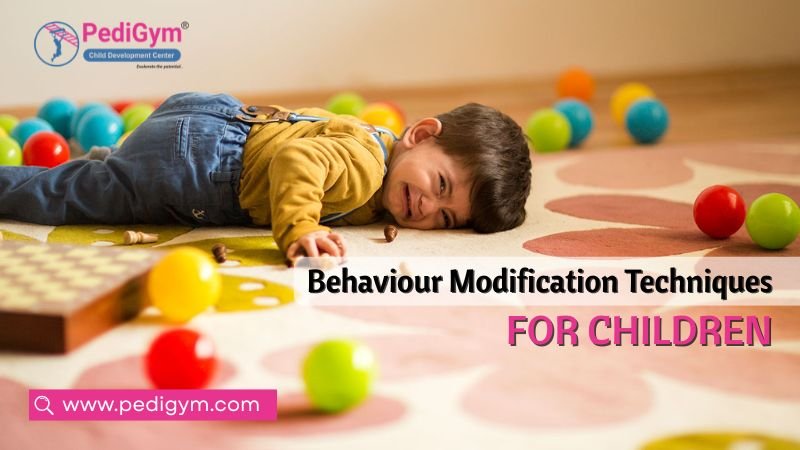
Behaviour modification helps children replace challenging behaviours with positive alternatives by understanding why a behaviour happens and changing what follows it. Instead of relying on punishment, this approach uses positive reinforcement, clear routines, consistent responses and skill-building to encourage lasting behavioural change. When parents, teachers and therapists work together, children gradually learn behaviours that improve communication, independence and emotional regulation.
What Is Behavior Modification?
Behaviour modification is a structured approach that helps children increase positive behaviours and reduce unwanted behaviours by changing the consequences that follow them. It is based on the principles of operant conditioning, developed by psychologist B. F. Skinner, which explains that behaviours followed by positive outcomes are more likely to be repeated.
Today, this approach is used in homes, schools and therapy clinics to help children develop everyday skills, manage emotions and participate more successfully in family and classroom routines. It is commonly recommended for children with behavioural concerns as well as those with ADHD, autism spectrum disorder (ASD), developmental delays or learning difficulties.
Unlike traditional discipline methods that focus only on stopping unwanted actions, behaviour modification teaches children what to do instead. The emphasis is on learning new skills, creating supportive environments and reinforcing behaviours that help children succeed.

What Does It Mean to Modify Behaviour?
To modify behaviour means helping a child replace an unhelpful behaviour with a more appropriate one through consistent teaching, practice and reinforcement. The goal is not simply to stop a behaviour but to teach a better way of meeting the same need.
For example:
- A child who leaves the dinner table every few minutes may learn to ask for a short break.
- A preschooler who grabs toys from others can be taught to request a turn and wait briefly.
- A student who avoids reading tasks may build confidence by completing short reading activities before progressing to longer ones.
Each example focuses on teaching a new skill instead of simply correcting the behaviour.
Why Do Children Display Challenging Behaviours?
Children rarely behave in a certain way “for no reason.” Behaviour usually communicates a need, even when the child cannot express it with words.
A child may:
- Seek attention or interaction.
- Avoid a difficult activity.
- Feel overwhelmed by noise or changes in routine.
- Struggle to communicate frustration.
- Seek sensory input.
- Feel tired, hungry or anxious.
Understanding the reason behind a behaviour is often the first step towards changing it.
Clinical Insight from PediGym
In our sessions, parents often describe a child as being “stubborn” or “not listening.” After observing the child, we sometimes find that the behaviour is linked to something else—such as difficulty understanding instructions, sensory overload or frustration with a task that feels too challenging. Once the underlying cause is addressed, behaviour often improves more quickly than parents expect.
How Does Behaviour Modification Work?
Behaviour modification works by looking at the events surrounding a behaviour rather than focusing only on the behaviour itself. One of the simplest ways to understand this process is through the ABC Model.
Component | What It Means | Example |
A – Antecedent | What happens before the behaviour | The teacher announces it’s time to stop playing and begin writing. |
B – Behaviour | The child’s response | The child leaves the table instead of starting the activity. |
C – Consequence | What happens afterwards | Extra attention is given while encouraging the child to return. |
Looking at all three parts helps identify patterns that may be reinforcing the behaviour.
Instead of immediately asking, “How do we stop this behaviour?”, behaviour modification asks:
- What happened before it?
- What need might the child be trying to meet?
- What happened afterwards that may have reinforced it?
Answering these questions makes it easier to teach a more appropriate response.
Core Principles of Behaviour Modification
Behaviour modification works best when parents, teachers and therapists follow a few consistent principles. These principles help children understand expectations, learn new skills and develop positive behaviours that can be used at home, school and in the community.
1. Teach the Behaviour You Want to See
Children learn more effectively when they are shown what to do instead of being told what not to do. Simply correcting unwanted behaviour rarely teaches a new skill, but modelling and practising the desired behaviour gives children a clear alternative.
For example, instead of saying:
❌ “Stop shouting.”
Try saying:
✅ “Use a calm voice so I can understand what you’re saying.”
Similarly, instead of saying:
❌ “Don’t grab the toy.”
Teach:
✅ “Ask, ‘Can I have a turn when you’re finished?'”
By focusing on replacement behaviours, children learn practical skills they can use in future situations.
2. Reinforce Positive Behaviour Immediately
Children are more likely to repeat behaviours that receive positive attention or meaningful reinforcement. Reinforcement can be verbal praise, encouragement, quality time or another reward that motivates the child.
The most effective praise is specific because it tells children exactly what they did well.
For example:
- “You packed your school bag without being reminded. That was very responsible.”
- “Thank you for waiting patiently while your sister finished speaking.”
- “You tried your best even though the activity was difficult. I’m proud of your effort.”
Recognising positive behaviour consistently helps children understand which actions should be repeated.
3. Build Skills One Step at a Time
Children learn new behaviours more successfully when large goals are divided into smaller, achievable steps. Expecting immediate perfection can lead to frustration, while gradual progress builds confidence.
For example, if a child is learning a morning routine, start with one goal such as getting dressed independently. Once that becomes a habit, introduce the next step, such as packing the school bag or preparing for school without reminders.
Celebrating small achievements keeps children motivated and makes long-term progress more manageable.
4. Stay Consistent Across Everyday Routines
Consistency helps children understand what is expected and makes learning more predictable. When adults respond in similar ways at home, school and therapy, children receive clear messages about appropriate behaviour.
For example, if polite requests are encouraged at home, teachers and caregivers should reinforce the same behaviour in other settings.
Consistency doesn’t mean being strict all the time—it means following through with expectations in a calm, predictable and supportive way.
5. Adapt the Approach to the Child
Every child learns differently, so behaviour support should be personalised rather than following a one-size-fits-all approach. Factors such as age, communication abilities, sensory preferences, learning style and developmental level all influence how children respond to different strategies.
A technique that works well for one child may need to be adjusted for another. Observing the child’s strengths, interests and challenges allows parents and professionals to create a plan that is both realistic and effective.
PediGym Insight: In our experience, families often ask for a single solution that works for every situation. However, the most successful behaviour plans are individualised. Understanding why a behaviour occurs helps us choose strategies that fit the child’s unique needs rather than applying the same technique to everyone.
Benefits of Behaviour Modification
When behaviour modification is applied consistently, it helps children develop skills that improve everyday life rather than simply reducing unwanted behaviours. Over time, children become more confident, independent and better able to manage different situations.
Some of the key benefits include:
- Improved emotional regulation by learning healthier ways to express feelings.
- Better communication skills through appropriate ways of asking for help, expressing needs and interacting with others.
- Greater independence in routines such as dressing, homework, mealtimes and self-care.
- Stronger social skills including sharing, waiting, taking turns and cooperating with others.
- Better participation at home and school by following routines and responding to instructions more confidently.
- Increased confidence as children experience success and receive positive encouragement.
- Healthier family relationships through more positive daily interactions and reduced conflict.
Behaviour modification also benefits parents and caregivers by providing practical strategies to respond consistently, understand the reasons behind challenging behaviours and create a supportive environment where children can learn and thrive.
A Practical Perspective from PediGym
how to stop it. Many parents believe it’s simply about rewarding good behaviour, but rewards are only one part of the process.
At PediGym, we first identify the reason behind the behaviour. For example, one child may avoid homework because writing feels difficult, while another may refuse it because they’re mentally tired after school. Although the behaviour looks the same, the support plan is different because the cause is different.
By understanding triggers, strengths and daily routines, we create personalised strategies that help children develop lasting skills instead of relying on constant rewards or punishment.
Behaviour Modification Techniques
Behaviour modification techniques are practical methods used to help children develop positive behaviours, learn new skills and become more independent. The most effective approach combines different techniques based on the child’s individual needs.
1. Positive Reinforcement
Positive reinforcement encourages children to repeat a desired behaviour by providing immediate praise or another meaningful reward. Rewards don’t have to be toys or treats – praise, attention or extra playtime can be just as effective.
When to Use It
- Completing homework
- Following instructions
- Sharing with others
- Using polite language
- Completing daily routines
Example
Instead of saying:
“Good job.”
Say:
“You packed your school bag without being reminded. That was very responsible.”
Specific praise helps children understand exactly what they did well.
PediGym Tip: Praise effort as well as success. Recognising small improvements builds confidence and motivation.
2. Shaping
Shaping teaches complex skills by breaking them into smaller, manageable steps. As each step is mastered, the next one is introduced.
Example
Instead of expecting a child to organise their school bag independently, teach one step at a time:
- Pack the books.
- Add the pencil case.
- Pack the water bottle.
- Check the timetable.
Small successes make learning less overwhelming.
3. Modelling
Children learn by watching the people around them. Parents, teachers and therapists can demonstrate behaviours they want children to copy.
Examples include:
- Greeting politely
- Waiting for a turn
- Asking for help
- Tidying up after activities
- Managing frustration calmly
Children are more likely to repeat behaviours they regularly observe.
4. Visual Supports
Visual supports help children understand routines and expectations using pictures or simple charts. They are especially useful for children who learn better through visual information.
Common examples include:
- Picture schedules
- Routine charts
- First-Then boards
- Choice boards
- Emotion cards
For example, a bedtime routine chart can help a child complete each step with fewer reminders.
5. Token Systems
A token system motivates children by allowing them to earn stars or stickers for positive behaviour, which can later be exchanged for a reward.
Behaviour | Token |
Complete homework | ⭐ |
Brush teeth | ⭐ |
Read for 15 minutes | ⭐ |
Put toys away | ⭐ |
After earning a set number of stars, the child chooses a preferred activity such as extra playtime or a family game.
As the behaviour becomes consistent, rewards should gradually be reduced.
6. Prompting and Gradual Independence
Prompting provides temporary support while a child learns a new skill. As confidence grows, the support is gradually reduced until the child can complete the task independently.
Prompts may include:
- Verbal reminders
- Gestures
- Demonstrations
- Visual cues
For example, a child learning to wash hands may first need verbal guidance, then only a picture chart before completing the routine independently.
Key Takeaway
No single technique works for every child. The best results come from combining different techniques based on the child’s strengths, developmental level and the reason behind the behaviour. A personalised approach helps children build skills that last beyond rewards alone.
How to Choose the Right Behaviour Modification Technique
The best behaviour modification technique depends on the child’s needs, developmental level and the behaviour you want to improve. There is no single method that works for every child. In most cases, combining two or more techniques produces the best results.
Goal | Recommended Technique |
Build daily routines | Visual schedules + Positive reinforcement |
Improve organisation | Shaping |
Increase independence | Prompting with gradual fading |
Strengthen social skills | Modelling |
Encourage consistent habits | Token system |
Build confidence | Specific praise |
Instead of changing techniques frequently, choose one or two approaches, use them consistently and review the child’s progress regularly. As children gain confidence and new skills become part of their routine, supports can be gradually reduced.
PediGym Insight: We rarely use just one technique during therapy. For example, a child learning a morning routine may use a visual schedule to understand the steps, prompting for guidance and positive reinforcement to encourage independence. Combining techniques creates a more effective and personalised support plan.
Behaviour Modification Strategies
Behaviour modification strategies are step-by-step approaches that help parents, teachers and therapists apply behaviour modification techniques consistently. While techniques are the tools, strategies focus on planning, monitoring progress and making adjustments to achieve long-term success.
1. Observe Before You Act
Understand the behaviour before trying to change it. Spend a few days observing when and where the behaviour occurs, what happens before it and how people respond afterwards. This helps identify patterns and possible triggers.
Ask yourself:
- When does the behaviour happen?
- What happened just before it?
- Who was present?
- What happened afterwards?
Understanding these patterns makes it easier to choose the right intervention.
2. Focus on One Goal at a Time
Start with one behaviour that has the biggest impact on the child’s daily life. Trying to change several behaviours at once can be overwhelming for both children and parents.
Common priority goals include:
- Following the morning routine
- Completing homework
- Participating during mealtimes
- Transitioning calmly to bedtime
Once progress is consistent, introduce the next goal.
3. Keep Everyone Consistent
Children learn faster when the adults around them respond in the same way. Parents, teachers and caregivers should use similar expectations, instructions and reinforcement so children receive clear and predictable messages across different environments.
4. Monitor Progress Regularly
Review progress every week instead of changing the plan every day. Small improvements are easier to notice when behaviour is tracked consistently.
Consider:
- Is the behaviour improving?
- Is the reinforcement still motivating?
- Are new triggers affecting progress?
- Does the plan need minor adjustments?
Regular reviews help keep the plan effective.
5. Encourage Independence Over Time
As children develop new skills, gradually reduce rewards and prompts. Replace external rewards with natural reinforcement such as praise, confidence and the satisfaction of completing tasks independently.
This helps children maintain positive behaviours without relying on rewards long term.
PediGym Insight: We encourage families to be patient and consistent rather than expecting immediate results. Small improvements repeated every day often lead to lasting behavioural change, especially when everyone involved follows the same plan.
A Practical Lesson We've Learned at PediGym
Every family arrives with a different story, but one pattern appears repeatedly.
Parents often tell us:
“We’ve tried rewards, consequences and reminders, but nothing seems to work.”
When we observe the child more closely, we often discover that the behaviour is not the real problem – it is a symptom.
For example, one school-age child regularly refused written homework. At first, it appeared to be a behavioural issue. After assessment, we found that the child became anxious whenever writing tasks felt too difficult. Instead of insisting on completing full worksheets, we divided activities into shorter sections, provided movement breaks between tasks and praised effort rather than speed.
Within a few weeks, homework became less stressful because the support matched the child’s needs rather than focusing only on the behaviour.
Experiences like this remind us that successful behaviour support begins with understanding why a behaviour happens – not just how to stop it.
Common Mistakes Parents Make During Behaviour Modification
Behaviour modification is most effective when it is applied consistently and patiently. However, some common mistakes can slow a child’s progress or make positive behaviours harder to maintain.
1. Trying to Change Too Many Behaviours at Once
Focus on one behaviour before moving to the next. Working on too many goals at the same time can overwhelm both children and parents. Start with the behaviour that has the greatest impact on daily life and build from there.
2. Focusing Only on Problem Behaviours
Notice and praise positive behaviours just as often as you correct challenging ones. When children receive attention for cooperation, effort and appropriate behaviour, they are more likely to repeat those actions.
3. Expecting Immediate Results
Behaviour change takes time and consistency. Some children respond quickly, while others need more practice and support. Celebrate small improvements instead of expecting instant success.
4. Comparing Your Child to Others
Measure progress against your child’s own starting point, not against siblings or classmates. Every child develops at a different pace, and personalised goals are more meaningful than comparisons.
Behaviour Modification Examples
Understanding real-life situations can make it easier to apply behaviour modification at home. The examples below show how changing the environment, teaching a new skill and reinforcing positive behaviour can lead to better outcomes.
Situation | What Was Happening | Support Used | Outcome |
Difficulty starting homework | The child became frustrated before beginning written work. | Homework was divided into smaller tasks with short movement breaks and praise after each completed step. | The child became more willing to begin homework and completed more work independently. |
Trouble transitioning from playtime | The child became upset whenever it was time to stop playing. | A five-minute visual countdown and a “first play, then dinner” routine were introduced. | Transitions became calmer because the child knew what to expect. |
Interrupting during conversations | The child frequently spoke over others. | Parents modelled waiting, used a simple visual reminder and praised successful waiting. | Turn-taking improved during family conversations. |
Avoiding self-care tasks | The child resisted brushing teeth every evening. | A visual routine chart and a sticker tracker encouraged consistency. | The child began completing the routine with fewer reminders. |
These examples show that lasting progress usually comes from understanding why the behaviour occurs and teaching an alternative that the child can use successfully.
How to Create a Behaviour Modification Plan
A behaviour modification plan is a structured, step-by-step approach that helps parents, teachers and therapists encourage positive behaviours using consistent strategies. An effective plan focuses on one clear goal, teaches a replacement behaviour and tracks progress over time.
Step 1: Choose One Target Behaviour
Start with one specific and measurable behaviour. Clear goals make it easier to monitor progress.
Instead of:
❌ “Improve behaviour.”
Set a specific goal, such as:
- Stay seated during meals for 15 minutes.
- Complete homework before screen time.
- Ask for help instead of leaving a difficult task.
Step 2: Observe the Behaviour
Understand the behaviour before trying to change it. Spend a few days observing when it happens and what might be triggering it.
Ask yourself:
- When does the behaviour occur?
- What happens just before it?
- What happens afterwards?
- Are there any common triggers?
Using the ABC Model (Antecedent–Behaviour–Consequence) can help identify patterns.
Step 3: Teach a Replacement Behaviour
Focus on what the child should do instead of the challenging behaviour. Replacement behaviours give children a positive and practical alternative.
For example:
- Ask for a break instead of leaving the table.
- Complete one small part of a task instead of refusing it.
- Ask for a turn instead of grabbing toys.
Step 4: Choose Meaningful Reinforcement
Reinforce the new behaviour immediately to encourage repetition. The most effective reinforcement is something the child finds motivating.
Examples include:
- Specific praise
- Stickers or stars
- Extra playtime
- Choosing a family activity
- Reading a favourite book together
Step 5: Track Progress
Monitor progress regularly to see what is working. A simple chart can help parents and teachers stay consistent.
Week | Goal | Progress |
Week 1 | Starts homework within five minutes | ⭐⭐☆☆☆ |
Week 2 | Starts homework with one reminder | ⭐⭐⭐⭐☆ |
Week 3 | Starts homework independently | ⭐⭐⭐⭐⭐ |
Remember, progress is rarely perfect. Celebrate small improvements and keep expectations realistic.
Step 6: Review and Adjust the Plan
Review the plan every one or two weeks and make changes if needed. As the child develops new skills, update goals and reduce support gradually.
Ask yourself:
- Is the child making progress?
- Does the reinforcement still motivate them?
- Has the target behaviour improved?
- Is it time to introduce a new goal?
PediGym Insight: The best behaviour modification plans are flexible. As children learn and grow, their goals and support strategies should evolve too. Regular reviews help ensure the plan continues to meet the child’s changing needs.
Using These Strategies at Home
Parents don’t need to wait for a formal therapy programme to begin supporting positive behaviour. Many opportunities occur naturally throughout the day.
You can encourage learning by:
- Keeping routines predictable.
- Giving short, clear instructions.
- Recognising effort as well as success.
- Preparing children before transitions.
- Offering limited choices to increase cooperation.
- Staying calm during challenging situations.
Small, consistent actions repeated every day often have a greater impact than occasional large rewards.
At PediGym, we encourage families to see behaviour support as part of everyday life rather than something that only happens during therapy sessions. When children experience the same expectations at home, school and therapy, they are more likely to develop lasting habits and greater independence.
If your child has ongoing challenges with attention, sensory processing, communication or emotional regulation, you can also explore related services such as Occupational Therapy, Sensory Integration Therapy, Autism Therapy or Parent Training through PediGym’s multidisciplinary team.
Frequently Asked Questions
What is behaviour modification?
Behaviour modification is an evidence-based approach that helps children develop positive behaviours by reinforcing appropriate actions, teaching new skills and adjusting the environment to support learning.
What does it mean to modify behaviour?
To modify behaviour means helping a child replace an unhelpful behaviour with a more appropriate one through consistent teaching, practice and positive reinforcement.
What are the most effective behaviour modification techniques?
Some of the most widely used techniques include positive reinforcement, shaping, modelling, visual supports, prompting, token systems and behaviour contracts. The right combination depends on the child’s needs and goals.
What is a behaviour modification plan?
A behaviour modification plan is a structured roadmap that identifies a target behaviour, possible triggers, replacement skills, reinforcement methods and ways to measure progress over time.
How long does behaviour modification take?
There is no fixed timeline. Some children respond within a few weeks, while others require longer depending on their developmental needs, consistency of support and the complexity of the behaviour being addressed.
Can behaviour modification be used at home?
Yes. Parents can use these principles during everyday routines such as homework, mealtimes, bedtime and play. Consistency, patience and positive reinforcement are key to long-term success.
Final Thoughts
Behaviour modification helps children develop positive behaviours by understanding the reason behind their actions and teaching appropriate alternatives. With consistent support, positive reinforcement and a personalised approach, children can build confidence, independence and everyday life skills.
At PediGym, we work with families to create practical, evidence-based behaviour support plans tailored to each child’s needs. If you’re concerned about your child’s behaviour, early assessment and intervention can make a meaningful difference in their long-term development.
About the Reviewer
Dr. Nitin Gupta
Founder, PediGym | Dynamic Movement Intervention (DMI) Level C Therapist
Dr. Nitin Gupta is the Founder of PediGym and a Dynamic Movement Intervention (DMI) Level C Therapist with experience supporting children with developmental, motor and behavioural challenges. He works with families using evidence-informed, child-centred approaches that focus on building functional skills, confidence and participation in everyday life. His multidisciplinary approach emphasises collaboration with parents, therapists and educators to create practical strategies tailored to each child’s individual needs.

Dr. Nitin, Founder of PediGym Child Development Center, is a dedicated pediatric therapy expert and DMI Level C Certified Therapist leading structured, evidence-based therapy programs in Faridabad and Gurgaon. Under his guidance, PediGym provides comprehensive pediatric rehabilitation focused on improving motor skills, coordination, sensory processing, speech clarity, and functional independence through personalized intervention plans.