
If you are searching “how to identify a special needs child,” you may have noticed something about your child’s development that concerns you. Perhaps your child is not speaking as expected, does not respond consistently when called, has difficulty with movement, struggles with everyday routines, or seems to be developing differently from other children.
If that is why you are here, take a breath.
You do not need to have an answer today. Children develop at different rates, and noticing a developmental difference is a reason to pay attention – not a reason to panic.
What matters is looking at your child’s overall pattern of development, how consistently a difficulty appears, and whether it is affecting everyday life. If you have ongoing concerns, discussing them with your child’s pediatrician or an appropriately qualified developmental professional is a practical next step.
Clinical Insight – Dr. Nitin Gupta, DMI Level C Therapist & Founder, PediGym:
“Parents do not need to diagnose their child at home. Their role is to notice meaningful or persistent difficulties, share those observations with a professional, and seek guidance when something does not feel right.”
What Does “Special Needs Child” Mean?
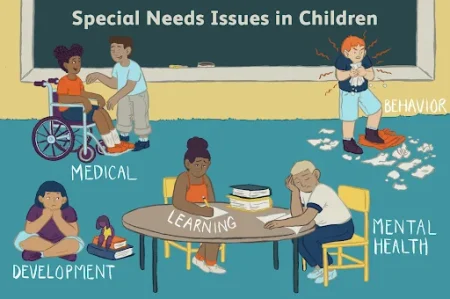
“Special needs” is a broad term commonly used for children who require additional support because of differences affecting areas such as:
- Communication and language
- Movement and physical development
- Learning and thinking
- Social interaction
- Behavior and emotional regulation
- Everyday activities and independence
A child’s support needs can change as they grow. Some children may need help in one developmental area, while others may need support across several areas.
The most useful starting point for parents is therefore not a diagnosis but an observation:
What is my child finding difficult, and is the difficulty persistent enough to affect everyday life?
Signs to Look For by Age
Developmental milestones provide general guidance about what children commonly learn at different ages. They are not a substitute for an individual assessment, but they can help parents recognize when it may be worth discussing a concern.
Ages 0–2: Early Development
During the first two years, parents can pay attention to communication, social interaction, movement, and emerging independence.
Talk to your child’s pediatrician if you notice concerns such as:
- Limited response to sounds or to their name
- Very little babbling, gesturing, or attempts to communicate
- Limited eye contact or shared interaction
- Significant difficulty sitting, crawling, standing, or walking compared with expected development
- Persistent difficulty using their hands for age-appropriate activities
- Feeding difficulties that interfere with everyday life
- No meaningful words around 18 months or very limited language development
- Loss of a skill your child previously had
A single delayed milestone does not tell the whole story. The child’s overall development and progress over time are important.
Ages 2–4: Communication, Play and Independence
As children enter the toddler and preschool years, differences may become more noticeable through communication, play, behavior, and daily routines.
Parents may want professional guidance when a child consistently:
- Has very limited spoken communication
- Has difficulty understanding simple age-appropriate instructions
- Rarely uses language or gestures to express needs
- Does not engage in shared or imaginative play as expected
- Has significant difficulty interacting with other children
- Struggles considerably with everyday transitions
- Has persistent difficulties with feeding, dressing, toileting, or other age-appropriate skills
- Shows unusual or repetitive behaviors that significantly interfere with daily activities
- Loses previously acquired language or other skills
At this age, differences in language and social development can become easier to observe because children are increasingly expected to communicate and participate in group activities.
Ages 4–6: Preschool and Early School Readiness
Between four and six years, children are developing more complex language, social, motor, and learning skills.
Consider discussing your concerns with a professional if your child has persistent difficulty with:
- Communicating clearly enough for everyday needs
- Following age-appropriate instructions
- Playing cooperatively with other children
- Managing transitions or changes in routine
- Fine-motor tasks such as drawing, using scissors, or handling objects
- Gross-motor activities such as running, jumping, climbing, or balancing
- Managing emotions and frustration
- Becoming increasingly independent with everyday activities
- Participating in preschool or group activities
The key consideration is functional impact: how much the difficulty affects your child’s ability to participate, learn, communicate, and manage everyday activities.
School-Age Children
Once children enter school, concerns may become apparent through academic performance, attention, behavior, communication, social relationships, or physical participation.
Parents and teachers may notice:
- Persistent difficulty learning age-appropriate academic skills
- Difficulty following classroom instructions
- Significant problems with attention or impulse control
- Difficulty communicating thoughts or understanding language
- Challenges forming or maintaining friendships
- Frequent emotional or behavioral difficulties
- Problems with coordination, handwriting, physical activities, or self-care
- Difficulty coping with sensory experiences
- A noticeable gap between a child’s abilities in different areas
Teachers can provide valuable observations because they see children participating in structured learning and social environments.
When Is a Developmental Concern a Red Flag?
There is no single sign that identifies every child who needs additional support. However, certain observations deserve timely professional attention.
These include:
- Loss of a previously acquired skill
- Significant concerns about hearing or responding to sounds
- Very limited communication for the child’s age
- Persistent difficulty understanding or communicating basic needs
- Significant difficulties with movement, balance, coordination, or muscle control
- Difficulty participating in everyday activities despite repeated opportunities to learn
- Developmental concerns raised independently by both parents and teachers
- Difficulties that consistently interfere with home, school, play, or relationships
Rather than using a single milestone as a pass-or-fail test, look at the whole developmental picture.
What Happens During a Developmental Assessment?
Many parents feel uncertain about what will happen when they take their child for an assessment.
A professional will usually begin by talking with you about your child’s developmental history and your current concerns.
The process may include:
Parent discussion: You may be asked when you first noticed the concern, how frequently it occurs, and whether it appears in different environments.
Developmental history: This may include information about milestones, communication, movement, health, feeding, sleep, behavior, and everyday activities.
Child observation: The professional may observe how your child plays, communicates, moves, follows instructions, interacts, or responds to different situations.
Developmental or functional assessment: Appropriate assessment tools may be used to understand specific areas of development.
Recommendations: Depending on the findings, the next step could involve monitoring, parent guidance, therapy, further assessment, or referral to another specialist.
Your observations are important. You do not need to arrive with a diagnosis.
What Parents Can Do at Home
While seeking professional guidance, parents can support development through everyday interactions.
Keep routines predictable
Regular routines can make daily activities easier, particularly for children who struggle with transitions.
Break difficult tasks into smaller steps
Instead of expecting your child to complete an entire activity independently, teach it one step at a time.
Give your child time to respond
Some children need additional processing time before responding to a question, instruction, or social interaction.
Encourage communication
Communication can include spoken words, gestures, facial expressions, pictures, signs, sounds, or other appropriate methods.
Celebrate progress
Small improvements can be meaningful. A new word, improved attention, better balance, smoother transition, or greater independence can represent important progress.
Keep useful records
Write down specific observations rather than simply recording that your child is “delayed.” For example, note what happened, when it happened, and how your child responded.
If appropriate, short videos of everyday activities may also help a professional understand behaviors that do not occur during an appointment.
What Should Indian Parents Do If They Have Concerns?
If you are in India and concerned about your child’s development, you do not have to work out the diagnosis before seeking help.
A practical pathway can be:
- Start with your pediatrician or a developmental pediatrician for an initial discussion and assessment.
- Depending on your child’s needs, you may be referred to professionals such as a physiotherapist, occupational therapist, speech-language therapist, psychologist, or other specialist.
- If your child attends school or preschool, speak with the teacher about what they are observing.
- Keep copies of assessment reports and therapy recommendations so that different professionals can understand your child’s history.
- Ask what you can realistically practice at home as part of your child’s daily routine.
For families seeking therapy, it is worth asking about the professional’s qualifications, experience with children of your child’s age, assessment process, treatment goals, and how progress will be measured.
Early professional guidance can help families move from uncertainty to a practical plan.
A Concern Is a Starting Point, Not a Label
It is easy to become overwhelmed when an internet search turns a simple concern into a long list of medical conditions.
Try to keep your attention on your child rather than on matching them to a diagnosis.
Your child has individual strengths, abilities, challenges, and ways of communicating. A good assessment should consider all of these—not just the things your child finds difficult.
Clinical Insight – Dr. Nitin Gupta, DMI Level C Therapist & Founder, PediGym:
“Early attention should be about understanding the child and identifying practical support that can improve participation, communication, learning, and independence.”
If you have noticed persistent developmental concerns, asking for professional guidance is a constructive next step. You do not need to wait until you are completely certain that something is wrong.
Frequently Asked Questions
How can I identify a special needs child?
Look for persistent difficulties affecting communication, movement, learning, social interaction, behavior, or everyday independence. Age, developmental history, and overall functioning all need to be considered, so professional assessment is important.
Is there one sign that confirms a child has special needs?
No. Developmental concerns are usually understood by looking at patterns across different areas rather than one isolated behavior or milestone.
What if my child has missed a developmental milestone?
Discuss the concern with your pediatrician, particularly if several milestones are delayed, progress has stopped, or your child has lost a skill they previously developed.
Can a child develop differently from their peers and still be doing well?
Yes. Children do not all develop at exactly the same pace. The important question is whether a difference is persistent and whether it affects your child’s ability to communicate, learn, participate, or manage everyday activities.
Is it too early to seek an assessment?
You do not need to wait until school age. If you have a persistent concern, discussing it early with a qualified professional can help you understand your child’s development and decide whether further assessment or support is appropriate.
About Dr. Nitin Gupta
Dr. Nitin Gupta, DMI Level C Therapist and Founder of PediGym, works with children and families requiring developmental and therapeutic support. His approach focuses on understanding each child’s individual abilities, functional needs, and goals while helping parents become active participants in their child’s development.

Dr. Nitin, Founder of PediGym Child Development Center, is a dedicated pediatric therapy expert and DMI Level C Certified Therapist leading structured, evidence-based therapy programs in Faridabad and Gurgaon. Under his guidance, PediGym provides comprehensive pediatric rehabilitation focused on improving motor skills, coordination, sensory processing, speech clarity, and functional independence through personalized intervention plans.